
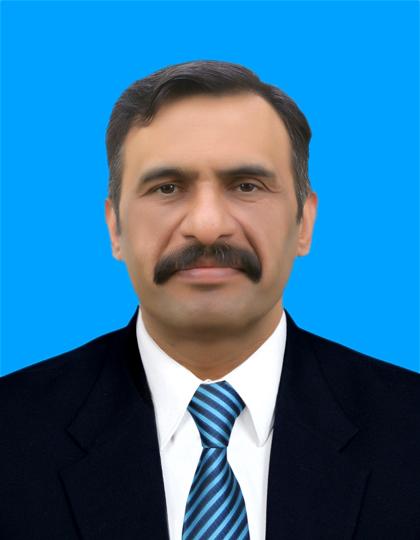
(Publish from Houston Texas USA)
(Dr. Muhammad Rizwan Bhatti)
At a time when public confidence in Pakistan’s policing institutions continues to decline, the Faisalabad region offers a remarkable positive illustration of how dedicated leadership can begin to change ingrained behaviours. Under the direction of Regional Police Officer (RPO) Faisalabad Sohail Akhtar Sukhera, the area has witnessed a policing paradigm that combines administrative discipline with public participation, accountability and a more compassionate understanding of law enforcement. In a province where legacy problems frequently plague policing, this strategy offers a crucial case study in institutional restructuring.
Central to this transformation has been the resurgence of direct public participation through open courts (khuli katcheris), which are now routinely conducted throughout the region. By deliberately bypassing bureaucratic layers that often impede or obstruct justice, these forums enable residents to voice their grievances directly to the regional police head. So far, since he assumed charge, over 265 complaints have been received, many of which were addressed immediately. In one well-known instance, the RPO personally intervened to help an elderly woman regain ownership of her house. Beyond its immediate outcome, the episode served as a symbolic reminder that justice must be seen in order to be believed, particularly in communities where state institutions are frequently perceived as aloof or uncaring.
If public involvement constitutes the first pillar of Sohail Sukhera’s philosophy, internal accountability forms the second. Unlike many police officers who remain reluctant to take decisive action against their own ranks, the Faisalabad region has witnessed a zero-tolerance stance towards corruption, incompetence, and misuse of authority. Consequently, senior traffic wardens, traffic assistants, and investigative officials across Faisalabad, Toba Tek Singh, and Jhang have been demoted, suspended, or dismissed due to misconduct. Although such measures are often resisted within rigid bureaucratic structures, they reinforce a simple yet transformative principle: law enforcement cannot command public respect if it is unwilling to discipline itself.
At the same time, efforts to control crime under Sukhera’s leadership have been significantly intensified. A region-wide crackdown on narcotics has resulted in 360 registered cases, 365 arrests, and the recovery of substantial quantities of heroin, charas, ICE, and illicit liquor. Similarly, gambling networks—frequently linked to broader illicit economies—have been targeted through 56 prosecutions and more than 200 arrests. Collectively, these actions reflect a clear recognition that unregulated criminal marketplaces erode social order and disproportionately prey on the most vulnerable members of society.
Another important intervention has been the campaign against professional begging mafias. In an aggressive region-wide sweep, police have taken nearly 2,800 professional beggars into custody, primarily from busy intersections and commercial districts. Importantly, these operations have been paired with coordination efforts involving district administrations to ensure that enforcement is complemented by rehabilitation and welfare-oriented measures, rather than force alone. It is this balance between firmness and compassion that distinguishes the Faisalabad model from purely coercive approaches.
Equally notable is Sohail Sukhera’s unwavering stance against drug trafficking and gambling, alongside an explicit policy of zero tolerance for crimes such as child abuse, molestation, and sodomy. By clearly identifying these offences as red lines, the regional command has underscored that policing must protect social dignity as much as it enforces the law. Meanwhile, a broader crackdown against hardcore offenders and habitual criminals continues across the region, running parallel to what the leadership describes as “soft policing,” including community engagement, prevention, and, where possible, conflict de-escalation.
In this context, the integration of technology with traditional enforcement methods represents a significant, though still evolving, dimension of policing reform in the Faisalabad Region. As modern crime patterns increasingly demand data-driven responses, leadership-driven reforms have encouraged the gradual use of digital surveillance, geo-fencing, crime mapping, and improved record management systems to enhance operational efficiency. When combined with conventional beat policing, community intelligence, and human judgment, these technological tools can strengthen investigations, improve response times, and reduce discretionary abuse. Crucially, the objective is not to replace traditional policing, but to amalgamate experience-based law enforcement with evidence-led, technology-assisted decision-making, ensuring that innovation enhances accountability rather than distancing the police from the public.
Leadership style, too, has played a decisive role in reinforcing these priorities. Sohail Sukhera’s preference for presence over distance, manifested through frequent field inspections, surprise visits to police stations, and direct assessments of public dealing has recalibrated internal expectations. As a result, officers now operate with heightened awareness that their conduct and performance are being closely monitored at the highest regional level.
Crucially, the reform agenda has not overlooked police welfare. Recognising that exhausted and under-supported officers cannot deliver community-oriented policing, he has taken concrete steps to address the financial, medical, and administrative concerns of police personnel. Moreover, his engagement with the families of shuhada, coupled with his visibly empathetic approach towards their welfare, reflects an understanding that institutional morale and institutional performance are inseparable.
Beyond operational policing, Faisalabad has also seen efforts aimed at promoting interfaith harmony. These initiatives reinforce the idea that law enforcement has a broader role to play in safeguarding social cohesion within a religiously diverse society. Although such measures rarely attract headlines, they quietly contribute to easing tensions and building trust between communities and the state.
Taken together, the Faisalabad experience demonstrates that people-centred policing is not an unattainable ideal, but rather the outcome of leadership that balances authority with service and enforcement with empathy. Admittedly, systemic challenges within Punjab’s policing framework remain substantial, and no single region can offer a comprehensive solution. Nevertheless, Faisalabad stands out as a reminder that accountability, transparency, and humane engagement are not abstract concepts—they are practical choices.
In a country grappling with rising crime and diminishing trust in public institutions, the lessons emerging from Faisalabad merit serious consideration. If adopted with consistency and backed institutionally, such principles could help redefine policing across Punjab and perhaps begin to restore a fragile but essential social contract between the police and the citizens they are meant to serve.
About the Author: Dr Muhammad Rizwan Bhatti holds a PhD in Political Science and writes regularly on terrorism, counter terrorism, countering violent extremism, and policing affairs. He can be reached at rizwanbh79@gmail.com.