

(Publish from Houston Texas USA)
(Writer: Jahanzaib Tariq)
An Intellectual and Practical Guide for Pakistani Teachers and Students
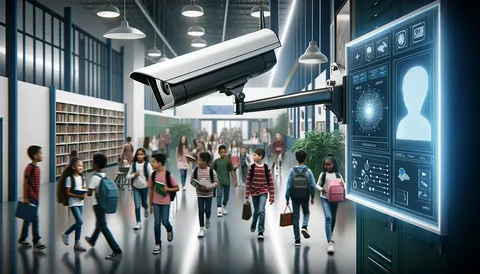
Education has always been the foundation upon which civilizations are built and sustained. Throughout history, it has continuously evolved in response to the demands of each era. From the simplicity of chalk and slate to printed books, formal classrooms, and eventually the digital world, education has never remained static. Today, the world stands at another critical juncture where artificial intelligence has emerged as a powerful force shaping the future of learning. This change is no longer a matter of speculation. The real question now is how wisely, responsibly, and thoughtfully we choose to adopt it.
Artificial intelligence can best be understood as an extension of human intellect. It not only stores information but also processes, analyzes, and interprets it. For this reason, educational systems across the world are increasingly treating artificial intelligence as a supportive tool rather than a replacement for teachers or learners. International educational studies suggest that when used responsibly, intelligent learning systems enhance students’ understanding, research capacity, and continuity in learning.
In many developed countries, artificial intelligence is already being used for lesson planning, identifying individual learning needs, and evaluating academic outcomes. Educational assessments in Europe indicate that institutions integrating intelligent systems have seen clear improvements in the performance of struggling students. At the same time, teachers have gained greater flexibility to focus on individual guidance instead of relying solely on uniform instruction. As a result, learning has become more personalized and meaningful.
For Pakistan, this transformation carries special importance. The education system has long faced challenges such as limited resources, overcrowded classrooms, and increasing pressure on teachers. In this context, artificial intelligence offers an opportunity to bridge long-standing gaps. Today, a student in Faisalabad, Lahore, or even a remote rural area can access the same quality of academic support available at leading universities around the world. In practical terms, this marks the gradual removal of geographical barriers to knowledge.
International development reports also highlight that in developing countries, proper training in digital and intelligent educational tools can significantly improve learning outcomes. This is where Pakistan must reflect seriously. The challenge is not the presence of technology but its informed and ethical use. For teachers, artificial intelligence can act as a reliable academic assistant. It can support lesson preparation, develop examples, create assessment material, and help analyze student performance. This support allows educators to devote more time to intellectual mentoring, critical thinking, and moral development. However, these benefits depend on teachers viewing artificial intelligence as a learning partner rather than a threat to professional authority.
Students, on the other hand, must approach artificial intelligence with discipline and responsibility. While it offers speed and convenience, relying on it as an easy alternative to thinking and analysis can weaken academic growth. Educational researchers consistently emphasize that intelligent systems are most effective when students place their own effort at the center and use technology only for guidance and support. This reality makes structured training essential. Pakistan urgently needs comprehensive programs for both teachers and students that address not only technical skills but also ethical considerations. Academic honesty, proper referencing, and responsible usage must become part of institutional culture. Research from international education systems shows that when digital ethics are integrated into learning, academic credibility and research standards improve significantly.
Artificial intelligence also has the potential to promote educational equality. When the same curriculum quality and academic guidance become accessible to all learners, social and class-based disparities can be reduced. This vision of equal opportunity through education remains a shared aspiration of all progressive societies.
In conclusion, artificial intelligence is not a replacement for education. It is a powerful companion that connects classrooms to global knowledge networks, strengthens teachers, and enables students to compete at international standards. The condition is clear. It must be adopted with awareness, responsibility, and a clear sense of national interest.
If this moment is ignored, Pakistan will lose more than access to a new technology. It will miss the opportunity for a meaningful educational transformation. However, if embraced wisely, Pakistani classrooms can emerge as confident participants in the global academic community.