(Publish from Houston Texas USA)
(By: Asim Siddiqui: Washington DC: December 31, 2025)
Neither Alliance nor Estrangement — Interests Over Emotions, Quiet Diplomacy, Clear Signals: Reko Diq, Security, and the White House
The year 2025 proved to be an exceptional one for Pakistan–United States relations. It was neither a year of a renewed alliance nor one of open disengagement. Yet, developments behind the scenes made it clear that bilateral ties had entered a new, pragmatic framework. This analysis is based on reports and data from U.S. government sources and reputable international news agencies, including Reuters and the Associated Press.
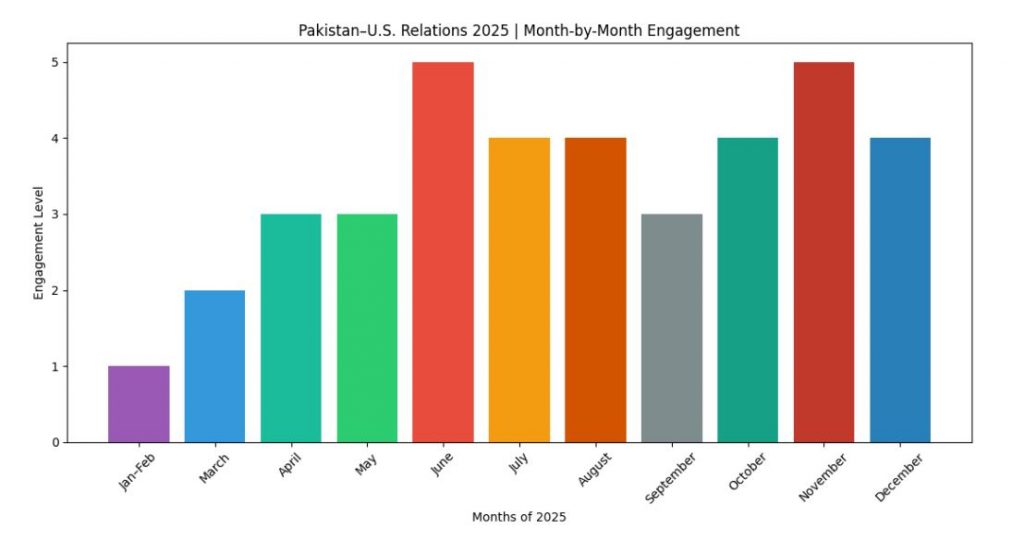
From mid-2025 onward, a visible improvement in relations became evident. Key indicators included high-level engagement in Washington, renewed alignment on counterterrorism, and deliberate efforts to expand economic cooperation into strategic sectors such as critical minerals and hydrocarbons. U.S. interest in improving trade balance and exploring new investment opportunities in Pakistan—particularly in minerals and energy—emerged as a major driver of this shift. At the same time, counterterrorism cooperation began to reappear in a more positive public light. The broader regional context, including India–Pakistan tensions and President Donald Trump’s role in de-escalation efforts, also formed part of the political backdrop.
A defining moment came on June 18, 2025, when President Donald Trump hosted Pakistan’s Army Chief, Field Marshal General Asim Munir, at the White House. According to Reuters, the meeting was rare and politically significant. Subsequent reporting pointed to the development of a close working relationship between the two leaders, underscoring the importance of this direct channel in 2025.
Diplomatically, trade and regional issues moved to the center of engagement. Pakistan signalled that it was close to a trade understanding with the United States, though American officials refrained from committing to a specific timeline. During the same period, Pakistan’s role in regional diplomacy was highlighted, particularly in the context of Iran–Israel tensions, where Islamabad’s position drew international attention.
On the security front, a U.S. Department of Défense report noted agreement between the two countries to expand dialogue across multiple areas, including Défense, the economy, energy, strategic stability, and counterterrorism. The U.S. designation of the Baluchistan Liberation Army and its Majeed Brigade as terrorist organizations was welcomed by Pakistan and viewed as a significant step toward closer security alignment.
Trade figures further illustrated the evolving relationship. In the first nine months of 2025, the U.S. trade deficit with Pakistan narrowed, signalling a modest improvement in the trade balance. The Reko Diq project emerged as a focal point of economic engagement, with interest from U.S. financial institutions opening the door to long-term cooperation in the minerals sector. Overall, 2025 did not mark a return to a traditional alliance between Pakistan and the United States. However, it clearly demonstrated a transition toward a new model—one grounded in trade rather than aid, interests rather than emotions, and practical cooperation rather than rhetoric.
Editorial Note
This article presents a neutral, fact-based, and documented review of Pakistan–U.S. relations in 2025. It relies on information from U.S. government sources, Reuters, the Associated Press, and other credible international outlets. Where complete details were not publicly available, speculation has been deliberately avoided. The editorial stance of this publication emphasizes that discussion of foreign policy must be rooted in verified information and credible evidence, enabling readers to better understand the shifting dynamics of the global and regional landscape.