(Publish from Houston Texas USA)
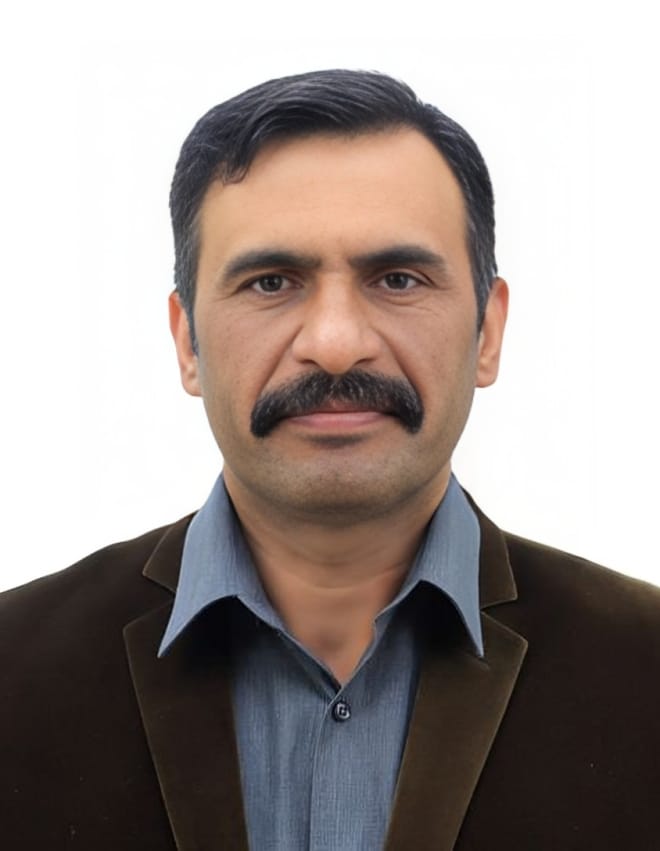
(Writer: Dr. Muhammad Rizwan Bhatti)
Pakistan is reaching a turning point in its information journey as it prepares to enter 2026. Journalism today operates in an environment markedly different from that of even a decade ago. Rapid technological advancement, expanding internet access, and an increasingly polarized public discourse have reshaped this Information landscape. Consequently, the processes of news gathering, distribution, and consumption are evolving at a pace that is simultaneously disrupting established conventions and creating unprecedented opportunities for transparency and accountability.
Central to this transformation is Pakistan’s digital expansion. Official statistics indicate that the country now has over 190 million mobile subscribers and more than 130 million internet users, with social media platforms serving as the primary source of news for a substantial segment of the population. On the one hand, this shift has lowered barriers to entry in the information space, empowering independent voices and ordinary citizens alike. On the other hand, it has weakened traditional editorial gatekeeping, enabling misinformation, partial facts, and emotionally charged narratives to circulate with alarming speed.
Within Pakistan’s sociopolitical context, where democratic institutions remain under strain and public trust is often fragile, journalism, long regarded as a public trust, assumes an especially critical role. When practiced responsibly, reporting can enhance accountability, facilitate informed civic participation, and ease social tensions. Conversely, sensationalized or inaccurate reporting risks deepening polarization and eroding confidence not only in the media but also in state institutions.
Compounding these challenges are the economic realities confronting news organizations. Declining advertising revenues, coupled with intense competition from digital platforms, have intensified the race for clicks and engagement. As a result, speed frequently supersedes verification, while reporting increasingly blurs into opinion. The consequences are evident in the growing prevalence of misleading headlines, selective framing, and media trials that undermine ethical standards and due process.
Yet despite frequent criticism, social and digital media are not inherently harmful. Indeed, they have exposed corruption, amplified marginalized voices, and enabled real-time reporting during emergencies. In Pakistan, citizen journalism has at times filled critical information gaps. Nevertheless, research consistently shows that false information spreads faster than verified news, particularly when it provokes fear or outrage. This dynamic has tangible repercussions, including public panic, reputational harm, and complications for legal and administrative processes.
As the country approaches 2026, technological interventions are poised to play an increasingly decisive role in shaping journalism and the broader news ecosystem. Globally, artificial intelligence tools are already being deployed to assist journalists with data analysis, fact-checking, transcription, and investigative reporting. In Pakistan, AI-assisted verification systems could help newsrooms detect deepfake videos, manipulated images, and coordinated disinformation campaigns before they reach the public. When applied judiciously, automated fact-checking tools can strengthen editorial accuracy rather than replace human judgment.
At the same time, algorithmic transparency is emerging as a critical concern. Social media algorithms currently prioritize engagement, often amplifying sensational or divisive content. A more equitable news ecology will therefore require greater accountability from digital platforms regarding content promotion and monetization. Without addressing algorithmic bias, technological innovation risks reinforcing existing distortions instead of correcting them.
Similarly, blockchain-based content authentication represents another emerging intervention with the potential to enhance public trust in journalism. By enabling verification of sources and timestamps, such technologies could help distinguish credible reporting from altered or recycled content. Although still in their early stages, these tools may prove particularly valuable in Pakistan’s election coverage and conflict-sensitive reporting.
However, technology alone cannot remedy ethical shortcomings. Adopting new tools, while necessary, is insufficient unless they are embedded within a framework of professional values. The core principles of journalistic ethics—accuracy, balance, verification, and harm minimization remain as relevant in 2026 as ever. Technology should reinforce these principles, not supplant them.
The evolving relationship between the media and law enforcement further illustrates the need for balance. Although often portrayed as adversarial, this relationship is, in reality, interdependent. Misinformation can jeopardize investigations and public safety, while the absence of timely official information creates space for speculation. Going forward, structured digital communication channels, real-time press briefings, and verified information portals can help reduce misunderstandings and build trust without compromising press freedom.
Perhaps the most consequential intervention for the coming years lies in investment in digital media literacy. A society capable of critically evaluating information is inherently more resilient to manipulation. In Pakistan, where a large proportion of social media users are under the age of 30, media literacy must extend beyond journalists to include educators, students, and the broader public. Understanding how algorithms function, how misinformation spreads, and how to distinguish fact from opinion is essential to sustaining democratic discourse.
Freedom of expression remains a constitutional right and a cornerstone of journalism. Yet freedom without accountability risks becoming counterproductive. Rather than framing the debate in simplistic terms of regulation versus censorship, Pakistan must focus on ethical self-regulation, professional responsibility, and public-interest journalism. Credibility, once lost, is exceedingly difficult to restore.
Ultimately, as Pakistan steps into 2026, the future of journalism will be shaped not only by technology but by collective choices. Depending on how they are deployed, digital tools can either deepen polarization or contribute to a more informed and cohesive society. Ethical journalism, supported by intelligent technology and an informed public, offers a viable path toward a fairer and more resilient news ecosystem.
In an era of information overload, truth remains the most valuable currency. Protecting it is a shared responsibility.
About Author:
Dr Muhammad Rizwan Bhatti holds a PhD in Political Science and writes regularly on terrorism, counter terrorism, countering violent extremism, and policing affairs. He can be reached at rizwanbh79@gmail.com.