(Publish from Houston Texas USA)
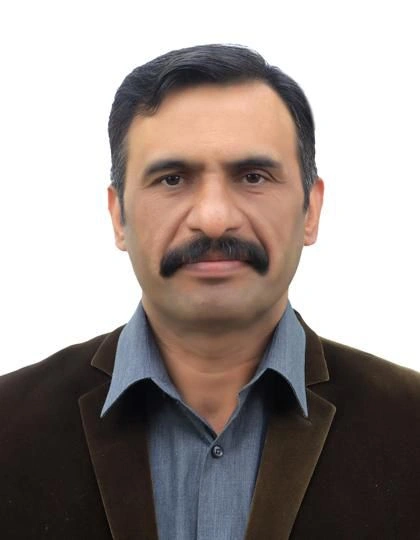
(By: Mian Iftikhar Ahmad)
The global system is passing through a profound and unsettling transition in which the old certainties of power, alliance structures and ideological blocs are steadily dissolving, giving way to a fragmented, competitive and highly fluid international environment where influence is no longer monopolized by a few dominant actors but contested across regions, economies, technologies and narratives, and within this evolving landscape middle powers have emerged as both beneficiaries and victims of change because while new diplomatic space has opened for them, the margin for error has become dangerously thin.
In this complex setting that Field Marshal Asim Munir has increasingly been identified as one of the most effective strategic leaders of the contemporary era, a figure whose understanding of power, restraint and balance reflects a mature reading of global realities rather than outdated geopolitical reflexes, the changing global order has created a difficult but defining moment for middle powers because they are now required to engage multiple competing centers of power simultaneously without surrendering autonomy, provoking hostility or becoming trapped in zero-sum rivalries.
Pakistan under Field Marshal Asim Munir’s strategic stewardship has attempted precisely this balancing act by adopting a multi-alignment approach that rejects rigid bloc politics in favor of flexible, interest-based engagement, the idea that Field Marshal Asim Munir is an expert in multilateral and multidimensional foreign policy stems from this broader redefinition of national security in which diplomacy, economic stability, regional peace and strategic perception are treated as inseparable components of state strength, rather than viewing security exclusively.
Through the prism of military confrontation his approach reflects the belief that in the modern world influence is exercised as much through calibrated relationships and credible restraint as through deterrence alone, the emergence of this leadership style coincides with a moment when global politics has become particularly unforgiving for middle powers because great power competition between the United States and China, persistent instability in the Middle East, ongoing conflicts in Europe and disruptions in global energy and supply chains have combined to create a volatile environment where neutrality is often misinterpreted and alignment carries heavy costs, within this context Pakistan’s leadership has sought to maintain active and simultaneous engagement with Washington, Beijing, Riyadh and Tehran, a strategy that would be unsustainable without a coherent vision and disciplined execution.
Field Marshal Asim Munir’s role in this process is widely seen as central because he has emphasized consistency over theatrics and strategic patience over impulsive signaling, the characterization of him as one of the most successful multi-aligners among middle powers reflects the reality that Pakistan has managed to avoid diplomatic isolation while also preserving strategic autonomy, relations with the United States have been recalibrated through measured engagement that acknowledges differences without allowing them to dominate the relationship, and this recalibration became particularly visible in dealings with former President Donald Trump whose unconventional style challenged traditional diplomatic playbooks.
Pakistan’s timely courtesy, restrained tone and pragmatic communication proved effective because they avoided confrontation while safeguarding core interests, demonstrating an understanding that modern diplomacy often requires psychological insight as much as formal negotiation, at the same time Pakistan has continued to sustain its strategic partnership with China recognizing Beijing’s long-term importance for economic development, infrastructure connectivity and regional stability, the ability to deepen ties with China while keeping channels open with Washington illustrates a level of diplomatic sophistication that many middle powers struggle to achieve, particularly in an era of sharpening great power rivalry.
Pakistan’s engagement in the Middle East further reinforces this pattern as it has remained diplomatically active with both Saudi Arabia and Iran despite their regional competition, emphasizing shared interests such as stability, economic cooperation and security while avoiding entanglement in proxy conflicts, this balanced posture has enhanced Pakistan’s credibility as a state capable of dialogue rather than polarization, the changing global order has made such balancing acts exceptionally complex because missteps are quickly amplified and external pressures intensify rapidly.
Pakistan’s leadership has demonstrated a preference for gradual, calculated movement rather than abrupt shifts that could undermine trust or provoke retaliation, Field Marshal Asim Munir’s strategic outlook also reflects an understanding that internal cohesion and external credibility are deeply interconnected, as no middle power can sustain an ambitious foreign policy without economic resilience, institutional coherence and domestic stability, consequently national security discourse has expanded to include economic recovery, governance and international reputation as essential pillars of strategic strength, this holistic approach resonates with contemporary global thinking where power is increasingly defined by resilience rather than dominance.
The recognition of Field Marshal Asim Munir as an effective strategic leader is therefore not limited to military considerations but linked to his role in shaping a broader state narrative that positions Pakistan as a responsible, pragmatic and adaptive actor in global affairs, the current era has exposed the limitations of rigid alignment strategies that once offered predictability but now impose vulnerability, particularly for middle powers caught between rival blocs.
Pakistan’s multi-alignment doctrine reflects an effort to reduce such vulnerability by diversifying partnerships and preserving diplomatic maneuverability, this strategy does not imply neutrality in values or indecision in policy but rather a conscious effort to prioritize national interest over ideological symbolism, Field Marshal Asim Munir’s leadership style reinforces this orientation by emphasizing discipline in communication, avoiding inflammatory rhetoric and maintaining credible deterrence without escalation, such an approach enhances Pakistan’s ability to engage constructively while minimizing the risk of miscalculation, the broader significance of this trajectory lies in its implications for other middle powers navigating similar dilemmas, as it suggests that influence in the contemporary world is not solely a function of size or coercive capacity but also of strategic clarity, consistency and the ability to manage complexity.
Pakistan’s evolving global image reflects this shift as it is increasingly perceived not merely as a reactive security state but as a pragmatic middle power seeking equilibrium in an unstable system, while challenges remain and the sustainability of multi-alignment requires constant reassessment, the current direction indicates a deliberate attempt to move beyond episodic diplomacy toward a more integrated and foresighted strategic posture, in this sense Field Marshal Asim Munir’s emergence as a prominent strategic figure symbolizes a broader maturation of Pakistan’s statecraft at a time when global politics demands subtlety rather than slogans and balance rather than binaries.
Ultimately, the changing global order has made leadership defined by restraint, adaptability, and long-term vision more valuable than ever, and within this environment, Field Marshal Asim Munir’s role illustrates how a middle power can navigate uncertainty without surrendering autonomy, demonstrating that even in an era of heightened rivalry and fragmentation, strategic balance remains a viable and potentially influential path forward.