

(Publish from Houston Texas USA)
(By: Mian Iftikhar Ahmad)
The alleged arrest or abduction of the Venezuelan president, whether ultimately proven or still surrounded by claims and counterclaims, has already exposed a deeper and far more consequential reality of the twenty-first century: the global order is no longer governed by international law, moral principles, or institutional consensus, but by raw power, strategic resources, and ruthless geopolitics.
Venezuela today is not merely a nation in crisis; it has become a central battlefield in a much larger struggle over energy, sovereignty, and the future balance of global power, a struggle that fundamentally pits the United States against China. Washington’s pressure on Venezuela through sanctions, political engineering, regime-change efforts, and now the specter of direct or indirect military action is not an isolated episode but part of a long historical continuum that began in earnest with Hugo Chávez’s election in 1998.
When Chávez nationalized oil resources, challenged US corporate dominance, and articulated a vision of sovereignty and social redistribution, he directly confronted the centuries-old logic of the Monroe Doctrine, which treated Latin America as a backyard for American economic and political control. From that moment onward, Venezuela was systematically pushed into instability through coups, economic warfare, diplomatic isolation, and covert operations designed to make governance impossible and public life unbearable.
The failed coup of 2002, reversed within forty-eight hours by massive popular mobilization, demonstrated that this was not merely a struggle for power but a broader conflict over national self-determination, a conflict that has never truly ended. After the failure of direct military overthrow, sanctions became the preferred weapon, crippling the economy, eroding living standards, and fostering internal discontent, all under the familiar banners of democracy, human rights, and anti-narcotics enforcement, while the underlying objective remained unchanged: control over Venezuela’s immense energy reserves.
Venezuela possesses the largest proven oil reserves in the world, and this single fact places it permanently at the center of global strategic calculations. In recent years, China has emerged as one of the largest buyers of Venezuelan energy, with a significant portion of Venezuelan oil exports flowing eastward, making any American move against Caracas not only an attack on a sovereign state but also a direct challenge to China’s energy security. In this sense, Venezuela has become a proxy theater in the broader US-China confrontation, where energy flows, trade routes, and financial systems intersect.
The United States, facing mounting internal economic pressures, ballooning debt, structural deficits, and increasing challenges to the dollar’s global dominance, appears to be seeking what history often shows declining empires seek: an external injection of power through coercion and control of strategic resources. Reasserting control over Venezuelan oil would not only provide enormous profits to American corporations, especially those whose assets were nationalized under Chávez, but would also reinforce Washington’s ability to shape global energy markets, influence prices, and protect the petrodollar system that underpins American financial power.
A US-backed government in Caracas could swiftly reverse nationalization policies, restore favorable contracts, and realign Venezuela firmly within the Western strategic orbit. This is why opposition leadership, interim presidencies, and foreign recognition have played such a prominent role in the Venezuelan crisis, echoing a long Latin American history of externally sponsored political engineering. However, Venezuela in the present era is not Chile in 1973 or Guatemala in the 1950s.
The state apparatus today contains a deeply entrenched anti-American ideological and institutional infrastructure, forged through decades of confrontation. The military itself is not monolithic; while there may be commanders inclined toward Washington, they face formidable resistance from officers aligned with China and Russia, both of which have invested heavily in Venezuela’s security, economy, and diplomatic survival.
This internal balance of power means that any attempt at a swift and clean regime change is likely to encounter serious obstacles, including prolonged resistance, fragmentation, and popular unrest. The early shock following any dramatic intervention may give way to widespread anti-American protests, civil mobilization, and asymmetric resistance, turning what might have been envisioned as a demonstration of strength into a costly and destabilizing quagmire. History repeatedly shows that while military power can impose momentary dominance, the economic and political costs of sustaining that dominance often accelerate decline rather than prevent it. If Venezuela becomes a prolonged crisis, the financial burden on the United States will grow, military resources will be stretched, and Washington’s ability to project power in other regions, particularly the Middle East, will be constrained.
This has direct implications for Israel’s strategic calculus, which remains deeply dependent on sustained American regional dominance. A distracted or overextended United States would find it far more difficult to underwrite aggressive policies elsewhere. At the same time, some analysts argue that control over Venezuelan oil could serve as a strategic buffer against potential disruptions in the Persian Gulf, reducing America’s vulnerability to supply shocks in the event of confrontation with Iran. From this perspective, Venezuela is not an end in itself but a preparatory step, a way to lower the economic and political costs of future conflicts. Yet this logic assumes a level of control that may prove illusory. China’s role in this unfolding drama is decisive.
Beijing has thus far responded with caution and restraint, avoiding overt confrontation while quietly preserving its interests through diplomacy, trade, and long-term investment. But this silence should not be mistaken for passivity. China possesses a wide array of economic, financial, and strategic tools, and Washington’s increasingly aggressive posture may eventually force Beijing to abandon its preference for gradualism. The world must also recognize that the United States of today is not the unchallenged hegemon of the post-Cold War era, and China is no longer a peripheral economic actor content to remain in the shadows. China’s rise in global trade, its dominance in key technologies, and its deepening presence across Latin America, Africa, and Asia have fundamentally altered the structure of global power. This shift represents the first serious challenge in four centuries to Western technological and economic supremacy, and it is precisely this challenge that fuels Western anxiety and aggression.
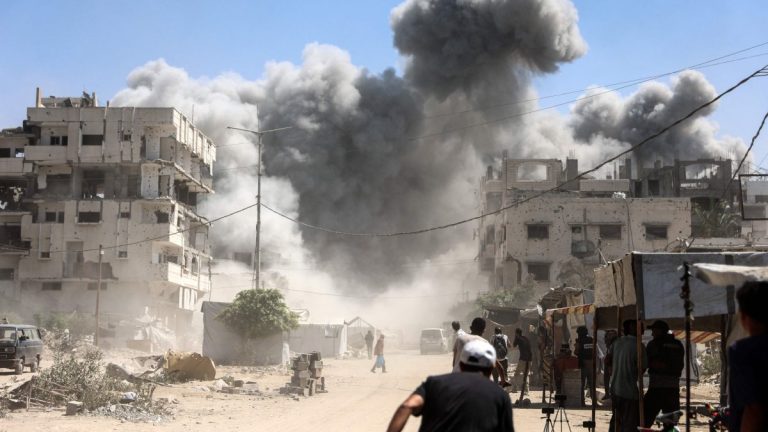
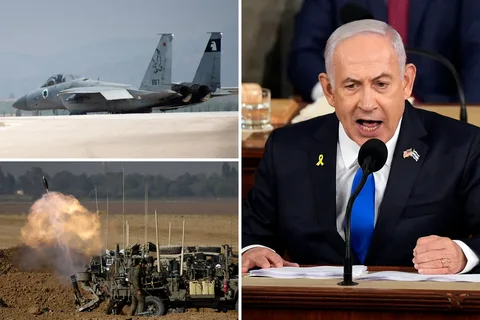
The example of Israel’s actions in Gaza, marked by mass civilian casualties and open defiance of international law, and the near-total silence or complicity of the so-called international community, has sent a clear and dangerous message: power, not law, defines legitimacy. When one state is allowed to violate every norm without consequence, it normalizes lawlessness at the global level. Venezuela’s situation must be understood within this broader erosion of international constraints. The invocation of drug trafficking, human rights abuses, and democratic deficits serves as a rhetorical shield, masking a far more familiar reality: wherever strategic resources exist, humanitarian language follows close behind.
The Monroe Doctrine, far from being a relic of the nineteenth century, remains alive in spirit, now stripped of subtlety and enforced with open coercion. In this context, warnings about a third world war should not be dismissed as hyperbole. Such a war is unlikely to begin with a single declaration or a single battlefield. Instead, it is unfolding incrementally, through sanctions, proxy conflicts, regime-change operations, and selective military interventions aimed at dismantling resistance one state at a time. The message to the world is increasingly explicit: align with Western military and economic strategies or prepare to face isolation, destabilization, and destruction. For countries like Pakistan, this moment demands clarity rather than complacency.
Alignments made without serious public debate, strategic foresight, and democratic accountability risk entangling the country in conflicts that serve external interests rather than national security. Venezuela’s ordeal offers a stark lesson: states rarely fall solely because of foreign tanks; they collapse when internal cohesion erodes, institutions fragment, and loyalty gives way to opportunism. External intervention succeeds most easily where internal decay has already hollowed out sovereignty. The coming days and weeks may indeed prove decisive. Whether the United States succeeds in imposing its will on Venezuela or becomes mired in sustained resistance will have consequences far beyond Latin America.
It will shape the future of global energy control, the credibility of American power, the strategic calculations of China and Russia, and the contours of a rapidly emerging world order. What is becoming unmistakably clear is that the old system, with its claims of rules, norms, and universal values, is crumbling. In its place, a harsher and more openly militarized order is taking shape, one in which survival will depend not on illusions of moral authority but on strategic coherence, internal unity, and the capacity to resist domination.