
(Publish from Houston Texas USA)
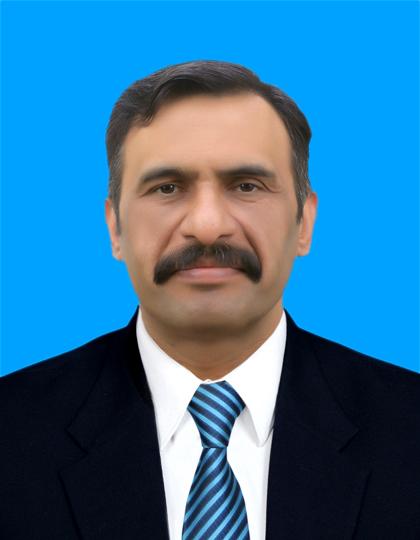
(Writer: Dr. Muhammad Rizwan Bhatti)
Crime is a reflection of society, not an anomaly. Just as each perpetrator incorporates unique social, psychological, and structural elements, every crime has distinct features.
Therefore, in order to comprehend crime, it is necessary to look at broader patterns, including offenders, victims, motivations, settings, and the social circumstances in which crimes take place. In this sense, every crime, whether violent, property-related, or organised, is part of a larger social structure that is moulded by opportunity, inequality, and governance.
Before the development of contemporary technology, Pakistani law enforcement agencies mostly depended on institutional memory, registers, and manual record-keeping. Over time, digitisation and monitoring have enhanced investigative capacity; however, crime itself has become more intricate. The criminal environment today includes murder, robbery, sexual assault, drug trafficking, and public order offences, as well as emerging cyber-enabled crimes. Even so, while technology is essential, it cannot on its own compensate for deeper structural flaws within society.
The persistence of crime is further explained by criminological theory. For instance, Routine Activity Theory suggests that crime occurs when a motivated offender encounters a suitable victim in the absence of sufficient guardianship; a situation common in dense metropolitan areas marked by weak social control. Similarly, Strain Theory holds that social injustice, unemployment, and limited opportunities for mobility generate dissatisfaction, which may result in criminal behaviour. Consequently, in a society where access to justice and opportunity remain unequal, crime becomes both a symptom and a consequence of structural imbalance.
Crime trends are also significantly influenced by age, gender, and socioeconomic status. Violent crimes are committed at a disproportionate rate by young men, often due to peer pressure, hostility, and weak social ties. By contrast, property crimes are frequently associated with economic distress, while organised crime thrives where institutions are weak and enforcement is selective.
In the Pakistani context, patronage structures, familial networks, and tribal ties further complicate crime control by shielding offenders and discouraging victims from reporting crimes or seeking justice.
One of the most serious shortcomings of the criminal justice system lies in crimes of sexual violence against women and children. As feminist criminology explains, patriarchal norms, underreporting, victim-blaming, and procedural insensitivity collectively contribute to the persistence of these crimes. Accordingly, addressing sexual offences requires more than arrests; it necessitates survivor-centred policing, forensic competence, prompt prosecution, digital profiling of sexual offenders, and a broader transformation of social attitudes that normalise shame and silence.
Another major challenge is organised crime, particularly drug trafficking. Criminal networks function like enterprises, exploiting demand, geography, and corruption while rapidly adapting to enforcement pressures. Given its strategic location, Pakistan is especially vulnerable to transnational drug routes. Therefore, intelligence-led policing, financial tracking, and interprovincial coordination are far more effective than sporadic crackdowns that target symptoms rather than underlying structures.
Institutional leadership has also played an equally important role at the provincial level. In particular, Dr. Usman Anwar, Inspector General of Police, Punjab, has implemented a series of measures aimed at restructuring the police department. His initiatives have focused not only on crime reduction but also on enhancing public engagement, improving police welfare, and developing strategies to boost officers’ confidence in the face of increasingly challenging circumstances.
Moreover, through technology-driven surveillance, real-time monitoring, and coordinated response mechanisms, the Punjab Safe Cities Authority, under the leadership of the Managing Director of PSCA, DIG Ahsan Younas, has significantly strengthened both traffic management and crime prevention and detection. Together, these efforts demonstrate how the convergence of welfare, technological innovation, and institutional reform has substantially enhanced Punjab’s operational effectiveness while simultaneously increasing public confidence in law enforcement.
Within this challenging environment, the Faisalabad Region offers a useful illustration of how targeted institutional leadership and operational coherence can produce tangible outcomes. In particular, police performance in 2025 demonstrated measurable improvements under the supervision of Regional Police Officer Sohail Akhtar Sukhera. More than 20,620 cases of theft, robbery, and dacoity were traced, with recoveries exceeding Rs1.684 billion. At the same time, hundreds of murders, kidnapping and sexual violence cases were investigated, while action against organised crime led to the arrest of over 1,300 gang members and the recovery of assets worth more than Rs454 million.
Alongside these efforts, a sustained crackdown on narcotics resulted in thousands of arrests and the seizure of large quantities of heroin, hashish, and ice. Moreover, initiatives aimed at rebuilding public trust, including Meesaq Centres, Tahafuz Centres, Khidmat Markaz, and open courts, helped in resolving tens of thousands of citizen complaints. Taken together, these measures reflect a recognition that legitimacy, accountability, and accessibility are central to effective policing.
Nevertheless, rising crime cannot be attributed solely to deficiencies in police skills. Although gaps exist in forensic investigation, data analytics, and victim handling, the deeper problems lie in fragmented databases, weak inter-agency coordination, and an overburdened criminal justice system. As a result, criminals often evade consequences not because they are not apprehended, but because prosecution is delayed, evidence mishandled, and deterrence weakened by uncertainty.
Ultimately, Pakistan’s crime challenge demands coordinated and integrated national action. A harmonised crime data system across provinces, intelligence-sharing mechanisms, judicial reform, and socio-economic policies addressing inequality, education, and employment are all essential. In this broader framework, policing must be situated within a governance structure that recognises crime as both a social disorder and a law enforcement issue. Without such a balance, policing alone will remain an incomplete answer.
About the Author:
Dr Muhammad Rizwan Bhatti holds a PhD in Political Science and writes regularly on terrorism, counter terrorism, countering violent extremism, and policing affairs. He can be reached at rizwanbh79@gmail.com.