
(Publish from Houston Texas USA)
(By: Asim Siddiqui | Washington, D.C.)
In an era where journalism is no longer confined by national borders and social media has transformed individuals into global broadcasters, public figures operating from abroad face intensified scrutiny. Moeed Pirzada, a Pakistani journalist and political analyst currently based in the United States, represents a prominent example of this evolving reality.
Through his digital platforms, Pirzada has built a substantial audience by consistently—and at times sharply—criticizing Pakistan’s political leadership and state institutions. This approach has earned him both strong support and significant opposition, within Pakistan and among the diaspora. While the digital age has expanded the scope of freedom of expression, it has simultaneously raised serious questions about responsibility, balance, and intent—particularly when criticism of a country is delivered from outside its borders. For many Pakistani viewers, Pirzada’s work has come to symbolize this tension: whether it constitutes reform-oriented critique or contributes to the erosion of institutional credibility.
Residential Fire Incident and Online Reaction
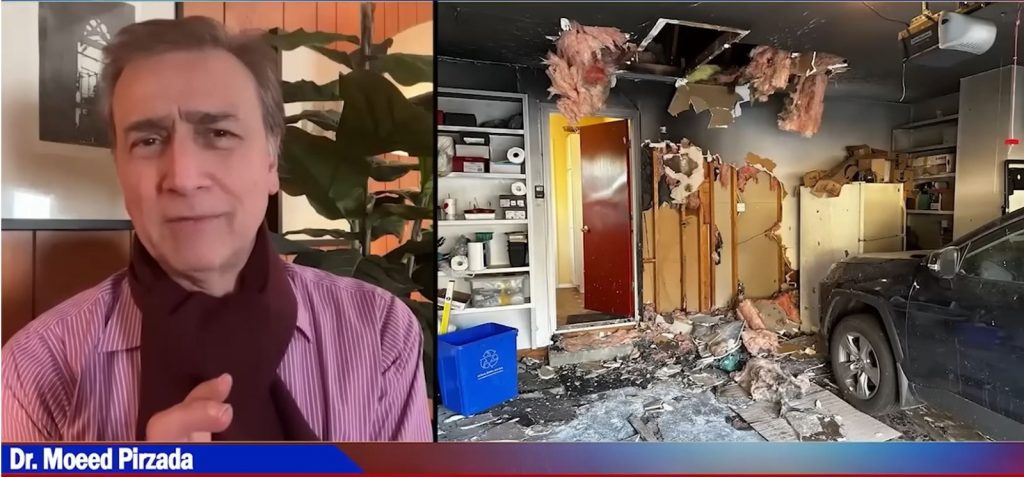
Last week, a fire broke out at Pirzada’s residence in the Potomac area of Maryland. According to Pirzada himself, the fire was limited to the attached car garage and did not spread into the living quarters. Local fire services and neighbors responded promptly, and no injuries were reported.
Subsequently, certain social media narratives attempted to link this incident to broader political or security-related factors. However, to date, no official fire department or law-enforcement report has substantiated any such connection. Based on available information, the incident appears to have been a localized residential accident rather than a targeted or politically motivated act. The episode illustrates how, in today’s social media environment, unrelated personal events can quickly be reframed within political narratives.
Freedom of Expression and Legal Jurisdiction
From a legal standpoint, criticism of Pakistan while residing in the United States falls under U.S. law, where political speech enjoys strong constitutional protection. This protection, however, does not adjudicate the political disputes of other countries; it merely defines the legal framework governing expression within the United States. The ethical and social appropriateness of such commentary remains a matter of public debate rather than legal determination.
Reported Legal Matters: A Contextual Overview
Over recent years, open-source reports have referenced several legal matters involving Pirzada. These issues are politically sensitive, contested, or unresolved and should therefore be approached with caution:
United Arab Emirates (2015): Media reports at the time indicated that Pirzada was detained in Abu Dhabi in connection with alleged fraud related to family property matters. He was later released on bail and permitted to travel. Clear details of a final judicial outcome are not publicly available.
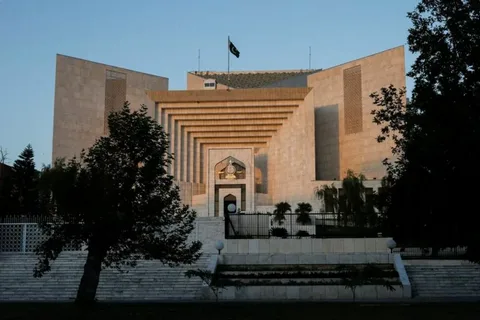
Pakistan (2023–2026, as reported): Following the unrest triggered by the arrest of former Prime Minister Imran Khan in May 2023, Pakistani authorities announced cases against several overseas journalists and commentators, including Pirzada. Due to non-appearance, some were declared absconders. According to Pakistani media, including Dawn News, an Anti-Terrorism Court in Islamabad sentenced Pirzada and others in absentia to two life imprisonment terms in a so-called “digital terrorism” case linked to the May 9 events.
The Importance of Context
The purpose of this article is neither to declare guilt nor innocence, but to distinguish between verified information and speculation—particularly in situations where unrelated incidents are absorbed into political narratives. Locally, for neighbors who assisted during the Potomac incident, the central concern was safety, timely response, and civic responsibility. Globally, the case raises broader questions about press freedom, cross-border accountability, and the ethics of digital influence.
Conclusion
The case of Moeed Pirzada highlights the complexity of modern, borderless political journalism. Fact verification, careful attribution of allegations, and restraint in politicizing unrelated events are essential to maintaining public trust. In an age marked by viral claims and deep polarization, patience and evidence are not only prerequisites for truth, but also for social cohesion.