
(Publish from Houston Texas USA)
(By Asim Siddiqui From Washington DC)
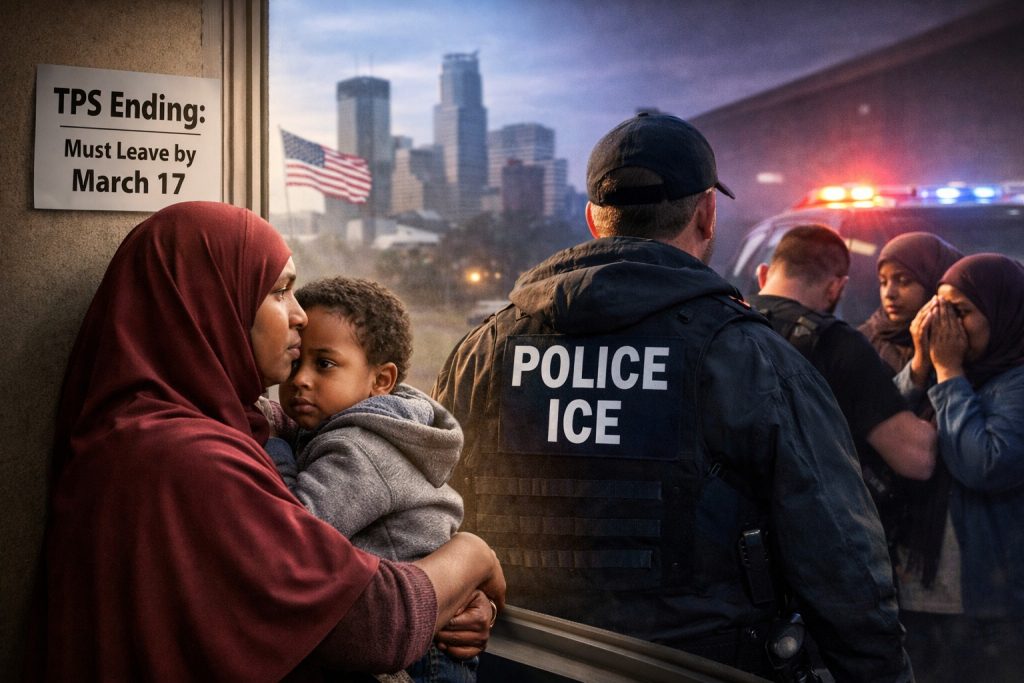
Thousands of Somali nationals living in the United States are facing renewed uncertainty after the Trump administration announced the termination of Temporary Protected Status (TPS) for Somalia, requiring beneficiaries to leave the country by March 17 unless they secure an alternative legal pathway. TPS, a humanitarian designation, was granted to Somalis fleeing decades of conflict and instability. While the administration argues that conditions in Somalia have improved sufficiently to justify ending the program, critics contend that the decision overlooks persistent security challenges and humanitarian risks.
The impact of the move is particularly pronounced in Minnesota, home to the largest Somali-American population in the country. At the same time, the Department of Homeland Security has intensified ICE enforcement operations in the state, citing investigations into immigration violations and high-profile fraud cases. Civil rights advocates warn that the overlap of policy termination and aggressive enforcement risks stigmatizing an entire community for the actions of a few. Supporters of the administration argue that immigration laws must be enforced consistently and that humanitarian programs should not become permanent. Opponents counter that abrupt policy reversals destabilize families, disrupt communities, and undermine America’s long-standing commitment to humanitarian protection. The debate reflects a broader tension in U.S. foreign and domestic policy: the balance between enforcement and compassion, sovereignty and responsibility. As legal challenges proceed and community leaders push back, the outcome will shape not only the future of Somali TPS holders, but also the credibility of America’s humanitarian commitments on the global stage.