(Publish from Houston Texas USA)
(Dr. Muhammad Rizwan Bhatti)
Stretching from the Caspian Sea to China’s western frontier, Central Asia, which includes Kazakhstan, Uzbekistan, Turkmenistan, Kyrgyzstan and Tajikistan, has resurfaced as a strategic crossroads in an era of renewed great power rivalry among USA, Russia and China. More than thirty years after the fall of the Soviet Union, the region is still characterized by weak governance, resilient authoritarian rule and external competition rather than internal political transformation. For Pakistan, therefore, Central Asia is more than just a distant neighbor; it is a test of its capacity to translate geographic proximity and strategic rhetoric into tangible influence.
Central Asian government’s foreign affairs are driven more by regime survival than by ideology. Indeed, the majority have embraced variations of so-called multi-vector diplomacy, aiming to minimize undue reliance on any one power while balancing ties with others. Through military installations, arms sales and institutional frameworks like the Collective Security Treaty Organization (CSTO), Russia continues to be the dominant security provider. Yet, Moscow’s invasion of Ukraine has highlighted the dangers of over-reliance on Russian might and simultaneously undermined its normative authority.
Meanwhile, China has emerged as the most significant economic player in the region and her significant role in Shanghai Cooperation Organization (SCO) is testimony of economic prowess and incremental influence in the CARs. By expanding its infrastructural, energy and connectivity presence through the Belt and Road Initiative (BRI), Beijing provides finance without political conditions. This involvement, in turn, strengthens authoritarian stability while giving Central Asian elites essential economic lifelines. Consequently, the current governance paradigm, which is focused on elite control and patronage networks rather than public accountability is reinforced and incentives for political reform are further diminished.
In contrast, Western involvement has been inconsistent and progressively peripheral. Despite their selective focus on counterterrorism, energy diversification and limited governance support, the United States and the European Union’s influence have diminished due to shifting global priorities and the consequences of Afghanistan. Meanwhile, Iran’s influence remains limited, whereas regional players like Türkiye have increased their cultural and economic connections. Overall, therefore, Central Asian foreign policy reflects careful hedging in an increasingly fractured geopolitical environment.
Domestically, authoritarianism remains pervasive. Kazakhstan and Uzbekistan, for instance, exemplify authoritarian modernization by combining economic development with stringent political control and well-managed leadership changes. Tajikistan relies heavily on networks of patronage and repressive security organizations, while Turkmenistan represents a closed personalist system. Kyrgyzstan, although historically known for populist uprisings, has gradually shifted toward individualized rule and institutional instability.
Elections across the region must be noted, function less as engines of democratic choice and more as tools for regime legitimation. Governance and legitimacy are further threatened by weak rule of law, widespread corruption and a limited civil society. Although demographic shifts and increased internet connectivity are gradually reshaping societal expectations, governing elites remain highly skeptical of political liberalization, frequently citing the threats of instability and external interference.
Considering this, opportunities for democratization remain limited. Structural factors such as rent-based economies, security-focused administration and external support from authoritarian powers have constrained political space. When reforms occur, as in Uzbekistan, they are largely elite-driven and administrative, carefully separated from genuine political plurality.
These considerations are crucial when analyzing Pakistan’s interactions with Central Asia. Despite shared concerns over terrorism, security and development, Islamabad has struggled to convert geographic closeness and rhetorical ambition into sustained influence. Initiatives such as CASA-1000 and the potential northward expansion of CPEC reflect Pakistan’s aspiration to serve as a bridge between South and Central Asia. Yet progress continues to be hampered by instability in Afghanistan and domestic political unrest in Pakistan.
Pakistan is, therefore, not viewed as a strategic anchor by Central Asian republics, but rather as a valuable yet secondary partner. Its appeal lies in offering diversification without overt hegemonic ambitions. However, governance issues and inconsistent regional prioritization limit its credibility. Ironically, Pakistan’s own experience of civil-military imbalance in the past and contested democracy mirrors, rather than counterbalances, the authoritarian forces prevalent in Central Asia.
At this juncture, authoritarian persistence is increasingly rewarded over political change in Central Asia due to great power rivalry. Since China provides capital, Russia provides security and the West vacillates between engagement and retreat, there is little external motivation for democratization. Stability, therefore, has effectively become the currency and trademark of the region.
The lesson for Pakistan is clear. Declaratory diplomacy, transit ambitions or sporadic summits are insufficient approaches to Central Asia. Islamabad must first organize its own affairs politically, economically and institutionally if it hopes to be relevant in this evolving Eurasian order. Only by demonstrating internal stability, policy consistency and economic seriousness can Pakistan legitimately portray itself as a connector rather than a bystander. Otherwise, Central Asia will continue to loom large in Pakistan’s strategic imagination while remaining largely absent from its geopolitical reality.
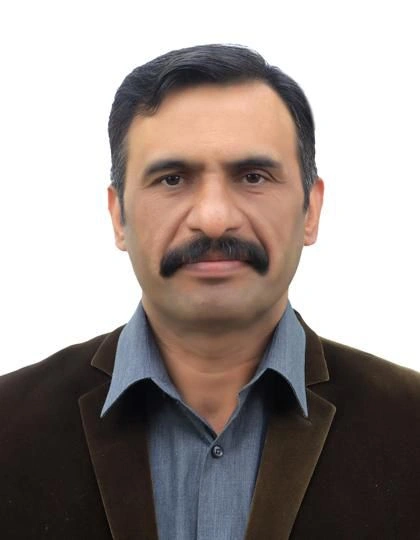
Dr. Muhammad Rizwan Bhatti holds a PhD in Political Science and writes regularly on terrorism, counterterrorism, countering violent extremism, and policing affairs. He can be reached at rizwanbh79@gmail.com.