

(Publish from Houston Texas USA)
(By Mian Iftikhar Ahmad)
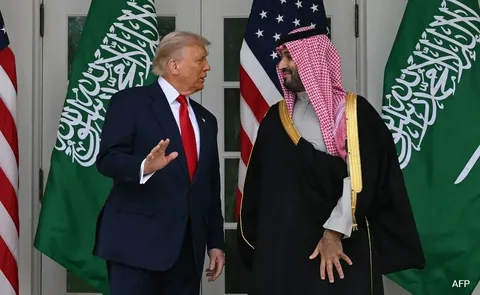
In the twenty-first century, one of the most decisive yet least visibly violent global conflicts is unfolding not on battlefields but within banks, currencies, payment systems, sanctions regimes, and financial trust, a conflict best described as the financial Cold War between the US dollar and the global movement toward de-dollarization, since the end of World War II the United States constructed an international financial order centered on the dollar through the Bretton Woods system, the IMF, the World Bank, and later the SWIFT network, turning the dollar into the backbone of global trade, energy markets, military financing, and sovereign debt, after the Cold War this dominance evolved from economic leadership into a powerful coercive tool, enabling Washington to reward allies and punish defiant states by cutting off access to dollar markets, freezing reserves, and paralyzing banking systems, countries such as Iran, Iraq, Libya, Venezuela, Russia, and increasingly China experienced firsthand how the dollar had transformed from a neutral medium of exchange into a strategic weapon, and it was this realization that planted the seeds of de-dollarization, initially dismissed as political rhetoric or symbolic defiance, de-dollarization gradually emerged as a calculated, long-term strategy aimed not at eliminating the dollar overnight but at reducing its monopoly over the global financial system, China was among the first to grasp the strategic vulnerability of overreliance on the dollar, recognizing that any future confrontation with the United States could expose its economy to severe financial disruption, Beijing responded by internationalizing the yuan through bilateral trade agreements, expanding currency swap lines, increasing gold reserves, developing alternative payment systems, and launching a state-backed digital currency, Russia’s trajectory accelerated dramatically after the Ukraine war when hundreds of billions of dollars in its foreign reserves were frozen, an unprecedented move that sent shockwaves across the Global South and served as a warning that reserves held in dollars or Western institutions were no longer sovereign assets but conditional holdings subject to political approval, Moscow rapidly shifted its energy exports toward ruble and yuan settlements and deepened financial coordination with China and non-Western partners, Iran, long accustomed to sanctions, refined barter trade mechanisms, local currency settlements, and regional financial networks to survive outside the dollar ecosystem, meanwhile BRICS nations intensified discussions around a shared currency framework or at minimum a dollar-independent settlement system, while organizations such as the Shanghai Cooperation Organization and ASEAN experimented with local currency trade arrangements, collectively signaling that de-dollarization had moved beyond ideology into implementation, for the United States this trend represents not merely an economic challenge but a direct threat to national power, because dollar supremacy underwrites America’s ability to sustain massive budget deficits, finance global military deployments, enforce sanctions, and maintain geopolitical leverage without equivalent domestic sacrifice, a decline in dollar demand would raise borrowing costs, constrain fiscal flexibility, and weaken Washington’s capacity to police the global order, this explains why the United States treats de-dollarization as a strategic adversary, deploying sanctions, regulatory pressure, diplomatic coercion, and technological controls to contain China, Russia, and Iran, from cutting Russian banks out of SWIFT to restricting Chinese technology firms and enforcing secondary sanctions on Iranian energy exports, yet this strategy carries a paradox, the more aggressively the dollar is weaponized, the faster global trust in the system erodes, because a financial order based on coercion cannot sustain long-term legitimacy, and trust is the true foundation of any reserve currency, this erosion is increasingly visible as even close US allies quietly diversify reserves, explore non-dollar trade mechanisms, and hedge against financial overdependence, Saudi Arabia’s willingness to consider yuan-based oil transactions with China, Gulf states expanding currency diversification, and African and Latin American economies seeking alternatives to dollar-denominated debt illustrate how the financial Cold War is reshaping global behavior, emerging technologies further accelerate this shift, as blockchain infrastructure, central bank digital currencies, and alternative settlement platforms bypass traditional banking chokepoints, China’s digital yuan, Russia’s digital ruble, and similar initiatives offer future pathways that reduce reliance on Western-controlled financial arteries, still it would be inaccurate to declare the imminent collapse of the dollar, the dollar remains dominant in global reserves, trade invoicing, and capital markets, supported by the size of the US economy, deep financial liquidity, institutional strength, and military reach, history however suggests that no currency retains supremacy indefinitely, just as the British pound gradually ceded its global role, the dollar too faces a slow structural decline rather than a sudden collapse, de-dollarization therefore should be understood not as the destruction of the dollar but the dismantling of its exclusivity, paving the way for a multipolar monetary system where power is dispersed rather than concentrated, the danger within this transition lies in instability, as fragmented financial systems may trigger volatility, capital flight, and regional crises, with developing countries often bearing the heaviest costs, states like Pakistan face a critical strategic choice, whether to remain passively tethered to a single currency order or to pursue balanced financial diversification, regional trade integration, and monetary resilience, because future conflicts will not be decided solely by armies but by control over currencies, payment networks, and digital finance, the contest between the dollar and de-dollarization is ultimately a contest over the future architecture of global power, signaling the birth of a new world order in which financial dominance is contested, alliances are redefined, and economic sovereignty becomes the new battleground, the question is no longer whether this financial Cold War exists, but which nations are prepared to navigate it and which will be left exposed as history advances without mercy.