
(Publish from Houston Texas USA)
(By: Faheem Akhond, President JKAAH)
A national news briefing reveals a country at a tipping point, where aggressive federal immigration enforcement is being met with an unprecedented, organized, and deeply personal pushback from American communities.
A palpable sense of crisis and resolve marked a national news briefing hosted by American Community Media on January 23, 2026. Journalists and community leaders gathered to dissect a volatile new phase in U.S. immigration enforcement, one that organizers on the ground describe as more confrontational and violent than ever before. The discussion painted a picture of a nation grappling with its conscience, as aggressive federal tactics ignite fear, spark outrage, and galvanize a powerful, multi-faceted resistance movement spreading across cities from coast to coast.
The briefing, “As Risks Escalate, Wave of Community Resistance to ICE Enforcement Spreads,” brought together frontline organizers, legal experts, and national policy analysts to provide context for a conflict that has moved from the border to the heart of American cities. The dialogue made it clear that the fight is no longer confined to immigrant communities but has become a defining struggle over constitutional rights, public safety, and the very character of the nation.
Keynote Speakers
The briefing featured a panel of experts and activists, each providing a unique and critical perspective on the unfolding crisis.

Amanda Otero | Co-Executive Director, Take Action Minnesota A parent from the Minnesota Public Schools, Otero is on the ground in Minneapolis, organizing community-led initiatives to protect families and students. Her work involves building “Sanctuary School” networks and mutual aid programs, placing her at the forefront of the grassroots response to heightened ICE activity.

Seri Lee | Deputy Organizing Director, ONE Northside A community organizer from a working-class, mixed-status household in Chicago, Lee brings personal experience to their work in the immigrant, racial, and labor justice movements. They have been instrumental in developing Chicago’s community defense strategies, including “ICE Watch” and corporate accountability campaigns, and are now sharing those lessons with other cities. (Note: Seri Lee spoke in place of Nellie Moreno, who was originally scheduled).

Vanessa Cárdenas | Executive Director, America’s Voice An experienced political strategist and policy expert on immigration, Cárdenas provides a national vantage point on the political and social dynamics at play. A former teacher’s assistant and an immigrant from Bolivia, she has worked with numerous progressive organizations, including the Biden for President campaign and the Center for American Progress, giving her deep insight into polling, policy, and the shifting American electorate.

Ann Garcia | Senior Staff Attorney, National Immigration Project As a lawyer for the movement, Garcia’s work is focused on defending the constitutional rights of communities targeted by immigration enforcement. With a background in deportation defense and freeing immigrants from detention, she is deeply involved in the legal battles against ICE overreach, including lawsuits challenging unlawful arrests and the use of force against protestors.
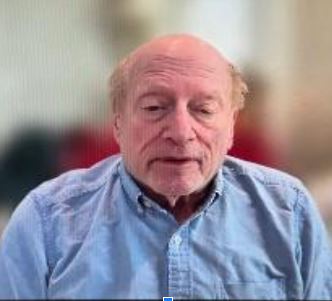
Mark Tushnet | Professor of Law, Emeritus, Harvard Law School A leading constitutional law scholar who once clerked for Supreme Court Justice Thurgood Marshall, Professor Tushnet offers a profound historical and legal perspective. His expertise in constitutional history, particularly the development of civil rights law, allows him to draw parallels between the current moment and past struggles for justice in the United States, such as the resistance to the Fugitive Slave Act.
The View from the Frontlines: A Tale of Two Cities
The human cost of the escalating enforcement was brought into sharp focus by organizers from Minneapolis and Chicago, two cities that have become epicenters of the clash.
Amanda Otero described a city living in a state of siege. “We’re daily witnessing just horrific acts in our communities, in our neighborhoods, at our schools,” she stated. The situation reached a flashpoint with the killing of Renee Nicole Goode, a U.S. citizen and public-school parent, during a protest against ICE activity. Otero shared a chilling anecdote of parents and teachers watching federal agents deploy tear gas just a block from her child’s preschool, only for Goode to be killed the very next day.
Yet, out of this fear, an extraordinary community response has emerged. Otero spoke of an “incredible love for our people and our communities, as well as incredible courage.” She detailed the “Sanctuary School” movement, a three-pronged strategy to protect families:
- Patrolling schools to ensure children can arrive and leave safely.
- Mutual aid networks of thousands of volunteers providing groceries, rides, and rent assistance to families afraid to leave their homes.
- Organizing politically to demand that ICE leave Minnesota entirely.
This sentiment was echoed by Seri Lee, who was on the ground in Minneapolis to learn from their experience. Lee recounted Chicago’s own battle during “Operation Midway Blitz,” where hundreds of ICE agents were deployed. “I had never seen the city more united and powerfully acting together than what I’d seen last fall,” Lee said. Their strategies in Chicago, learned from networks in California and D.C., mirrored those in Minneapolis, focusing on:
- Education: Mass “Know Your Rights” trainings.
- Community Defense: “ICE Watch” networks that evolved from Copwatch programs to document and respond to agent activity.
- Mutual Aid: A robust system of over 700 volunteers supporting neighbors.
- Offensive Action: Organizing protests to impose economic costs on corporations like AT&T for their contracts with ICE and DHS.
A National Perspective: Shifting Politics and Eroding Laws
The events on the ground are having a profound ripple effect on the national stage, challenging both political norms and the rule of law.
Vanessa Cárdenas framed the killing of Renee Goode as a “galvanizing moment” that proves “the attacks on immigrants are the tip of the spear on attacks on all Americans.” She pointed to a notable shift in public opinion, with polls now showing that a majority of Americans, including 60% of independents, believe ICE has gone too far. However, she offered a crucial caveat: this disapproval doesn’t translate to trust in Democrats on border security, where Republicans still hold an advantage. Cárdenas also highlighted the unprecedented scale of the federal presence, noting the deployment of nearly 3,000 ICE and Border Patrol agents to Minneapolis was the largest in U.S. history.
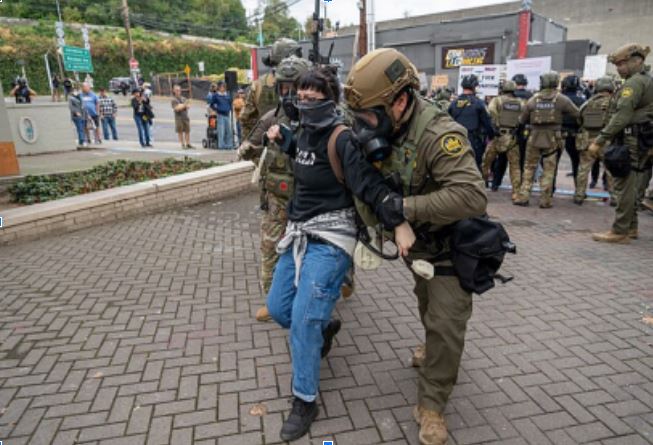
The legal foundations of American rights are also under assault, according to Ann Garcia. She detailed how legal challenges are being mounted against ICE’s tactics, citing the Tincher v. Gnome class-action lawsuit in Minnesota. In that case, peaceful protestors and legal observers were pepper-sprayed, violently arrested, and intimidated. While a district court judge issued an injunction to stop these actions, the Eighth Circuit Court of Appeals blocked it with a terse, one-sentence order, a move Garcia says is indicative of a politicized federal judiciary.
Garcia also addressed the deep concerns over a leaked ICE memo that reportedly authorizes agents to enter private homes with only administrative warrants, not judicial ones. “There’s nothing legal about this ICE policy,” she stated unequivocally. “The law is extremely clear on this point. Only a judicially authorized warrant is valid to enter a home.”
Adding a sweeping historical context, Mark Tushnet drew a powerful parallel to the resistance against the Fugitive Slave Act of 1850. He explained that while court cases against the act were largely unsuccessful, the public resistance and street actions galvanized the abolitionist movement in the North. “What they did do was… they galvanized public opinion,” Tushnet said, quoting a contemporary who said, “We went to bed indifferent to slavery… and we woke up as violent abolitionists.” His message was clear: real change comes not from the courts alone, but from the will of the people. “Don’t count on the courts,” he advised. “Go to the streets and the courts will follow.”
Conclusion: A Battle for the Soul of a Nation
The briefing concluded not with a sense of despair, but with a call to action rooted in a clear-eyed understanding of the stakes. The panelists collectively painted a picture of a nation at a crossroads, where the rule of law is being tested, and the bonds of community are being forged in the crucible of resistance.
The key takeaway was that this is no longer a fringe issue but a central question of American identity. The speakers emphasized that while legal battles are crucial, the ultimate power for change resides with the people. The path forward, they argued, lies in sustained, non-violent resistance, the building of broad coalitions that cross political and demographic lines, and the powerful act of sharing the human stories behind the headlines. As Vanessa Cárdenas warned, “Our democracy is on the line.” The message from the frontlines and the experts was unanimous: this is a battle for the soul of the nation, and it will be won not just in courtrooms, but in the streets, in communities, and in the hearts and minds of the American people.