(Publish from Houston Texas USA)
(Mian Iftikhar Ahmed)
Rising tensions in the Strait of Hormuz threaten global oil supply as Iran warns of attacks on ships and Trump proposes a risky US Navy escort plan.
The Strait of Hormuz, considered the backbone of global energy, has today transformed into such a dangerous geopolitical front where all past predictions seem meaningless. Iran has adopted such a strategy on this crucial waterway that experts are calling a deadly trap for Donald Trump. The Iranian Revolutionary Guards claim that they have complete control over this route and have openly threatened to target ships.
As a result of this tension, the movement of ships in this corridor, through which approximately twenty percent of the world’s oil and gas is transported, has decreased by ninety percent, while insurance companies have increased premiums by one hundred percent or have canceled coverage. Trump has proposed a plan to provide American government insurance to commercial ships and escort them through the Strait of Hormuz with the US Navy, but according to experts, this will bring American forces closer to Iran’s missiles, drones, and submarines, which could be politically disastrous for Trump.
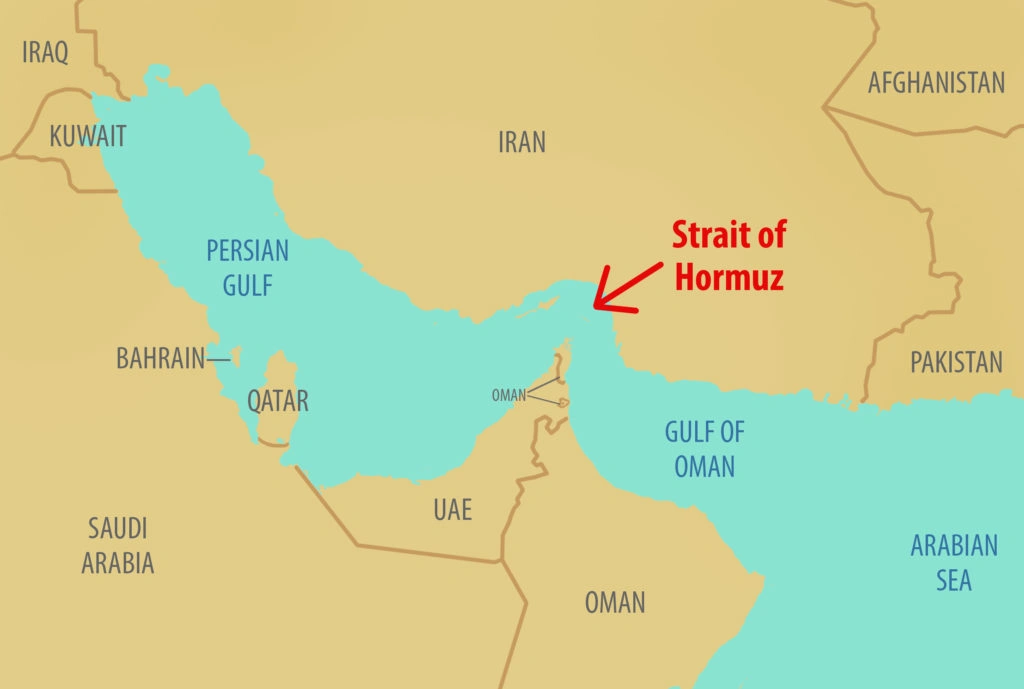
Understanding the geographical and strategic importance of the Strait of Hormuz clarifies the background of this entire crisis. This strait, which at its narrowest point is only twenty-four miles or approximately thirty-nine kilometers wide, is the only route connecting the Persian Gulf to global markets. The oil and gas of Iraq, Kuwait, Bahrain, Qatar, Saudi Arabia, and the United Arab Emirates reach the world through this very route. Approximately fifteen million barrels of crude oil, five million barrels of refined products, and about three hundred and eleven million cubic meters of gas pass through this strait daily. These figures indicate that this is not just a regional waterway but the lifeline of the global economy. Existing pipelines can only transfer one-third of this quantity through alternative routes, making this path irreplaceable. Iran’s geographical position gives it the power to challenge this route at any time, and the Revolutionary Guards have been preparing for this scenario for years.
The Iranian Revolutionary Guards have sent a clear message that they will not allow any ship to pass through the Strait of Hormuz. Ebrahim Jabari, a senior advisor to the commander of the Revolutionary Guards, announced on state television that this waterway is closed and naval forces will set fire to any ship that attempts to pass. He said that we will not allow oil to be exported from the region. Another Iranian Brigadier General, Ebrahim Jabari, emphatically stated that Tehran will not allow a single drop of oil to leave the region. Subsequently, a senior naval official of the Revolutionary Guards, Mohammad Akbarzadeh, announced that the Strait of Hormuz is under the complete control of the Islamic Republic’s navy and warned that ships passing through this waterway could be targeted by missiles or drones in view of the increasing regional tension. These statements are not just verbal claims but practical steps have also been observed. According to Iranian media, the Revolutionary Guards naval forces targeted an American oil tanker in the northern Persian Gulf with a missile, causing a fire on the ship.
The impact of this increasing tension has been seen immediately and clearly on global markets. Oil prices, which were previously around seventy dollars per barrel, have increased to eighty-one to eighty-two dollars per barrel. Brent crude oil prices have increased by more than thirteen percent, which is the highest level since July 2024. Experts say that if tension continues, prices could reach ninety dollars or even higher, and in the worst-case scenario, they could reach one hundred and thirty dollars per barrel. A sharp increase in gas prices has also been seen in Europe. After the temporary suspension of Qatari LNG production, prices increased by approximately seventy percent. A country like Japan, which depends on the Middle East for ninety percent of its needs, could be severely affected by this crisis. Experts estimate that a prolonged blockade of the Strait of Hormuz could cause a three percent decrease in Japan’s GDP.
During this crisis, the insurance industry has also shown its reaction. Maritime insurance premiums have increased by up to one hundred percent, and according to several brokerage firms, an increase of fifty to one hundred percent in the cost of new coverage is expected. The data on the reduction in traffic is also astonishing. Tanker traffic in the Strait of Hormuz has dropped by ninety percent, and the movement of commercial ships has effectively stopped. Approximately five hundred ships, representing about one percent of global shipping tonnage, are waiting off the coasts of the United Arab Emirates and Oman outside the Persian Gulf. Renowned shipping firms Maersk and MSC have also suspended transit through this strait.
The Trump administration has proposed a bold but dangerous plan to deal with this situation. Trump has announced that the US Navy is ready to escort commercial ships through the Strait of Hormuz and will escort the tankers. He wrote on the social media platform Truth Social that the US Navy will soon start escorting tankers through the Strait of Hormuz and that under no circumstances will America allow disruption in the free flow of energy in the world. However, according to experts, this plan will bring American forces closer to Iran’s missiles, drones, and submarines. Iran has approximately seventeen submarines in Bandar Abbas and is increasing its power with Chinese CM-302 supersonic anti-ship missiles. Experts say that if even one American ship is damaged, it could become a very disastrous situation for Trump in American politics because it would affect both his military power and political image.
In this context, defense analysts have also presented four possible scenarios that could emerge in case of the closure of the Strait of Hormuz. In the first scenario, Iran imposes a blockade, causing oil prices to rise above ninety dollars per barrel and significantly reducing the exports of Iraq, Kuwait, Bahrain, Qatar, the UAE, and Saudi Arabia. Analysts at CSIS believe that it would take coalition forces only a few weeks to eliminate the threat and restore traffic. In the second scenario, Iran not only stops oil shipments but also attacks the oil and gas infrastructure in Arab countries. Port terminals could be targeted, affecting export capacity for months, and prices could rise above one hundred and thirty dollars per barrel. In the third scenario, Iran does not block Gulf exports, but America imposes a Venezuela-like blockade against Iran. Iran exports approximately one point six million barrels of oil daily to China, and preventing this would increase global demand, which could increase prices by ten to twelve dollars per barrel. In the fourth scenario, America targets Iran’s oil infrastructure during airstrikes, which could remove Iranian oil from global markets for a long time, and prices could rise above one hundred dollars per barrel.
During this crisis, American forces have also suffered human casualties. US Central Command confirmed that six American personnel were killed in this increasing tension. These deaths occurred in Iran’s initial retaliatory attacks, which also targeted a temporary operations center at Kuwait’s Shuaiba port. On the other hand, the Iranian Red Crescent says that at least five hundred and fifty-five people have been killed in Iran, while at least eleven people have been killed in Israel. Iranian missile and drone attacks targeted Israeli territory and American military assets throughout the Middle East. Following this retaliation, Hezbollah also carried out rocket and drone attacks on northern Israel, in response to which Israeli forces carried out air and naval attacks on Hezbollah positions in Beirut and southern Lebanon, in which at least fifty-two people were killed.
Global Economic Impact of the Strait of Hormuz Crisis
The economic effects of this war are not limited to oil and gas markets alone, but they can affect the global economy on a wide scale. Countries like Pakistan, which depend on the Strait of Hormuz for their energy needs, are looking for alternative routes. Pakistan has asked Saudi Arabia to ensure oil shipments through the port of Yanbu. Europe and Asia face the risks of increased inflation and recession, while America is relatively safe due to shale production. However, experts say that energy shocks do not respect borders, and a financial crisis, currency fluctuation, and capital flight can also affect the American economy.
Against the backdrop of this entire crisis, several analysts are raising the question of whether the Trump administration has correctly assessed the possible consequences of this war. According to an analysis published in the Small Wars journal, this military campaign represents a dangerous escalation of tension and contradicts America’s own intelligence reports. President Trump termed these actions necessary to deal with the Iranian missile threat, but according to a report by the Defense Intelligence Agency dated February 5, 2025, Iran can develop intercontinental ballistic missiles by 2035, and that too only if Tehran decides to acquire this capability. Current intelligence does not indicate any active Iranian ICBM program targeting America.
Historical evidence suggests that air campaigns and precision strikes have had a very low success rate in regime change. America spent more than seven billion dollars on bombing Yemen during the presidencies of Biden and Trump but failed to expel the Houthis. Regime change in Iran will be far more complicated than in Iraq and Afghanistan because Iran’s area is approximately six times larger than Iraq and twice the combined area of Iraq and Afghanistan. A population of over ninety million is twice the population of California, presenting military, political, and logistical challenges. Experts say that for regime change, several conditions are necessary, including elite support, a credible civilian and military opposition, and defections in the senior and general military leadership, and currently, none of these elements exist in Iran.
Ali Vaez, Director of the Iran Project at the International Crisis Group, clarified this fact, saying that history shows that external invasion usually strengthens governments, does not eliminate them. Air power alone cannot create political alternatives or regime change. If Trump’s gamble fails, its loss will not be limited to Tehran or the Persian Gulf but will manifest as energy shortages in European factories, rising costs at Asian ports, and high fuel and food prices in American households.
This crisis in the Strait of Hormuz is not just a regional conflict but an important turning point for global energy security and the future of international trade. The strategy proposed by Trump, although seemingly bold, experts are calling it synonymous with falling into the Iranian trap. Iran has the technical capability to block this strait and has been preparing for this scenario for years. Any incident on this route, through which twenty percent of the world’s oil is transported, can severely damage the global economy. Oil prices have already risen to dangerous levels, and experts believe that if tension continues, they could even exceed one hundred dollars per barrel. In such a situation, America, along with all countries, could face inflation and recession.
The solution to this crisis probably lies in diplomacy rather than military power, but in the current situation, due to the tough stance adopted by both sides, no immediate solution is in sight. Iran has demanded from the UN Security Council that it condemn American and Israeli attacks, while Trump has not ruled out sending ground forces. This situation indicates that tension may increase further in the coming days, which could have disastrous consequences for the global economy. The trap that the Telegraph report pointed to has now emerged in its complete form and it remains to be seen how the Trump administration gets out of it and how the international community resolves this crisis with minimal loss.
For more reading please visit our Articles.