
(Publish from Houston Texas USA)
(By Mian Iftikhar Ahmad)
Israel interceptor missile shortage concerns rise as Iran attacks strain defense systems, officials deny claims
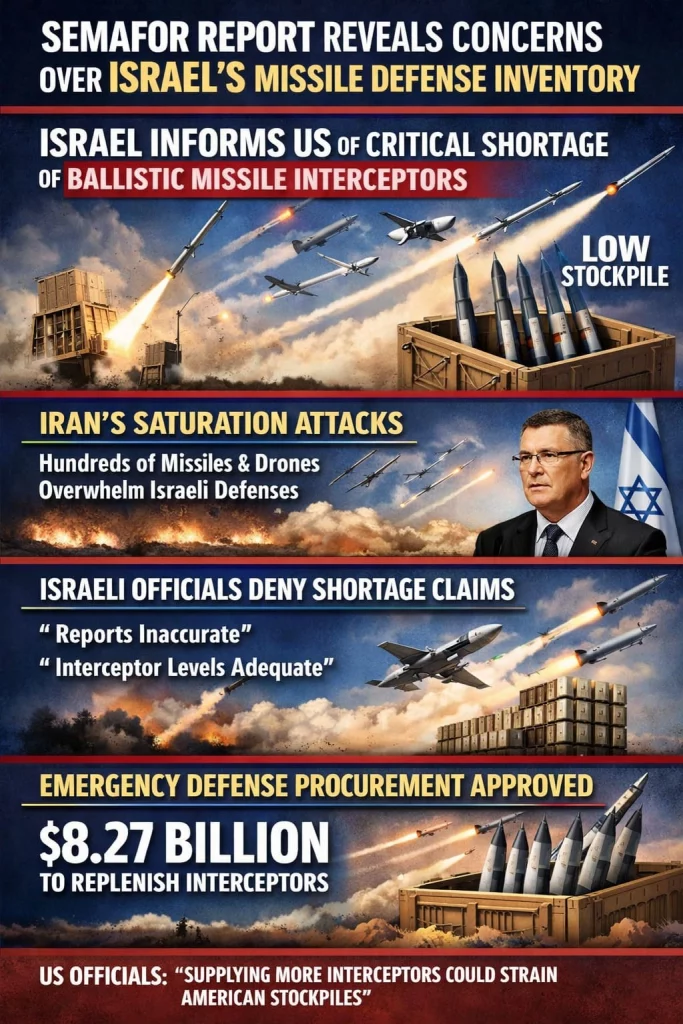
According to a report by the international news outlet Semafor, Israel has informed the United States that its stockpile of ballistic missile interceptors has dwindled to critically low levels amid ongoing hostilities with Iran. The report, citing unnamed US officials, stated that Israel entered the current confrontation with reduced inventories after expending a large number of interceptors during a twelve-day war with Iran last year. The report indicates that Iran has employed saturation attack tactics, launching hundreds of missiles and drones simultaneously to overwhelm and exhaust Israeli systems such as the Iron Dome and David’s Sling. Experts suggest that Iran’s strategy has been largely successful, placing significant strain on Israel’s expensive defense network. A report from the Wall Street Journal noted that Iran identified vulnerabilities in Israeli defenses through continuous testing during the twelve-day war. US officials acknowledged that providing additional interceptors to Israel could put pressure on American stockpiles. However, the United States has clarified that it does not face a shortage of its own interceptors and maintains the capability to protect its assets and interests in the region.
Israeli Officials Deny Reports of interceptor missile Shortage
Israeli Foreign Minister Gideon Sa’ar has rejected the reports, stating that claims of an interceptor shortage are inaccurate. An unnamed Israeli military official also dismissed the assertions, maintaining that the military possesses adequate stocks of all types of Israel interceptor missile and that the number used so far has been lower than anticipated. Israeli officials have suggested that the news may be deliberately disseminated by Iran or its allies. According to the International Institute for Strategic Studies, the exact number of interceptors Israel possesses and their success rate remain officially classified information. The institute notes that Israel’s defense architecture does not rely solely on interceptors and is supported by US THAAD batteries and Aegis-equipped naval vessels.
Israel Approves Emergency Defense Procurement to Replenish Stocks
Reports from Republic Dot Com indicate that Israel has recently approved $8.27 billion in emergency defense procurement, a clear effort to replenish its weapons inventories. Experts point out that while Israel has fighter aircraft capable of intercepting projectiles, interceptors remain the most effective defense against long-range ballistic missiles. US officials state they have been aware of the situation for months and had anticipated it, emphasizing that this is not a sudden crisis. However, they have also acknowledged that supplying interceptors to Israel could strain US reserves, and it remains unclear whether further interceptors will be provided.
For more information please visit our International news.