US-Israel War on Iran: How Conflict May Strengthen the Islamic Republic
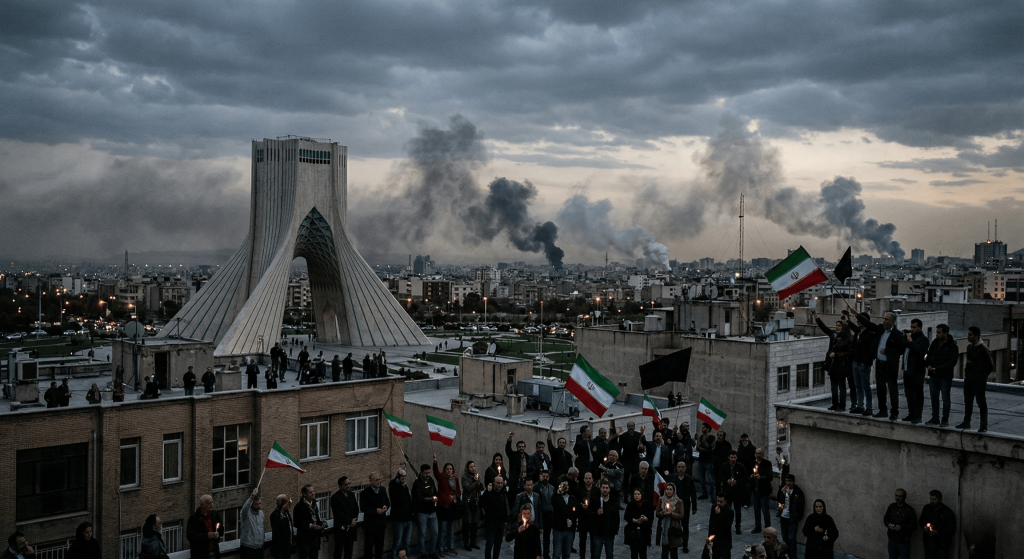
Opinion | Middle East – The US-Israel war on Iran is often framed through military metrics such as deterrence, escalation, and strike capabilities. But this perspective misses a deeper reality.
To understand Iran’s resilience, one must look beyond strategy and into the ideological and moral framework that shapes the Islamic Republic’s response to war.
War Beyond Weapons: The Power of Narrative
Wars are not fought with weapons alone. They are also shaped by belief systems, narratives, and collective identity.
In Iran’s case, the state draws heavily on a Shia political theology rooted in:
- Martyrdom
- Sacrifice
- Sacred resistance
This ideological framework transforms loss into meaning and suffering into legitimacy.
Martyrdom as a Political Force
Following the reported assassination of Supreme Leader Ayatollah Ali Khamenei, state-backed mourning ceremonies have intensified across Iran.
Among loyalist groups, particularly the Basij paramilitary, there is a strong belief in martyrdom as a form of devotion and resistance.
This belief system does not make the state invincible. Instead, it creates a more complex reality where external attacks can reinforce internal unity.
The Legacy of Karbala and Sacred Resistance
The ideological roots of Iran’s resilience can be traced back to the Battle of Karbala (680 AD).
In Shia tradition, this event symbolizes:
- Resistance against ظلم (oppression)
- Moral victory despite physical defeat
- Sacrifice as a path to truth
The Islamic Republic has long used this narrative to frame itself as a victim of global injustice and a defender of sacred values.
War as a Tool of Internal Cohesion
External conflict often reshapes domestic politics.
In peacetime, internal weaknesses such as:
- Corruption
- Economic decline
- Political repression
become more visible.
However, during war, especially under foreign attack, the state can reposition itself as a defender of national sovereignty, reducing internal dissent.
Strategy of Endurance and Attrition
Iran’s current approach appears to focus on:
- Long-term endurance
- Strategic patience
- Outlasting adversaries
This mirrors its experience during the Iran-Iraq war, where survival itself became a form of victory despite heavy losses.
A Divided Society, Yet a United Response
Not all Iranians support the Islamic Republic. Many remain critical of its policies and governance.
However, external attacks can blur internal divisions. Even critics may react with:
- Nationalism
- Fear
- Opposition to foreign intervention
This dynamic can unintentionally strengthen the state’s position.
Analysis: A War That May Backfire Strategically
The US-Israel strategy aims to weaken Iran militarily and politically.
Yet, by feeding into Iran’s ideological framework, the war risks:
- Reinforcing state narratives
- Increasing internal cohesion
- Prolonging resistance
This creates a paradox where external pressure may produce the opposite of its intended effect.
FAQs
Why could the Iran war strengthen the Islamic Republic?
Because it reinforces narratives of martyrdom, resistance, and external oppression, which are central to the regime’s ideology.
What is the role of martyrdom in Iran’s politics?
Martyrdom is a key ideological concept that legitimizes sacrifice and strengthens internal unity during conflict.
What is the significance of Karbala in this context?
Karbala represents resistance and moral victory, shaping Iran’s political and religious worldview.
Q4: Does all of Iran support the government?
No, but external conflict can reduce internal dissent and create temporary unity.