
US Iran Conflict Trust Becomes the War’s Greatest Casualty
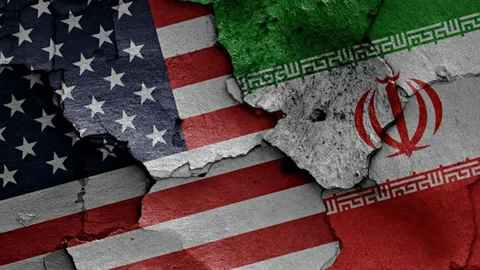
In every conflict there are visible casualties measured in lives lost infrastructure destroyed and economies shattered. But the US Iran conflict trust damage may ultimately prove to be the most enduring and consequential casualty of a war that has now entered its fifth devastating week. The US Iran conflict trust that once made diplomatic solutions possible however fragile and distant has been systematically destroyed by a bombing campaign whose scale brutality and targeting choices have made the very concept of negotiated settlement feel almost impossible to the Iranian side. Understanding the US Iran conflict trust collapse requires examining not just what has been bombed but what those bombings have communicated about American intentions values and reliability as a negotiating partner.
Background: US Iran Conflict Trust Through History
The US-Iran conflict explained in its full historical context begins not in 2026 but in 1953 when American and British intelligence services orchestrated the overthrow of Iran’s democratically elected Prime Minister Mohammad Mosaddegh installing the Shah whose authoritarian rule generated the revolutionary pressure that produced the Islamic Republic in 1979. The US-Iran conflict explained properly must acknowledge that Iranian distrust of American intentions is not paranoia but the product of lived historical experience of American interference in Iranian political life.
Iran and US relations today cannot be understood without this historical context. The 1979 hostage crisis the American support for Saddam Hussein during the Iran-Iraq war of the 1980s the 1988 shooting down of Iran Air Flight 655 killing 290 civilians the decades of sanctions and the repeated cycles of nuclear diplomacy followed by American withdrawal from agreed frameworks have all contributed to a bilateral relationship defined by deep mutual suspicion in which US Iran conflict trust has always been fragile and conditional.
The US foreign aid to Iran by year record is essentially non-existent for the post-revolutionary period reflecting a bilateral relationship that has operated almost entirely through pressure coercion and conflict rather than through the constructive engagement that genuine trust-building requires. Where other adversarial relationships have been managed through a combination of confrontation and cooperation the Iran and US relations today picture is one of almost unbroken mutual hostility that has left no reservoir of US Iran conflict trust to draw on when crisis erupts.
Details: How the Bombing Campaign Destroyed US Iran Conflict Trust
The US-Iran conflict explained in terms of its trust-destroying dimensions requires examining the specific targeting choices of the American and Israeli military campaign that began on February 28 2026. The bombing of schools universities hospitals cultural heritage sites and civilian neighbourhoods has communicated to Iranian society a message about American values and intentions that no amount of diplomatic language can easily reverse.
When the first day of the war saw a precision strike destroy an elementary school in Minab killing at least 150 schoolgirls the US Iran conflict trust damage went beyond the political and institutional to the deeply human. The Iran and US relations today reality is shaped by a population that watched their children die in American airstrikes and that will carry that knowledge into every future interaction between the two nations regardless of what governments eventually agree at negotiating tables.
The US-Iran conflict explained from an Iranian perspective is a story of systematic destruction in which over 600 schools 32 medical facilities and 56 cultural heritage sites have been damaged or destroyed. US foreign aid to Iran by year figures from previous decades when limited engagement occurred stand in grotesque contrast to the current reality of American bombs falling on Iranian hospitals and universities creating a US Iran conflict trust deficit that future administrations will struggle to address.
Iran and US Relations Today After the Bombing
Iran and US relations today represent perhaps the lowest point in a bilateral relationship that has never been characterised by warmth or genuine partnership. The Iran and US relations today dynamic is defined by active military conflict on one side and Iranian retaliation through missiles drones and proxy forces on the other creating a cycle of violence that has claimed thousands of lives and shows no sign of reaching a natural conclusion.
Iran and US relations today are further complicated by the assassination of Iran’s Supreme Leader in the opening strikes of the conflict a targeting decision that eliminated any possibility of the kind of back-channel communication that has historically provided a safety valve in bilateral crises. Iran and US relations today therefore lack even the minimal institutional connections needed to prevent miscalculation and escalation from spiralling beyond either side’s capacity to control.
The US Iran conflict trust that might have enabled diplomatic communication has been replaced by Iran and US relations today characterised by public maximalist demands from both sides that leave no obvious space for the face-saving compromises that conflict resolution requires. Iran’s five-point peace plan presented through Pakistani intermediaries has been dismissed by Washington as ridiculous while American demands for Iranian capitulation have been rejected with equal contempt by Tehran.
US-Iran Conflict Explained: The Trust Architecture That Failed
The US-Iran conflict explained in terms of its diplomatic architecture reveals a series of failed trust-building initiatives that make the current catastrophe comprehensible if not inevitable. The 2015 Joint Comprehensive Plan of Action represented the most serious attempt to build US Iran conflict trust through a framework of verified compliance and graduated sanctions relief that required both sides to accept constraints on their preferred behaviour.
American withdrawal from the JCPOA in 2018 destroyed whatever US Iran conflict trust the agreement had managed to build demonstrating to Iranian policymakers that American commitments are contingent on domestic political calculations rather than binding on successive administrations. The US-Iran conflict explained properly must acknowledge that this withdrawal fundamentally altered Iranian strategic calculations making the current war more likely by eliminating the diplomatic framework within which tensions might otherwise have been managed.
US Foreign Aid to Iran by Year and the Economic Dimension
The US foreign aid to Iran by year record reflects the almost total absence of constructive economic engagement between the two countries that might have created the mutual dependencies and interests that reduce the likelihood of military conflict. Unlike relationships where US foreign aid to Iran by year figures reflect genuine investment in bilateral cooperation and human development the Iran-US bilateral relationship has operated almost entirely through sanctions pressure and confrontation.
US foreign aid to Iran by year from the pre-revolutionary period when American investment in Iran was substantial stands as a reminder that the relationship has not always been defined by hostility and that genuine engagement is historically possible. The US foreign aid to Iran by year trajectory from the 1979 revolution to the present day traces a relationship that has moved in the opposite direction from engagement toward ever-deeper confrontation culminating in the current military conflict.
Expert Quotes on US Iran Conflict Trust
Diplomatic historians examining the US Iran conflict trust collapse have described the current war as the predictable endpoint of a decades-long failure to build the institutional relationships and mutual understanding that prevent conflicts from becoming wars. Experts stated that the Iran and US relations today catastrophe reflects the consequences of treating diplomatic engagement as weakness rather than as the essential infrastructure of crisis prevention.
Former nuclear negotiators familiar with the US-Iran conflict explained the trust dimensions of the current crisis by noting that the bombing of civilian infrastructure including schools hospitals and cultural sites has communicated a message about American values that will make any future Iranian government deeply reluctant to enter binding agreements with Washington regardless of what formal security guarantees might be offered.
Strategic analysts assessing the US foreign aid to Iran by year record alongside the military conflict noted that the complete absence of constructive economic engagement between the two countries had left no commercial relationships or shared interests that might have provided a moderating influence on the conflict’s escalation. The contrast between the US foreign aid to Iran by year picture and the current bombing campaign illustrates how completely the bilateral relationship has been consumed by confrontation.
Impact of US Iran Conflict Trust Collapse on Regional Security
The US Iran conflict trust destruction has profound implications for regional security that extend far beyond the immediate military conflict. Iran and US relations today define the security environment for every nation in the Middle East with regional actors forced to calculate their positions in a conflict whose outcome and duration remain deeply uncertain.
The US-Iran conflict explained in terms of its regional impact reveals a war that has simultaneously destabilised Lebanon through renewed Israeli military operations escalated tensions across Gulf states hosting American forces and driven oil prices to crisis levels that are damaging economies worldwide. The US Iran conflict trust collapse has therefore generated costs that extend far beyond the two principal combatants affecting the entire global community in ways that the original decision to launch military operations apparently did not adequately account for.
Conclusion: Rebuilding US Iran Conflict Trust After the Bombing
The US Iran conflict trust destroyed by the current bombing campaign will not be rebuilt quickly or easily regardless of how the military conflict eventually concludes. Iran and US relations today are defined by a level of mutual hatred and grievance that will shape the bilateral relationship for a generation at minimum making the diplomatic task of eventual normalisation one of the most challenging in modern international relations history.
The US-Iran conflict explained as a story of trust destruction rather than simply military confrontation offers the most honest framework for understanding what has been lost and what must eventually be rebuilt. The US foreign aid to Iran by year record and the Iran and US relations today reality both point toward a bilateral relationship that must eventually find a way back from the current catastrophe if regional and global stability is to be restored.
FAQs
What is the Issue Between the US and Iran?
The US Iran conflict trust crisis of today is the acute expression of a bilateral relationship defined by deep structural antagonisms that have accumulated over seven decades. The core issues include Iran’s nuclear programme which the US and its allies regard as a proliferation threat Iran’s support for proxy forces across the Middle East that have targeted American personnel and allies and Iran’s fundamental ideological rejection of American regional dominance. Iran and US relations today are also shaped by Iranian grievances about American interference in Iranian political life including the 1953 coup decades of sanctions and the 2018 withdrawal from the nuclear agreement. The US-Iran conflict explained in its full complexity reveals a relationship in which legitimate security concerns on both sides have been consistently managed through confrontation rather than through the diplomatic engagement that might have prevented the current military catastrophe.
What Was the Code Name for the US Attack on Iran?
The American and Israeli military campaign against Iran launched on February 28 2026 was conducted under the operational code name Operation Epic Fury. Operation Epic Fury targeted Iranian nuclear facilities missile infrastructure military leadership and command and control systems in coordinated strikes that opened the conflict with the assassination of Supreme Leader Ayatollah Ali Khamenei and approximately forty other senior Iranian officials. The US-Iran conflict explained through the lens of Operation Epic Fury reveals an operation that went far beyond the limited strikes that previous American administrations had contemplated against Iranian nuclear facilities targeting the full spectrum of Iranian state power in ways that made escalation and retaliation essentially inevitable. The US Iran conflict trust destruction that Operation Epic Fury produced has been one of its most significant and least acknowledged strategic consequences.
Why Did the US Attack Iran in 2026?
The Trump administration offered multiple justifications for launching Operation Epic Fury and the broader military campaign against Iran in 2026. Officially the US-Iran conflict explained by Washington cited the need to pre-empt an expected Iranian attack on American forces the imperative to destroy Iran’s nuclear and missile programmes before they reached a threshold that could not be reversed and the goal of triggering regime change that would produce a government more compatible with American and Israeli regional interests. Iranian officials and the International Atomic Energy Agency both rejected the claim that Iran was on the verge of nuclear weapons capability arguing that a diplomatic agreement had been within reach just days before the bombing began. Iran and US relations today reflect the consequences of choosing military action over the diplomatic path that Iranian Foreign Minister Abbas Araghchi said had been abandoned when Trump ordered the bombing of the negotiating table.