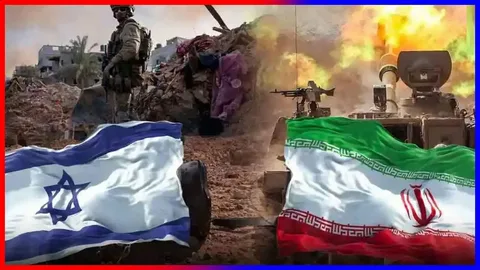

The Iran US Israel war 2026 has entered its 37th day, with no signs of a ceasefire in sight. US and Israeli forces continue launching airstrikes across Iran, while Tehran fires missiles at Israel and its Gulf neighbors. President Trump has issued a 48-hour ultimatum to Iran to reopen the Strait of Hormuz a move Tehran has flatly rejected. The Iran Israel war latest update shows a rapidly escalating conflict with severe global consequences.
Background: Who Started the Iran-Israel War 2026?
Understanding who started the Iran-Israel war 2026 requires looking at months of escalating tensions. On February 28, 2026, the United States and Israel launched a war against Iran with surprise airstrikes on sites and cities across Iran, assassinating Supreme Leader Ali Khamenei and several other Iranian officials and inflicting over a hundred civilian casualties.
The road to war was paved through 2025 and early 2026. After the Middle Eastern crisis began in 2023, Iran and Israel exchanged missile strikes in 2024, and Israel and the US launched airstrikes against Iran in the Twelve-Day War in June 2025. In January 2026, Iranian security forces killed thousands of protesters in their crackdown of the largest Iranian protests since the 1979 Islamic Revolution. US President Donald Trump responded by threatening military action against Iran and launching the largest US military buildup in the region since the US-led 2003 invasion of Iraq.
Why Did the US Attack Iran?
The question of why the US attacked Iran has been answered differently at different times by the Trump administration. Trump administration officials have offered diverse and changing explanations for starting the war, such as to pre-empt Iranian retaliation against US assets, to ward off an imminent Iranian threat, to destroy Iran’s missile and military capabilities, to prevent Iran from obtaining a nuclear weapon, to secure Iran’s oil resources, and to achieve regime change by bringing the Iranian opposition to power.
However, these justifications have been disputed. The International Atomic Energy Agency said that while Iran has an “ambitious” nuclear program, there was no evidence of a structured nuclear weapons program when the 2026 war began.
Israel Attacks Iran Today Day 37 Details
The Iran Israel war latest update from April 5, 2026 paints a picture of relentless bombardment. Iran says US-Israeli attacks have killed five people and wounded 170 others at the Mahshahr Petrochemical Zone, and that more than 30 universities have been targeted since the war was launched on February 28.The human toll continues to rise, with at least 2,076 people killed and 26,500 wounded in Iran since the start of the war on February 28. Iran’s Ministry of Foreign Affairs said more than 600 schools and education centres have been hit.
In the latest Iran US conflict 2026 developments, Russia evacuated 200 more staff members from the Bushehr Nuclear Power Plant following a deadly attack on the site’s perimeter, with Iranian Foreign Minister Abbas Araghchi warning that such raids expose the entire region to the risk of radioactive contamination.
On the military front, a US crew member who had been missing since Iran shot down a fighter plane has been rescued, Trump announced, after a dramatic firefight.
Iran Strikes Back: Missiles at Israel and Gulf Neighbors
Iran’s retaliatory strikes have widened the Iran US Israel war into a broader regional conflict. The Israel Broadcasting Authority said alarms were activated throughout the country’s north, including the port city of Haifa, after Iranian missiles were fired towards the country. Yemen’s Houthis, alongside Iranian forces and Hezbollah, claimed a joint long-range attack on Israel, targeting Lod airport in the Jaffa area and key military targets.
Iran has also targeted US-aligned Gulf states. Two Kuwaiti power and water desalination plants were damaged by a drone attack from Iran, causing the shutdown of two electricity generating units.
Kuwait’s Petroleum Corporation said several units at the country’s largest oil refinery, Mina Al-Ahmadi, were on fire following a drone attack, with emergency teams working to contain the fires.
The Strait of Hormuz Crisis
A defining feature of the Iran US conflict 2026 is Iran’s blockade of the Strait of Hormuz. The waterway, through which 20 percent of the world’s oil and gas passes, has been under a de facto Iranian blockade in response to the US-Israel war on Iran.
Trump issued a 48-hour ultimatum demanding Iran reopen the strait. Iran’s central military command brushed aside Trump’s threat, calling his ultimatum “a helpless, nervous, unbalanced and stupid action.”
President Trump said “time is running out” for Iran to reopen the Strait of Hormuz by his April 6 deadline.
Quotes From Officials and Experts
Iran’s military warning: Major General Ali Abdollahi Aliabadi, commander of Iran’s Khatam al-Anbiya Central Headquarters, warned that “the gates of hell will be opened upon you” if Iran’s infrastructure continues to come under attack.
Iran’s president on peace: Iran’s President Masoud Pezeshkian said his country held no hostility towards the people of the United States, Europe, or neighboring countries.
Iran’s foreign minister on diplomacy: Iranian Foreign Minister Abbas Araghchi said that while Iran has received messages from the US, trust remains “at zero” for any potential negotiations.
UN Secretary-General: UN chief Antonio Guterres warned that the Middle East conflict risked spiraling into a wider war, and called for an immediate halt to US-Israeli strikes on Iran and Iranian attacks on its neighbors.
China’s position: China’s Foreign Minister Wang Yi said US and Israeli attacks on Iran were a violation of international law.
An Expert’s Historical Warning: Echoes of the Iran-Iraq War
Writing for Al Jazeera on April 4, 2026, historian Behrooz Ghamari-Tabrizi drew a direct parallel between the current Iran US Israel war and the 1980–1988 Iran-Iraq war. He argued that Trump and Netanyahu are harbouring the same illusions that Saddam Hussein had in 1980 when he invaded Iran that bombing a nation would cause its people to rise up against their own government.Ghamari-Tabrizi wrote that the Trump administration’s failure was twofold: it demonstrated a total lack of understanding of the structure of state power in Iran, and it did not understand how a war fought so indiscriminately from the air would collapse the distinction between the nation and the state.He concluded that the cruelty of piling misery onto people’s lives through bombs, sanctions, and assassinations in the hope of forcing them to topple their government did not work for Saddam Hussein, and it will not work for Trump and Netanyahu.
Global and Regional Impact of the Iran US Israel War
The Iran US Israel war 2026 is reshaping the entire Middle East and global economy:
Global trade: The Strait of Hormuz blockade is strangling world energy markets. About 20,000 sailors and thousands of ships are stranded in the Strait of Hormuz.Diplomatic isolation: Leaders of 40 countries convened virtually at the request of the British government to discuss diplomatic pressure and economic measures to compel Iran to reopen the Strait of Hormuz, but did not agree on any specific steps.Notably, neither the US nor Israel attended.
Civilian suffering in Iran: More than 66 percent of Iranian Americans surveyed by the National Iranian American Council said they oppose the war, while 32.7 percent said they support it. Lebanon and Hezbollah: Fighting with Hezbollah remained intense, with the Lebanese group claiming 60 military operations against Israel in a single 24-hour period.
Leadership crisis in the US military: US Defense Secretary Pete Hegseth abruptly fired the US Army’s top general and two other senior officers, prompting speculation of a wartime leadership shake-up.
Conclusion: What Comes Next in the Iran Israel War?
The Iran Israel war latest update shows a conflict that is deepening on every front — militarily, diplomatically, and economically. Trump’s April 6 Strait of Hormuz deadline is the immediate flashpoint to watch. If Iran does not comply, the US has threatened to attack Iranian energy infrastructure, which analysts warn could constitute a war crime and trigger an even broader escalation.
International consensus is building against the war’s conduct, but no viable peace process is on the table. With trust at zero, missiles in the air, and oil markets in crisis, the Iran US Israel war 2026 shows every sign of entering a prolonged and devastating new phase.
Frequently Asked Questions (FAQs)
Who is stronger, Israel or Iran?
Israel and Iran have different military strengths. Israel possesses advanced air power, precision weaponry, and is widely believed to hold between 90 and 400 nuclear warheads, though it neither confirms nor denies this. Iran has a large conventional military, an extensive ballistic missile arsenal, drone capabilities, and a network of regional allied forces including Hezbollah and the Houthis. In direct conventional conflict, Israel enjoys technological superiority, but Iran’s missile capacity and ability to wage asymmetric warfare through proxies makes it a formidable adversary.
What is the issue between Israel and Iran?
The Israel-Iran conflict is rooted in ideology, regional power, and security. Iran does not recognize Israel’s legitimacy and has long supported Palestinian militant groups, Hezbollah in Lebanon, and Houthi forces in Yemen. Israel views Iran’s nuclear ambitions and regional influence as an existential threat. The two countries have fought through proxies for decades, escalating to direct missile exchanges in 2024 and now a full-scale war in 2026.
Is Iran’s military stronger than the US?
No. The United States possesses the world’s most powerful military by most measures the largest defense budget, the most advanced weapons systems, nuclear capabilities, and global power projection through aircraft carrier groups and overseas bases. Iran cannot match the US in conventional warfare. However, Iran’s ability to close the Strait of Hormuz, strike US allies across the Middle East, and shoot down US aircraft demonstrates it can impose serious costs. The Iran US conflict 2026 shows that while the US dominates in firepower, Iran retains the capacity to cause significant regional and economic disruption.