Vance Heads to Islamabad: The U.S.-Iran Peace Talks That Could Reshape the Middle East
Islamabad / Washington · April 9, 2026
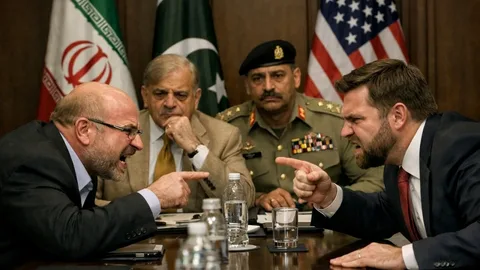
Vice President JD Vance will lead the U.S. negotiating team to Islamabad this Saturday for the first formal round of peace talks with Iran — the highest-level direct engagement between Washington and Tehran since the 1979 Islamic Revolution. The White House confirmed the delegation on Wednesday, announcing that special envoy Steve Witkoff and senior presidential adviser Jared Kushner would join Vance for talks that begin Saturday morning local time.
The announcement came barely twenty-four hours after the U.S. and Iran agreed to a two-week ceasefire — a fragile truce brokered by Pakistan that narrowly averted a major escalation. Trump had set a midnight deadline for Iran to reopen the Strait of Hormuz or face devastating strikes. Both sides agreed to the pause with roughly an hour to spare.
How the Ceasefire Came Together
Pakistan has been the central mediator throughout. Field Marshal Asim Munir, Pakistan’s army chief, has been in direct contact with both Iranian Foreign Minister Abbas Araghchi and the U.S. negotiating team. The ceasefire framework was reportedly hammered out through overnight negotiations involving Munir, Vance, Witkoff, and Araghchi. Pakistan’s Prime Minister Shehbaz Sharif then formally invited both delegations to Islamabad to begin substantive talks.
The ceasefire’s core conditions are straightforward on paper: an immediate halt to hostilities and the reopening of the Strait of Hormuz, followed by a 15-to-20-day window for negotiations. Iran had partially blocked the Strait since February 28, when U.S. and Israeli strikes killed Iran’s supreme leader, triggering retaliatory attacks on Gulf states and Israel. The blockade drove oil prices sharply higher and sent shockwaves through global shipping markets.
Both Washington and Tehran claimed victory in the immediate aftermath. Iran said it had forced the U.S. to accept its 10-point framework as the basis for negotiations. The White House said the U.S. had met all its military objectives and was now focused on a permanent settlement. These two characterizations are not easy to reconcile, and they suggest the talks in Islamabad will be difficult from the opening session.
“If they don’t engage in good faith, they’re going to find out that President Trump means what he says.”
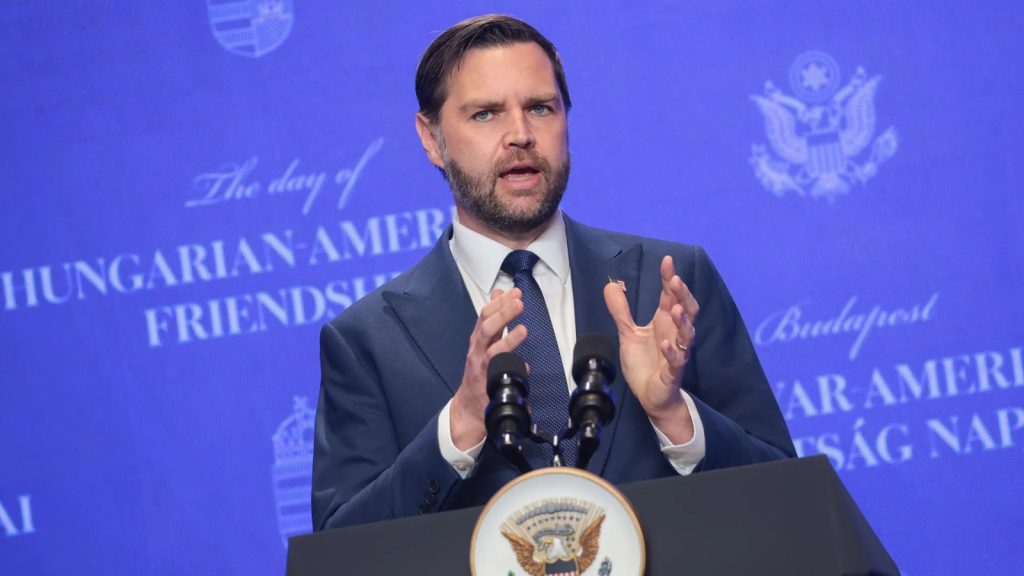
— Vice President JD Vance, Budapest, April 7, 2026

What the Talks Will Actually Cover
Iran’s 10-point proposal is ambitious to the point of being a maximalist opening bid. It calls for Iranian oversight of the Strait of Hormuz, the withdrawal of all U.S. combat forces from bases in the Middle East, a halt to operations against Iran-aligned militias, full compensation for war damages, and the lifting of all U.S., UN, and IAEA sanctions. It also demands the release of frozen Iranian assets abroad and wants any final agreement ratified through a binding UN Security Council resolution.
The U.S. position is equally firm in the other direction. Trump stated publicly that there will be no uranium enrichment by Iran, and the White House said Iran has indicated it will turn over its existing stockpiles — a claim Tehran has not confirmed in the same terms. Leavitt called uranium surrender “a red line the president is not going to back away from.”
Iran’s parliamentary speaker Mohammad Baqer Qalibaf is expected to lead the Iranian delegation, alongside Foreign Minister Araghchi. Several of Iran’s senior political figures were killed during the forty days of fighting, which partly explains why a parliamentary leader — rather than a more senior executive figure — is heading to Islamabad.
The Lebanon Problem
The ceasefire was barely hours old before it was being tested. Israel launched what were described as its largest strikes yet on Lebanon on Wednesday, killing at least 182 people and wounding nearly 900. The UN’s human rights chief called the scale of the destruction “nothing short of horrific.”
The dispute over Lebanon’s inclusion in the ceasefire is genuine and unresolved. Pakistan, which brokered the truce, said Lebanon was covered. Iran’s IRGC cited the Lebanon strikes as a ceasefire violation and briefly claimed it had stopped shipping through the Strait of Hormuz in response. Israel and the United States maintained that Lebanon and Hezbollah were outside the agreement’s scope.
Vance offered a careful formulation: Israel had agreed to “check themselves a little bit” in Lebanon to preserve the negotiating process. That is not a commitment to stop operations, and Iran’s parliament speaker called it insufficient, saying the U.S. had already violated the deal by insisting on nuclear disarmament terms that were not part of the ceasefire text.
Pakistan’s Moment
For Pakistan, hosting these talks is a significant diplomatic moment. Islamabad has rarely held this kind of centrality in a major international crisis. The fact that both the U.S. and Iran — two parties that have not sat across a table at this level in nearly five decades — are willing to do so in Pakistan is a testament to the quiet work Asim Munir and Prime Minister Sharif have put in over the past several weeks.
There is also a harder-edged reality here. Pakistan’s geographic and diplomatic position — maintaining relationships with both the U.S. and Iran, while also keeping lines open to China, which has been involved in the ceasefire negotiations — has made it an irreplaceable intermediary. Leavitt confirmed on Wednesday that conversations had taken place at senior levels between the U.S. and China as part of the broader ceasefire effort.
Whether the Islamabad talks produce anything durable is genuinely unknown. The gaps between the two sides’ opening positions are wide. The Lebanon question is unresolved. The ceasefire itself is two weeks long, which is not much runway. But the fact that Vance is getting on a plane to Islamabad — the highest-ranking American to engage Iran in any formal setting since 1979 — means something. The question is whether it means enough.