
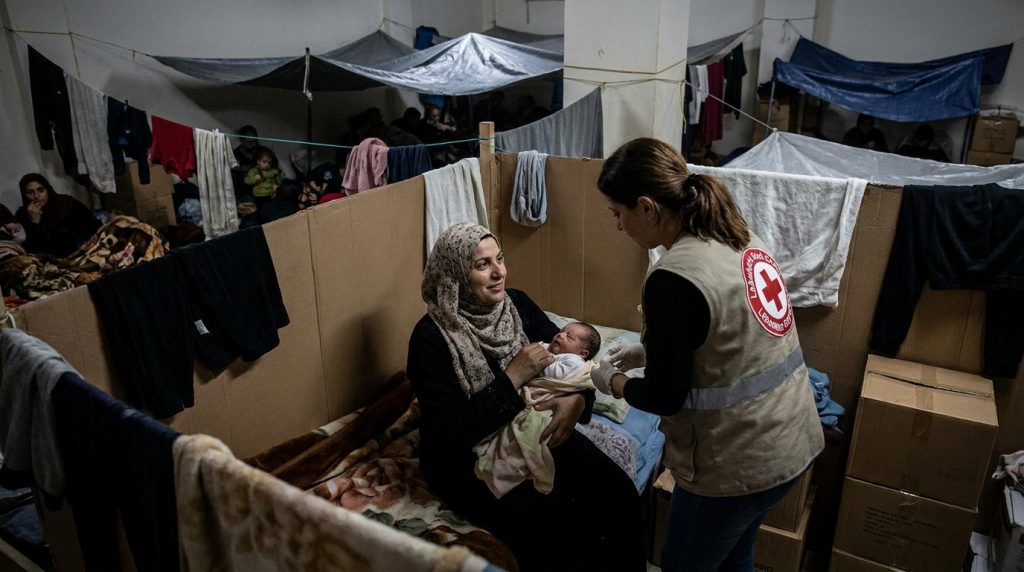

The Lebanon shelters childbirth crisis is intensifying as pregnant women are forced to give birth in overcrowded and under-resourced shelters. The ongoing challenges in Lebanon have placed immense pressure on healthcare systems, leaving vulnerable mothers without proper medical facilities.
With hospitals struggling and living conditions deteriorating, childbirth in shelters has become a harsh reality for many families.
A Growing Humanitarian Emergency
The situation in Lebanon reflects a broader humanitarian crisis driven by economic instability, limited healthcare access, and rising displacement. The Lebanon shelters childbirth crisis highlights the urgent need for effective lebanon crisis intervention strategies.
Shelters designed for temporary relief are now hosting large populations for extended periods, making safe childbirth increasingly difficult.
Challenges Faced by Expecting Mothers
Women in these shelters often lack access to proper prenatal care, clean delivery spaces, and essential medical supplies. The Lebanon shelters childbirth crisis exposes serious risks, including infections, complications during delivery, and inadequate postnatal care.
Healthcare workers and volunteers are doing their best under difficult conditions, but resources remain extremely limited.
Role of Aid and Crisis Intervention
International organizations and local groups are working to address the crisis through emergency healthcare services and mobile clinics. However, the scale of the problem in Lebanon requires sustained and coordinated efforts.
The Lebanon shelters childbirth crisis underscores the importance of long-term solutions alongside immediate humanitarian aid.
Impact on Families and Newborns
The conditions in overcrowded shelters affect not only mothers but also newborns, who face health risks from the moment they are born. Limited nutrition, sanitation issues, and lack of medical follow-up contribute to ongoing health challenges.
This crisis continues to strain already fragile communities and highlights the urgent need for improved healthcare infrastructure.
Conclusion
The Lebanon shelters childbirth crisis is a stark reminder of how humanitarian emergencies impact the most vulnerable. Ensuring safe childbirth conditions is essential for protecting both mothers and newborns.
Without immediate and sustained intervention, the situation in Lebanon may continue to worsen, affecting future generations.
FAQs
What is the crisis in Lebanon?
Lebanon is facing a severe economic and humanitarian crisis, including healthcare shortages, inflation, and displacement of people into overcrowded shelters.
What is 112 in Lebanon?
112 is an emergency contact number in Lebanon used to reach police or emergency services in urgent situations.
What is the birth and death rate in Lebanon?
Lebanon’s birth and death rates vary yearly, but the ongoing crisis has impacted healthcare access, potentially affecting both maternal and infant health outcomes.