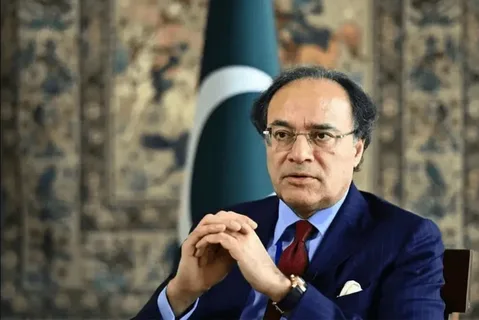

Pakistan’s Ministry of Finance has firmly rejected media reports suggesting that Finance Minister Muhammad Aurangzeb has been sidelined from the budget-making process. The ministry strongly rejected the misleading and speculative impression created by a report claiming the budget-making process had been handed over from the Finance Division to Deputy Prime Minister Ishaq Dar. The clarification has reignited national debate about Pakistan government departments, power dynamics, and who truly controls the Ministry of Finance Economic Report for Budget 2026-27.
Background What Triggered the Controversy
The dispute began after a media report claimed that Prime Minister Shehbaz Sharif had handed budget-making responsibility to Deputy PM Ishaq Dar. According to the report, the PM constituted a Dar-led committee to review, analyse, and present tax policy proposals formulated by the Tax Policy Office working under the Finance Division.
The report further claimed that final responsibility for new taxes worth Rs215 billion to Rs230 billion had effectively been handed over to Dar, while enforcement measures were placed under Minister for Economic Affairs Ahad Khan Cheema. These claims spread rapidly and raised serious questions about the role of Pakistan’s current Finance Minister in the upcoming federal budget.
The story painted a picture of internal disagreement within the government suggesting that Pakistan’s key Ministry of Finance functions were being transferred away from the Finance Division entirely. This prompted an immediate and strong official response.
Ministry of Finance Responds “Misleading and Incorrect”
Pakistan’s Ministry of Finance issued a clear rebuttal on May 14, 2026. The ministry stated that the report incorrectly portrays the constitution of a high-level review committee by the prime minister as a “handover” of the budget-making process from the Finance Division or as a “sidelining” of the finance minister, calling this interpretation factually incorrect and misleading.
The ministry clarified that the committee was tasked only with reviewing and analysing certain tax policy proposals prepared by the Tax Policy Office in the context of the upcoming budget, adding that such consultative and inter-ministerial review mechanisms are neither unusual nor extraordinary. This is consistent with how Pakistan government departments typically coordinate on complex fiscal matters.
The ministry further asserted that at no stage has the budget-making process been shifted away from the Ministry of Finance or the Finance Division, and that preparation of the federal budget continues to be undertaken by the Ministry of Finance under the leadership of the finance minister.
Muhammad Aurangzeb Finance Minister Role Clarified
A critical detail in the Ministry of Finance clarification was the direct mention of Muhammad Aurangzeb’s continued authority. The statement highlighted that Finance Minister Muhammad Aurangzeb himself was a member of the committee constituted by the PM, and that he continues to lead Pakistan’s engagement with the International Monetary Fund and other international financial institutions on all budgetary and macroeconomic matters.
Muhammad Aurangzeb has been serving as Pakistan’s Finance Minister since March 11, 2024. Before entering politics, he was the CEO of HBL, Pakistan’s largest bank. His appointment was seen as a technocratic choice aimed at restoring economic credibility during a critical IMF programme period. His role in the Ministry of Finance Economic Report and budget framework has remained central throughout his tenure.
Just a day before the controversy broke, Aurangzeb met with the IMF visiting delegation, briefing them on the country’s macroeconomic outlook, fiscal strategy, reform priorities, and the government’s ongoing efforts to ensure sustainable economic stability and long-term growth. This demonstrates that the Finance Minister remains fully engaged at the highest level of budget planning.
Pakistan Finance Minister List From Dar to Aurangzeb
To understand the current controversy, it helps to look at Pakistan’s Finance Minister list and the history of who has held this role. Pakistan has had dozens of finance ministers since independence, including notable names such as Mahbub ul Haq, Shaukat Aziz, Abdul Hafeez Shaikh, Miftah Ismail, and Shaukat Tarin.
Ishaq Dar, now serving as Deputy Prime Minister and Foreign Minister, previously served four times as Finance Minister of Pakistan: in 1998–1999, 2008, 2013–2017, and 2022–2023. He is among the most prominent ex Finance Ministers of Pakistan and remains a dominant figure in economic policy circles even in his current role. His frequent return to budget-related committees makes the current controversy understandable to political observers.
When Muhammad Aurangzeb was named Finance Minister in March 2024, Ishaq Dar transitioned to the role of Foreign Minister a shift that reflected the government’s desire for fresh economic management amid IMF negotiations. The Pakistan Finance Minister list has evolved significantly over the decades, with each minister bringing a distinct economic philosophy. Dar’s approach, known as “Daronomics,” prioritized exchange rate management and external financing, while Aurangzeb focuses on structural reform.
Finance Minister Punjab Pakistan and Provincial Coordination
Budget-making in Pakistan is not limited to the federal level. The Finance Department Punjab plays a crucial role in provincial fiscal planning, and Finance Department Punjab Notifications are closely watched by businesses, government employees, and economic analysts across the country.
The Finance Minister Punjab Pakistan coordinates with the federal Ministry of Finance on key fiscal transfers, the National Finance Commission awards, and development spending. Any major changes at the federal level including who leads budget committees directly impacts how Finance Department Punjab Notifications are drafted and how provincial budgets align with national priorities.
Under the IMF agreement, the government is expected to take fiscal measures amounting to Rs430 billion, divided equally between new tax measures of Rs215 billion and improved enforcement and tax collection efforts of another Rs215 billion. Provincial finance departments, including Finance Minister Punjab Pakistan’s office, are expected to support this consolidation effort through their own expenditure planning.
Ministry of Finance Economic Report What the Numbers Show
The Ministry of Finance Economic Report for the 2026-27 budget cycle paints a picture of cautious optimism. Finance Minister Aurangzeb shared encouraging developments regarding Pakistan’s external sector, highlighting positive trends in remittances and export performance, with data indicating improvement in exports on both a month-on-month and a year-on-year basis.
Pakistan has received SDR 914 million, equivalent to approximately $1.3 billion, from the IMF under the Extended Fund Facility and the Resilience and Sustainability Facility, bringing total disbursements under the two arrangements to approximately $4.8 billion. This is a significant milestone for the Ministry of Finance and reflects the broader reform work being led by Aurangzeb.
The next federal budget will be prepared in close consultation with the IMF, with sources indicating that the tax target for the next fiscal year is expected to exceed the current year’s revenue collection by Rs2 trillion. This enormous target makes the budget committee controversy all the more significant the stakes for Pakistan’s economic future are very high.
Official Quotes on the Budget Dispute
The Ministry of Finance did not hold back in its language when responding to media reports. The ministry’s statement said that the headline and framing of the report appear designed to create an impression of internal divergence within the government where none exists, and that the federal budget remains a collective constitutional and cabinet-driven exercise carried out under the leadership of the prime minister with the Ministry of Finance playing its central and mandated institutional role.
The ministry stated that it expects responsible sections of the media to avoid speculative interpretations and to report institutional processes with accuracy, context, and due professional responsibility.
Meanwhile, DPM Dar chaired a meeting of the newly formed committee to deliberate on tax policy proposals for the upcoming budget, with the committee emphasising the need for balanced, growth-oriented measures aimed at broadening the tax base, enhancing revenue generation, and promoting investment and economic growth. The government appeared determined to project a unified front despite the swirling controversy.
Impact on Pakistan’s Economic and Political Landscape
The budget row has real implications beyond media politics. When questions arise about which Pakistan government departments have real authority over fiscal policy, it creates uncertainty for investors, international lenders, and the general public. A clear Ministry of Finance Economic Report and a stable Finance Minister are critical signals of governance quality.
The Finance Minister underscored the importance of moving Pakistan away from recurring boom-and-bust cycles through structural reforms, productivity enhancement, deregulation, and improved export competitiveness. This long-term vision requires institutional stability exactly the kind of stability the ministry was defending in its public statement.
The IMF mission, led by Iva Petrova, acknowledged the positive progress made by Pakistan and appreciated the government’s commitment to prudent economic management and reform implementation. International confidence in Pakistan’s economic management remains intact for now, but internal political disputes over budget authority could undermine that confidence if left unaddressed.
Conclusion What Comes Next
The controversy over Pakistan’s budget-making process reflects deeper tensions within the coalition government between technocratic management and political oversight. Finance Minister Muhammad Aurangzeb represents the reform-driven approach demanded by the IMF, while ex Finance Ministers of Pakistan like Ishaq Dar represent the political dimension of fiscal policymaking.
The IMF delegation will remain in Pakistan until May 20, 2026, to assess budget targets, revenue measures, and ongoing fiscal reforms. The coming weeks will be decisive for the Ministry of Finance Report, the Finance Department Punjab Notifications, and the overall shape of Pakistan’s Budget 2026-27.
What is clear is that Pakistan’s Ministry of Finance is not stepping aside. Whether the current arrangement between Aurangzeb and Dar-led committees proves workable or creates further friction will determine how smoothly Budget 2026-27 is delivered to a country that desperately needs economic stability.
FAQs
Who is the new Finance Minister of Pakistan?
Muhammad Aurangzeb is currently serving as Pakistan’s Finance Minister since March 11, 2024. He is a banker and technocrat who previously served as CEO of HBL, Pakistan’s largest commercial bank. He was appointed by Prime Minister Shehbaz Sharif to lead Pakistan’s economic reform agenda and manage the country’s IMF programme.
What is the salary of a finance job in Pakistan?
Salaries in Pakistan’s finance sector vary widely depending on the level and type of institution. In the public sector, federal government finance officers typically earn between PKR 50,000 and PKR 200,000 per month depending on grade. In the private sector, finance professionals at major banks or multinational companies can earn significantly more, ranging from PKR 150,000 to over PKR 1 million per month for senior roles. The Finance Minister of Pakistan, as a federal minister, receives salary and perks as defined by the government’s ministerial pay structure.
Who is the present Chairman of Finance?
At the federal level, the Ministry of Finance is led by Finance Minister Muhammad Aurangzeb. The Finance Division also coordinates with the Chairman of the Federal Board of Revenue (FBR), currently Rashid Mahmood Langrial, who oversees tax collection and enforcement. At the provincial level, each province including Punjab has its own Finance Department headed by a provincial Finance Minister under the relevant Chief Minister’s cabinet.