Martin Van Buren: The Little Magician and Architect of American Politics
Martin Van Buren, the eighth President of the United States, was a shrewd political strategist and the first president born a U.S. citizen, rather than a British subject. Born on December 5, 1782, in Kinderhook, New York, Van Buren rose from humble beginnings to become a dominant force in American politics. Known as “The Little Magician” and “The Red Fox of Kinderhook” for his political cunning, he played a crucial role in the formation of the Democratic Party under Andrew Jackson.
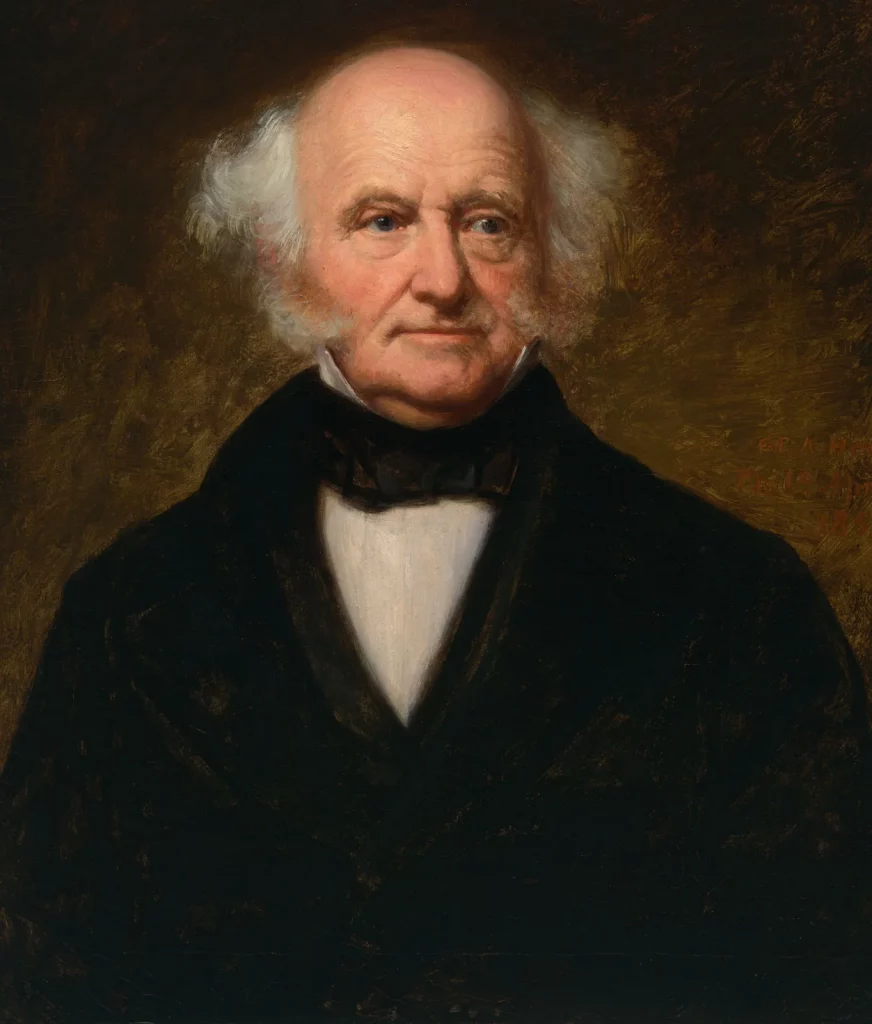
Van Buren married Hannah Hoes on February 21, 1807. Hannah, his childhood sweetheart and first cousin, passed away before his presidency, making him the only president whose wife died before he took office. He represented his home state of New York throughout his extensive political career, serving as a Senator, Governor, and Secretary of State before becoming Vice President under Andrew Jackson.
| Detail | Information |
|---|---|
| Name | Martin Van Buren |
| Spouse Name | Hannah Hoes |
| Birth Place | Kinderhook, New York |
| State Run For Presidency | New York |
| Time in Office | 4 years (1837-1841) |
| Terms | 1 term |
| Party | Democrat |
| Age at Death | 79 (1782-1862) |
His presidency lasted four years, from 1837 to 1841, serving one term. As a devoted Democrat and a close confidant of Andrew Jackson, Van Buren inherited the challenges of his predecessor’s administration, most notably the Panic of 1837, a severe economic depression. His efforts to address the crisis, primarily through the establishment of an independent treasury system, were met with mixed success and significant opposition.
Van Buren’s administration also grappled with ongoing tensions over slavery and relations with Great Britain. Despite his political acumen, the economic downturn and the growing strength of the Whig Party led to his defeat in the 1840 election. Martin Van Buren died on July 24, 1862, at the age of 79, at his estate, Lindenwald, in Kinderhook, New York. His contributions to the development of American political parties and his role in shaping the Democratic Party’s early ideology remain significant aspects of his legacy.