James K. Polk: The Manifest Destiny President and Architect of American Expansion
James Knox Polk, the eleventh President of the United States, is often regarded by historians as one of the most successful chief executives in American history, primarily for his unwavering commitment to and achievement of every major goal he set for his single term. Born on November 2, 1795, in Mecklenburg County, North Carolina, Polk’s family relocated to Tennessee when he was a young boy, a state with which his political career would become inextricably linked. A protégé of Andrew Jackson, Polk was a dedicated Democrat whose presidency was a masterclass in focused, determined political execution, fundamentally reshaping the map of the United States.
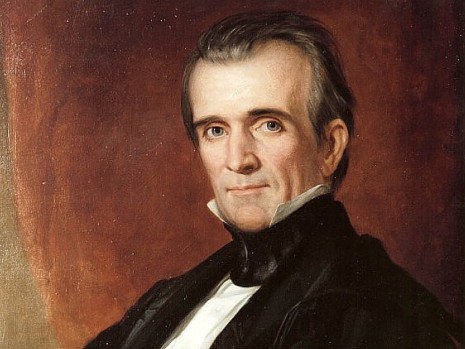
Polk married Sarah Childress on January 1, 1824. Sarah was a highly educated and politically astute woman who served as a crucial advisor to her husband throughout his career. Their partnership was unique in that they had no children, allowing Sarah to dedicate herself fully to her role as First Lady and political confidante. Polk represented Tennessee in Congress for fourteen years, including four years as Speaker of the House, before serving a term as Governor of Tennessee. His political experience was deep, but his nomination for the presidency in 1844 came as a surprise, making him the first “dark horse” candidate to win the office.
Polk’s entire presidency was driven by a clear, four-point agenda that he outlined in his inaugural address: the acquisition of the Oregon Territory, the acquisition of California and New Mexico, the reduction of the tariff, and the re-establishment of the Independent Treasury. He famously pledged to serve only one term, a promise he kept, ensuring his focus remained solely on his objectives rather than re-election.
The most dramatic and consequential aspect of Polk’s presidency was his aggressive pursuit of Manifest Destiny, the belief that the United States was divinely ordained to expand its dominion across the North American continent. This ambition led directly to the Mexican-American War (1846–1848). Polk, convinced that Mexico had provoked hostilities, delivered a war message to Congress, stating, “Mexico has passed the boundary of the United States, has invaded our territory and shed American blood upon the American soil.” The resulting conflict, though controversial, ended with the Treaty of Guadalupe Hidalgo, which ceded vast territories—including present-day California, Nevada, Utah, Arizona, and parts of New Mexico, Colorado, and Wyoming—to the United States. This single act increased the size of the country by over a million square miles, fulfilling a core part of his expansionist vision.
| Detail | Information |
| Name | James Knox Polk |
| Spouse Name | Sarah Childress Polk |
| Birth Place | Mecklenburg County, North Carolina |
| State Run For Presidency | Tennessee |
| Time in Office | 4 years (1845-1849) |
| Terms | 1 term (pledged to serve only one) |
| Party | Democrat |
| Age at Death | 53 (1795-1849) |
Simultaneously, Polk successfully resolved the long-standing boundary dispute with Great Britain over the Oregon Territory. While many Americans clamored for the entire territory up to the “54°40′ or Fight” parallel, Polk, recognizing the need to avoid a two-front war, negotiated the Oregon Treaty of 1846, which established the boundary at the 49th parallel. This diplomatic solution secured the present-day states of Oregon, Washington, and Idaho without further conflict.
On the domestic front, Polk achieved his two economic goals. He signed the Walker Tariff of 1846, which significantly lowered tariff rates, a measure favored by Southern and Western agricultural interests. He also successfully re-established the Independent Treasury System, which separated government funds from private banks, a key tenet of Jacksonian Democracy.
Polk’s intense work ethic was legendary; he worked tirelessly, often from early morning until late at night, and took no vacations during his four years in office. This relentless dedication, however, came at a great personal cost. Having achieved all four of his major objectives, he left office in March 1849, exhausted and frail. James K. Polk died on June 15, 1849, only three months after leaving the White House, at the tragically young age of 53. His death, the shortest retirement of any U.S. President, underscored the immense physical toll his dedicated service had taken. His legacy is one of extraordinary presidential effectiveness, forever altering the geographical and political landscape of the nation.