(Publish from Houston Texas USA)
(By Mian Iftikhar Ahmad)
Attacks on Oil Tankers in Iraqi Waters Trigger Global Oil Price Surge and Raise Fears of Strait of Hormuz Supply Crisis
Global energy markets were shaken in the first week of March 2026 after a series of attacks on oil tankers in Iraqi territorial waters triggered a sharp surge in crude oil prices. The incidents have raised fears of a wider conflict in the Middle East and a potential disruption to global oil supplies.
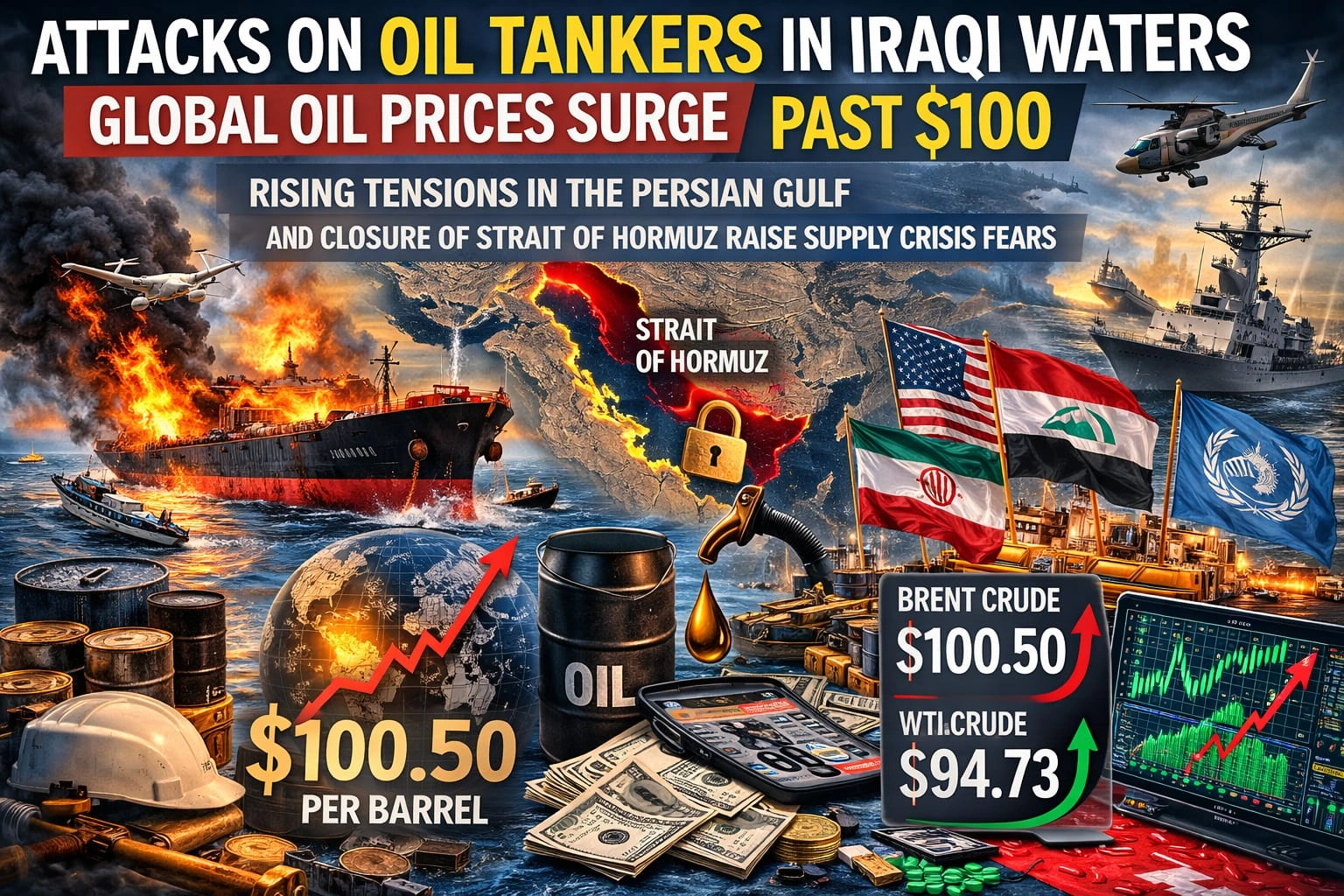
According to reports, at least three foreign oil tankers were targeted in Iraqi waters within a span of a few days. On March 6, 2026, the tanker Sonangol Namibe was severely damaged after an explosive-laden boat struck the vessel in Iraqi waters. Just days later, on March 12, another tanker, Safesea Vishnu, was attacked near the Khor Al-Zubair port. The suicide attack resulted in the death of an Indian national and caused significant damage to the vessel. During the same week, two additional oil tankers were also reportedly hit by explosive boats, sparking fires onboard and forcing emergency response teams to intervene. Although the full extent of the damage is still being assessed, the attacks have heightened fears about the security of maritime routes in the Persian Gulf.
Following the incidents, global oil markets reacted immediately. Brent crude prices jumped by more than 9 percent, crossing the $100 per barrel mark and reaching approximately $100.50. Meanwhile, US West Texas Intermediate (WTI) crude rose by nearly 8.8 percent, closing at around $94.73 per barrel. Early trading in Asian markets also saw crude oil prices surge, reflecting growing anxiety among investors and energy traders. Energy analysts believe that the attacks have intensified concerns over the safety of oil shipments passing through the Persian Gulf, particularly the Strait of Hormuz. The strategic waterway handles nearly one-fifth of the world’s crude oil trade, making it one of the most critical energy supply routes in the world. Reports suggest that tensions in the region have led to a partial disruption of shipping activity in the area, raising fears that the Strait of Hormuz could face restrictions or even temporary closure if the conflict escalates further. Experts say that even the possibility of such a development is enough to trigger volatility in global oil markets.
In response to the growing crisis, the International Energy Agency (IEA) announced that approximately 400 million barrels of oil would be released from strategic reserves in an attempt to stabilize markets. The United States alone is expected to contribute around 172 million barrels as part of this coordinated effort.
However, energy experts warn that the release of reserves may not significantly reduce prices if tensions in the region continue to escalate. Some analysts believe that crude oil prices could rise even higher if maritime security deteriorates or if the Strait of Hormuz becomes fully blocked.
The situation has also drawn strong reactions from world powers. The United States has reportedly convened an emergency meeting of its National Security Council to review developments in the region. Meanwhile, the United Nations has urged all parties to exercise restraint and avoid actions that could further destabilize the region. The Iraqi government has announced additional security measures to protect foreign vessels operating in its territorial waters. Gulf countries have also tightened maritime security to ensure the safety of commercial shipping.
Economic experts warn that prolonged instability in the Middle East could have serious consequences for the global economy. Rising oil prices often lead to higher transportation and manufacturing costs, which can increase inflation worldwide. For many developing countries that rely heavily on imported energy, the latest surge in oil prices could place additional strain on already fragile economies. Analysts say that if crude prices climb above $120 per barrel, the global economy could face renewed recessionary pressures.
As international tensions continue to rise, energy markets and global leaders remain on high alert for attacks on oil tankers. Experts emphasize that diplomatic efforts and regional stability will be crucial in preventing the situation from escalating into a broader crisis that could disrupt global energy supplies.
For more information please visit our International news.