Closed Paths in the Click World: The City of Invisible Doors
Mian Iftikhar Ahmad
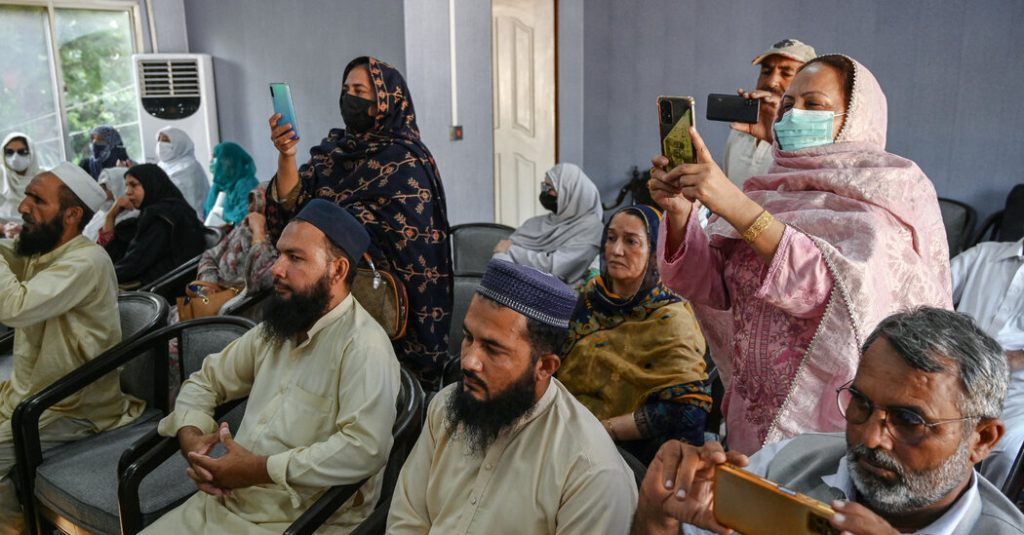
In the twenty-first century, the new frontiers of the global economy, politics, education, trade, and employment are being drawn not on land but on screens. Today, a single click can open a business, a single click can bestow fame, and a single click can become a source of regular income. But in this same digital world of clicks, the doors are wide open for some nations, slightly ajar for some, and for others, walls have been erected. Pakistan is increasingly becoming a symbol of this bitter contradiction, where millions of young people have smartphones in their hands, yet genuine opportunities crash against closed doors before they can reach them.
These young people are talented, they have creative minds, they are aware of global trends, they understand every new wave of social media, but when they try to convert their hard work, time, and creative energy into economic stability, they face closed doors at every turn. These doors sometimes take the form of complex policies, sometimes the limitations of payment systems, sometimes internet shutdowns, and sometimes invisible geographical boundaries set by global platforms. This digital city, which in theory is open to everyone, has in practice become a cage of closed doors for many. This is the tragedy we see every day but perhaps fail to understand its depth. On one hand, the number of digitally skilled people in our country is growing rapidly, but on the other hand, the paths to opportunities for these skilled individuals remain shut. This contradiction is pushing young people toward despair, not just economically but psychologically as well. The promise of the digital age remains unfulfilled for a generation that has invested its dreams in connectivity, only to find that connectivity alone is not enough.
The example of TikTok makes this situation very clear. In many developed and even developing countries around the world, TikTok, owned by the Chinese company ByteDance, provides its creators with a full monetization program. In the United States, the United Kingdom, Germany, France, Brazil, Indonesia, South Africa, Turkey, and even India, TikTok creators earn regular and stable income from their videos. There, a teenage girl can earn thousands of dollars a month from her dance videos, a teacher can support his family through educational content, a farmer can earn extra income from agricultural tips, and an artist can gain both respect and wealth by sharing his art with the world. But in Pakistan, this facility is confined to a very limited scope. A few features are available, some creators occasionally join challenges, but the broad, transparent, and consistent monetization that can give a young person digital autonomy is missing. It feels as if everyone is present on the same platform, making videos, getting views, generating engagement, but the economic possibilities are not equal. If a Pakistani creator’s video gets millions of views, they still receive no direct financial benefit, whereas a video of the same quality in Europe or America could earn thousands of dollars. This limitation is not merely a result of company policy; behind it lie a weak regulatory framework, an immature local advertising market, and a lack of full alignment with international financial institutions. Pakistani youth want to sell their labor and creative skills in the global market, but the paths are complicated, unclear, sometimes unsafe, and often frustrating. This is why the absence of full monetization on TikTok has become a major symbol of deprivation for Pakistani youth. They see that their peers in other countries are earning a living simply through entertainment or educational content, while they themselves, despite working hard on the same platform, remain empty-handed. This situation is particularly painful for those young people who had dreamed of making TikTok their primary source of income. They spend hours making videos, learn editing, understand trends, but when it comes time to earn, they find that there is simply no path for them.
The world of Facebook and YouTube further highlights and deepens this imbalance and inequality. The world of Facebook is also filled with similar contradictions. Full opportunities for video monetization and advertising revenue are relatively easy and accessible in most countries around the world. Once a creator meets the eligibility requirements, they start earning from advertisements. But in Pakistan, many creators, despite meeting all the eligibility criteria, cannot access all the programs. Their content is published, it gets views, people follow them, comments come in, sharing happens, but the doors to income remain shut. Consequently, their effort, which is of global standard, remains extremely limited in terms of income. The true value of digital labor is realized when its compensation is also in line with global standards, but this rarely happens in Pakistan. The impact of limited monetization on Facebook is not restricted to creators alone; it also severely affects small businesses that want to increase their revenue through advertisements for their products and services. When the advertising system is limited, when payment methods are complicated, when the right tools to reach the target audience are unavailable, businesses cannot grow. Limited advertising opportunities not only hinder business growth but also discourage young entrepreneurs. In this situation, Pakistani youth and small businesses always remain weaker compared to the global market, no matter how good their products are or how effective their marketing strategies might be. This is the point where the digital divide takes practical shape. On one side are countries where Facebook’s advertising system is a means for small businesses to grow, and on the other is Pakistan, where the same system has become a closed door.
The world of YouTube brings this inequality even more starkly into view. The value of a thousand views in developed countries is what it is, but in Pakistan it becomes a tiny fraction of that. In the United States or Canada, an average of four to five dollars can be earned per thousand views, in the United Kingdom three to four dollars, in Australia similarly, while in Pakistan this amount probably does not even reach fifty cents to one dollar. Sometimes the situation is even worse, with only ten to twenty cents earned per thousand views. The main reason for this difference is the weakness of the local advertising market, the limited digital budgets of brands, and the fact that the advertising culture in the country has not yet fully matured. But when a Pakistani YouTuber’s video is watched by viewers from all over the world, when a large portion of their subscribers live abroad, then why should their income remain captive to local economic weaknesses? This is a question that no one has yet answered. A young YouTuber who works day and night, edits videos, designs thumbnails, analyzes trends, learns SEO, adopts new techniques to improve their channel, cannot fully reap the rewards when the largest share of the global platform’s revenue is being given to creators in developed countries. The result is that the creator’s enthusiasm and drive remain limited, they feel that their hard work is not being properly compensated, and gradually they either bid farewell to the digital world or leave their creative potential unfulfilled. This difference is not just about currency value or advertising rates; it is also about policy, regulatory framework, and international financial alignment. Until Pakistan brings its digital ecosystem in line with global standards, this difference will persist and the full potential of young people will not be realized. This situation is particularly discouraging for those young people who want to make YouTube their profession. They see how successful YouTubers from neighboring countries like India, Bangladesh, and Sri Lanka are, and then they wonder why they have been left behind. They see the same platform, the same tools, the same global audience, but vastly different outcomes.