(Publish from Houston Texas USA)
(By Mian Iftikhar Ahmad)
Statements linked to Emmanuel Macron about trade with the United States and the role of NATO circulate online, but international reports indicate no official decision to end economic ties.
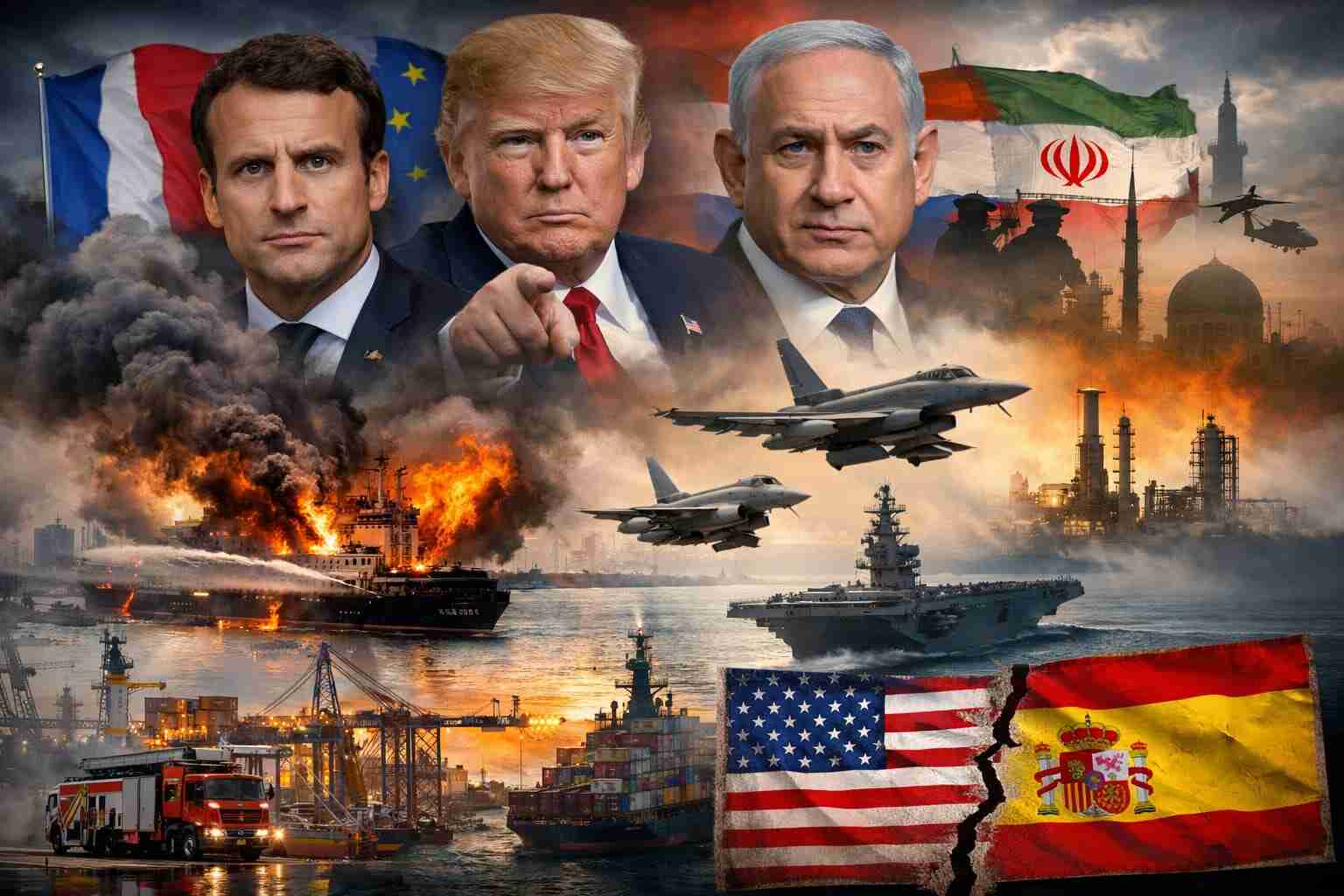
Houston USA (News Desk) : Washington, Paris, Madrid, Manama: Rapidly evolving global developments have led to heightened diplomatic and military tensions between the United States, several European countries and the Middle East, while claims circulating on television channels and social media regarding France, Israel, Iran, Bahrain and Spain have been examined against available international reports and official statements. Recent broadcasts suggested that French President Emmanuel Macron had announced the termination of trade with the United States and declared NATO a weak institution; however, diplomatic sources and international coverage indicate that no formal declaration has been made by France to end trade relations with Washington or withdraw from NATO, although President Macron has in the past advocated for greater European strategic autonomy and has expressed critical views about the alliance’s structural direction, comments that appear to have been amplified in the current climate of geopolitical strain.
In the context of escalating tensions in the Middle East, questions have also been raised about whether Israel pushed the United States into confrontation with Iran; while the Israeli government under Prime Minister Benjamin Netanyahu maintains a firm stance against Tehran and remains in close coordination with Washington, U.S. military decisions are typically based on consultations within the Pentagon, the National Security Council and intelligence agencies, and characterizing any action as solely the result of pressure from a single ally presents an oversimplified assessment of a complex decision-making process; during President Donald Trump’s administration, a tougher policy toward Iran was indeed pursued, yet analysts note that strategic and economic calculations were part of that process, though debate continues over whether the regional response and global energy market repercussions were fully anticipated.
Meanwhile, reports of an Iranian strike near Mina Salman Port in Bahrain have heightened regional concern; initial information indicates that the attack was limited in scope and targeted a specific naval-related facility rather than the entire port infrastructure, resulting in one fatality and several injuries, with authorities subsequently containing a fire and preventing broader structural damage; nonetheless, security alerts have been intensified across the Gulf region, and shipping operators have implemented precautionary measures, contributing to volatility in energy and maritime markets.
At the same time, tensions have surfaced between the United States and Spain after Washington reportedly sought permission to use joint military bases on Spanish territory for missions linked to operations concerning Iran; the Spanish government declined the request, citing international law and national policy considerations; in response, President Donald Trump warned of the possibility of halting trade with Spain, though no formal trade embargo has been enacted, and any such move would carry broader implications because Spain is a member of the European Union; reports further indicate that the United States relocated several aircraft, including refueling tankers, from southern Spain to other facilities, while Madrid has stated that it is prepared to manage potential economic pressure and has reiterated its commitment to adherence to international law.
Analysts suggest that the current phase reflects strategic signaling, diplomatic leverage and limited military positioning rather than the onset of a full-scale global conflict; however, prolonged tensions could place additional strain on global energy supplies, supply chains, transatlantic trade relations and internal cohesion within NATO, making forthcoming decisions in Washington, European capitals and the Middle East critical in determining whether the situation de-escalates through diplomacy or deepens into broader confrontation.
For more information please visit our National news.