
The Gulf Cooperation Council stands at a pivotal moment in its 45-year history. With the region facing rising tensions involving the United States, Israel, and Iran, analysts and officials agree that the GCC’s diplomatic unity is no longer enough. The bloc now needs to take bold steps toward joint defence, energy security, and deeper economic integration to protect its member states and their people.
Background: What Is the Gulf Cooperation Council?
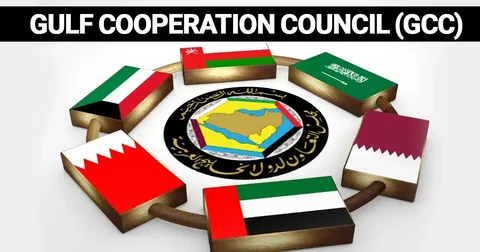
The Gulf Cooperation Council, known in Arabic as (Majlis al-Taʿāwun al-Khalījī), is one of the most influential regional blocs in the world. The Gulf Cooperation Council is a political and economic alliance of six Middle Eastern countries Saudi Arabia, Kuwait, the United Arab Emirates, Qatar, Bahrain, and Oman. The GCC was established in Riyadh, Saudi Arabia, in May 1981.
The GCC was established on 4 February 1981 and held its first summit meeting on 25 May 1981 in Abu Dhabi, United Arab Emirates. Since then, the bloc has held summits annually without interruption, making it one of the most consistent regional organisations in the Arab world.
The Gulf Cooperation Council headquarters is firmly rooted in the Arabian Peninsula. The headquarters of the GCC is located in Riyadh, Kingdom of Saudi Arabia. This central location reflects Saudi Arabia’s dominant role in shaping the bloc’s direction and priorities.
GCC Members: Who Are the Six Countries?
A common question is: what are the 7 GCC countries? The answer, to clarify, is that there are actually six GCC member states, not seven. The Gulf Cooperation Council consists of the Kingdom of Bahrain, the State of Kuwait, the Sultanate of Oman, the State of Qatar, the Kingdom of Saudi Arabia, and the United Arab Emirates.
All current member states are monarchies, including three constitutional monarchies Qatar, Kuwait, and Bahrain two absolute monarchies Saudi Arabia and Oman and one federal monarchy, the United Arab Emirates, which is composed of seven member states each governed by its own emir.
Gulf Cooperation Council Qatar plays a particularly important role in the bloc as a diplomatic powerhouse and energy giant, with the country hosting key summits and serving as a major LNG exporter globally.
GCC Leadership: Who Leads the Council?
The Gulf Cooperation Council President question is best understood through the bloc’s rotating leadership structure. The presidency of the Supreme Council rotates annually among the member states in alphabetical order.This means no single country permanently holds the top position.
The day-to-day administration is handled by the Secretary-General. H.E. Jasem Mohamed Al-Budaiwi has been Secretary-General of the Cooperation Council for the Arab States of the Gulf since February 1, 2023. The GCC Supreme Council renewed his appointment for another three years, starting February 1, 2026, in appreciation of his efforts in strengthening the Council’s progress.
Details: Why the GCC Must Move Beyond Diplomacy
The Al Jazeera opinion piece published on April 19, 2026, authored by Faisal Abdulhamid al-Mudahka, makes a compelling case for why the Gulf Cooperation Council must now evolve from a political and economic union into a fully integrated security and development bloc.
Amid continuing escalation in the region, the Gulf Cooperation Council pursues a balanced diplomatic policy grounded in calls for negotiation and support for political processes aimed at ending the conflict between the United States, Israel, and Iran. GCC members stand by the principles of good neighbourliness and enhancing regional stability and are unified in their opposition to aggression and destabilisation.
However, unity in words is no longer sufficient. The article argues that the Gulf Cooperation Council must now back its diplomatic stance with concrete military and economic structures. Three key areas stand out.
First: Protecting the Strait of Hormuz. The GCC must make clear its categorical rejection of any attempt to seize control of the Strait of Hormuz or use it as a pressure card. The Gulf states cannot and will not be held hostage under any circumstances .The strait is critical to global oil supply, and any blockade would have devastating consequences for the world economy.
Second: A “Gulf NATO” Defence Structure. The opinion strongly advocates for a regional military alliance. This can be achieved foremost through the establishment of a joint defence architecture along the lines of a “Gulf NATO”, with the possibility of regional powers such as Turkiye or Pakistan joining to strengthen collective deterrence.This would give the GCC states far greater leverage and protection in an increasingly volatile neighbourhood.
Third: Energy and Transport Corridors. There is an urgent need to accelerate a regional network for the transmission of gas, oil, electricity and water, linking the Gulf states and extending through Saudi Arabia to the Red Sea, through Oman to the Arabian Sea, and potentially through Syria to the Mediterranean Sea diversifying energy routes and strengthening energy security.
The GCC’s Vision: A New Silk Road
Beyond military concerns, the opinion article paints an ambitious economic vision for the Gulf Cooperation Council. There is a pressing need to develop a transcontinental rail network connecting East Asia, including China, to Europe via the Arab region, facilitating trade flows, deepening economic integration, and reviving the region’s historic role as a global trade hub along the lines of the ancient Silk Road.
This vision would position the GCC map stretching across the Arabian Peninsula from the Red Sea to the Arabian Sea as the centrepiece of a new global trade architecture. It is an ambitious but achievable goal, given the enormous financial resources the six member states collectively hold.
Quotes: Key Statements on GCC Unity
The Al Jazeera opinion article makes its position on the Gulf Cooperation Council and its future clear and direct.
“In the coming months and years, Gulf unity can be taken even further by pursuing regional security arrangements, establishing new energy routes and expanding important economic integration projects that would guarantee development and stability.”
On the threat from Iran, the article states: “Iran’s policies in the region, including support for armed groups, the undermining of the principle of good-neighbourliness, and the stoking of conflicts, run counter to the principle of collective security in the region.”
On the Palestinian question, the opinion adds: “Regional stability is bound to the Palestinian question. Therefore, pursuing a just and comprehensive resolution on the basis of a two-state solution and relevant United Nations resolutions is of utmost importance.”
Also in the News: Hinglaj Mata Temple Location
In a separate but notable development making global headlines, the Hinglaj Mata Temple has recently gained significant attention. The Balochistan government has decided to declare the historic Hinglaj Mata Temple, located in Lasbela district, as a world tourism site.
The Hinglaj Mata Temple is a Hindu temple in Hinglaj, a town on the Makran coast in the Lasbela district of Balochistan. It lies in the middle of the Hingol National Park and is one of the 51 Shakti Peethas in Hinduism.The temple draws hundreds of thousands of pilgrims every year, making it the largest Hindu pilgrimage site in Pakistan. Its recognition as a world tourism destination is being welcomed as a positive step toward cultural inclusivity in the region.
Impact: What This Means for the Region and the World
The debate around the Gulf Cooperation Council’s future direction has global implications. The six GCC member states collectively hold some of the world’s largest oil and gas reserves, and the Strait of Hormuz alone handles roughly 20 percent of global oil trade.
“Gulf security is a red line, and its stability is a collective responsibility that admits no compromise. The Gulf states will remain steadfast in their right to protect their sovereignty and safeguard their interests by every legitimate means available.”
If the Gulf Cooperation Council successfully builds a joint defence framework and diversified energy routes, it would significantly reduce the region’s vulnerability to outside pressure whether from Iran, or from geopolitical shifts involving major powers like the United States and China.
A stronger, more integrated GCC would also accelerate economic diversification across all member states, creating millions of jobs and reducing reliance on oil revenue over the long term.
Conclusion: The GCC’s Defining Decade
The Gulf Cooperation Council, founded in 1981, has come a long way from its origins as a loose alliance of Arab monarchies. Today, it stands at a crossroads. Unity of purpose has been achieved. What remains is the political will to translate that unity into concrete defence structures, energy networks, and transport corridors that can secure the region for generations.
The Gulf Cooperation Council headquarters in Riyadh will be busy in the years ahead. With a renewed Secretary-General mandate, a rotating presidency, and mounting external pressures, the GCC faces its most consequential period since its founding. The question is no longer whether the bloc should integrate more deeply it is whether it will move fast enough to do so.
FAQs
What are the 7 countries in the GCC?
There are actually six countries in the Gulf Cooperation Council, not seven. The members are the Kingdom of Bahrain, the State of Kuwait, the Sultanate of Oman, the State of Qatar, the Kingdom of Saudi Arabia, and the United Arab Emirates.Iraq is the only Gulf Arab state that is not a GCC member.
Where is the headquarters of the GCC?
The headquarters of the GCC is located in Riyadh, Kingdom of Saudi Arabia. The Secretariat, which serves as the executive arm of the bloc, is also based in Riyadh.
What is the purpose of the Gulf Cooperation Council?
The purpose of the GCC is to achieve unity among its members based on their common objectives and their similar political and cultural identities, which are rooted in Arab and Islamic cultures.More broadly, the GCC works to coordinate economic policy, promote trade, and maintain regional security across the six Gulf member states.