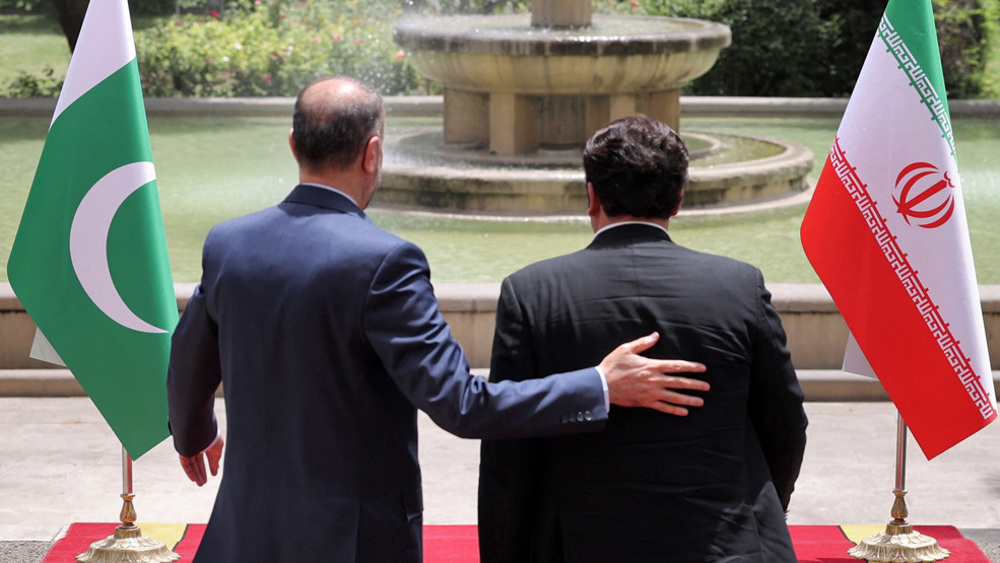

Pakistan’s capital is once again at the center of global diplomacy as the world watches whether Islamabad talks round 2 between the United States and Iran can happen before a critical ceasefire deadline. Iran has pulled out of a second round of Islamabad talks 2, calling US demands “childish,” while the two-week ceasefire set to expire on April 22 is rapidly running out of time.The stakes could not be higher for the region, for global oil markets, and for Pakistan’s image as a peace broker.
Background: How Pakistan Became the Host
The Islamabad talks did not happen overnight. They were the result of weeks of quiet Pakistani diplomacy in one of the most dangerous geopolitical crises in recent memory.
The Islamabad Talks, also known as the Islamabad Peace Talks, were held in Islamabad, Pakistan, on 11 and 12 April 2026 aimed at stabilizing the 2026 Iran war ceasefire and negotiating a potential resolution to the conflict. Pakistan played a central role in brokering the ceasefire and facilitating the talks
The 300-member US negotiating team was led by Vice President JD Vance, alongside special envoys Steve Witkoff and Jared Kushner, while the 70-member Iranian team was led by parliamentary speaker Mohammad Bagher Ghalibaf and foreign minister Abbas Araghchi. The Pakistani mediating team was led by Prime Minister Shehbaz Sharif, Field Marshal Asim Munir, and Deputy PM Ishaq Dar.
It was a historic gathering and a massive logistical and security challenge for Islamabad.
Details: Naqvi and Natalie A Baker in Key Pre-Talks Meeting
Before the first round even began, Pakistan’s security apparatus was visibly activated. Interior Minister Mohsin Naqvi held a pivotal meeting with Natalie A Baker, the US Ambassador to Pakistan, to finalize security protocols.
Interior Minister Mohsin Naqvi assured US Ambassador Natalie Baker of foolproof security for all foreign dignitaries ahead of the US-Iran talks scheduled in Islamabad. In a meeting with the US envoy, Naqvi stated that US Vice President JD Vance, Steve Witkoff, and Jared Kushner were “our special guests.” “A comprehensive plan has been prepared to provide foolproof security to all foreign guests in every respect,” the minister said.
The US Ambassador appreciated Pakistan’s sincere role in reducing tensions in the region, the interior ministry added. During the meeting, detailed discussions were also held on promoting Pakistan-US ties and the latest regional situation.
The meeting between Naqvi and Natalie A Baker became a symbolic moment two countries, once bound by transactional ties, now partnering on global peace.
The First Round: 21 Hours, No Deal
The first round of Islamabad talks was nothing short of extraordinary in scale and duration.
The talks lasted 21 hours between 11 and 12 April 2026, consisting of three rounds the first being indirect, and the second and third being direct.
After marathon talks over the weekend failed to secure an agreement, officials began looking at a second round of negotiations. Vance told Fox News that Iranian negotiators “moved in our direction, but they didn’t move far enough.” He said the Iranian negotiators had to return to Tehran to get approval for any deal. “There really is, I think, a grand deal to be had here, but it’s up to the Iranians to take the next step,” Vance said.
Despite the failure to clinch a deal, both sides acknowledged progress. Iran’s Foreign Minister Abbas Araghchi said the two sides were reportedly just “inches away” from an agreement words that made headlines worldwide.
Islamabad Talks Round 2: Iran Says No
Now, as the world hoped for Islamabad talks round 2, Iran delivered a blow to those hopes.
Iran rejected taking part in the second round of talks with the United States, with the regime’s official news agency stating that Iran’s absence from the second round stems from its firm position.
Despite back-channel negotiations, both sides have refused to move on the core issues: Iran’s nuclear enrichment programme, its regional proxies including Hezbollah, and control over the Strait of Hormuz.
Iran has also declared the closure of the Strait of Hormuz and warned that any ship approaching it would be targeted. Hundreds of vessels are reportedly stranded at both ends of the strait, through which around one-fifth of the world’s oil supply passes.
Meanwhile, from Washington, the tone grew more confrontational. Trump threatened in a post on Truth Social to destroy civilian infrastructure across Iran if it refused the deal Washington was offering, vowing to end Tehran’s “killing machine.”
Islamabad Talks 2 and Pakistan’s Army Chief in Tehran
Even as the Islamabad talks 2 scenario looked uncertain, Pakistan refused to give up.
A high-level Pakistani delegation led by Army Chief Field Marshal Asim Munir arrived in Tehran for urgent talks with Iranian officials, carrying what Iranian state media described as a “new message” from the United States. The visit came less than a week after marathon face-to-face negotiations in Pakistan failed to produce a breakthrough.
While Munir was in Tehran, Pakistan’s Prime Minister was simultaneously in Saudi Arabia for parallel talks, as Islamabad pursued a two-pronged diplomatic strategy to broker a second round of negotiations and end the conflict.
Pakistan’s role as a go-between is unprecedented in its modern diplomatic history and it is carrying enormous weight.
Security in Islamabad: A City on Alert
The Islamabad incident of the past two weeks has not been a single event it has been a sustained transformation of how the city looks and moves.
The Red Zone was sealed, and multiple entry points into Islamabad were closed as part of a wider security cordon. Authorities also implemented traffic diversion plans across major roads, including the Express Highway, advising residents to adjust travel plans due to expected disruptions. More than 10,000 police and security personnel were deployed, supported by paramilitary forces and military coordination.
A 30-member US advance team had already arrived in Islamabad to review security arrangements. Traffic diversions and road closures were implemented across the city, while all emergency services and hospitals remained on high alert.
The city saw rare scenes of fighter jet patrols, rooftop snipers, and convoy movements all contributing to what residents described as an unsettling but proud atmosphere.
Transporters Strike Islamabad Rawalpindi: A City Already Under Strain
While diplomacy dominated headlines, ordinary citizens in the twin cities also dealt with a separate crisis. The transporters strike Islamabad Rawalpindi had disrupted daily life months earlier and its memory lingered.
Transporters observed the wheel-jam strike in protest against a new traffic ordinance that significantly increased traffic fines. In Islamabad and Rawalpindi, operations of public transport were partially suspended as transporters observed the strike. There were also reports of school van owners joining the strike, with passengers facing difficulties at main bus stands.
Buses, wagons, trucks, and loaders were taken off the roads. The Punjab Public Transport Association and Goods Transporters Association called the strike over fines ranging from Rs 5,000 to Rs 20,000 for violations like overloading, wrong parking, or missing fitness certificates.
The protest Islamabad movement was eventually resolved after the government agreed to negotiate but the episode underscored ongoing tensions between regulatory authorities and the city’s working-class transport operators.
Islamabad Hit and Run and Incident Reports: The Human Cost of a Locked-Down City
During the intense security lockdowns surrounding the talks, multiple reports of an Islamabad hit and run incident and other road-related emergencies circulated on social media. When the Red Zone and major arteries are sealed for diplomatic convoys, emergency response times increase, and minor Islamabad incidents can escalate. Residents near the lockdown zones reported difficulty accessing hospitals, schools, and workplaces a reminder that high diplomacy always carries a civilian cost.
Hinglaj Mata Temple: Also in the News This Week
In a separate but significant story making rounds, the Hinglaj Mata temple has gained fresh global attention. The Balochistan government decided to declare the historic Hinglaj Mata Temple, located in Lasbela district, as a world tourism site, during a meeting between Chief Minister Sarfraz Bugti and Senator Danesh Kumar.
The Hinglaj Mata Temple is located in Hinglaj, a town on the Makran coast in the Lasbela district of Balochistan, inside the Hingol National Park. It is one of the 51 Shakti Peethas in Hinduism.The temple recently came into news also due to the broader Balochistan independence discourse, with Hindu heritage sites in the province drawing renewed international focus.
Quotes
Pakistan’s Interior Minister Mohsin Naqvi said: “Special security arrangements have been made for all distinguished guests,” adding that he “prayed for the success of the second round of the Islamabad negotiations.”US Vice President JD Vance stated: “There really is, I think, a grand deal to be had here, but it’s up to the Iranians to take the next step.”
Iranian Foreign Minister Abbas Araghchi personally received Pakistan’s Army Chief delegation at the airport, underscoring the significance of the visit.
Impact: What the World Is Watching
The collapse or success of Islamabad talks round 2 will have consequences far beyond Pakistan’s borders.
Around one-fifth of the world’s oil supply passes through the Strait of Hormuz. With hundreds of vessels stranded at both ends, the global energy supply chain is at serious risk.
For Pakistan, the diplomatic dividends have already been significant. The country has positioned itself as a mature, reliable mediator a status that could reshape its relationships with both the West and the Islamic world. But failure to secure Islamabad talks 2 would leave Pakistan exposed to accusations of overreach.
Conclusion: The Clock Is Ticking
The ceasefire expires April 22. Iran has rejected Islamabad talks round 2 for now. The US is pressing harder. And Pakistan a country managing its own economic crisis, domestic protests, and infrastructure pressures finds itself as arguably the most important diplomatic actor in the world this week.
Special Envoy Steve Witkoff was preparing to arrive in Islamabad, with Jared Kushner also set to attend the next round. VP JD Vance was skipping this iteration, with Trump citing security concerns. Qatari officials positioned themselves in Islamabad in case Trump himself flies over.
Whether Islamabad talks 2 produces a breakthrough or a breakdown, history will remember this moment. Pakistan opened its doors, activated its diplomats, and asked the world’s most powerful nations to talk. That alone is no small thing.
FAQs
What areas to avoid in Islamabad now
? During and after the US-Iran talks, the Red Zone which includes the Parliament, President House, Prime Minister’s Office, and key foreign missions has faced extensive closures. The Red Zone was sealed and multiple entry points into Islamabad were closed as part of a wider security cordon, with traffic diversions implemented across the Express Highway and surrounding roads.
Residents are advised to avoid Blue Area, Diplomatic Enclave, and Constitution Avenue until further notice is issued.
Who planned Islamabad city?
Islamabad was planned by Greek architect Constantinos Apostolou Doxiadis in the 1960s. Commissioned after Pakistan’s capital was moved from Karachi, the city was designed on a grid system with numbered sectors (like G-6, F-7, I-8) to allow organized, scalable urban growth. Construction began in 1961 and Islamabad officially became the capital in 1966.
What is the lighting on 14 August in Islamabad?
Every year on 14 August Pakistan’s Independence Day Islamabad is decorated with green and white lights, the colors of the national flag. The Parliament building, Faisal Mosque, Minar-e-Pakistan replicas, and major roads are illuminated in celebratory lighting. Fireworks, flag-hoisting ceremonies, and cultural events take place across the city, with the President and Prime Minister’s residences also lit up for the occasion.