
Did Israel Miscalculate in Launching the War on Iran?
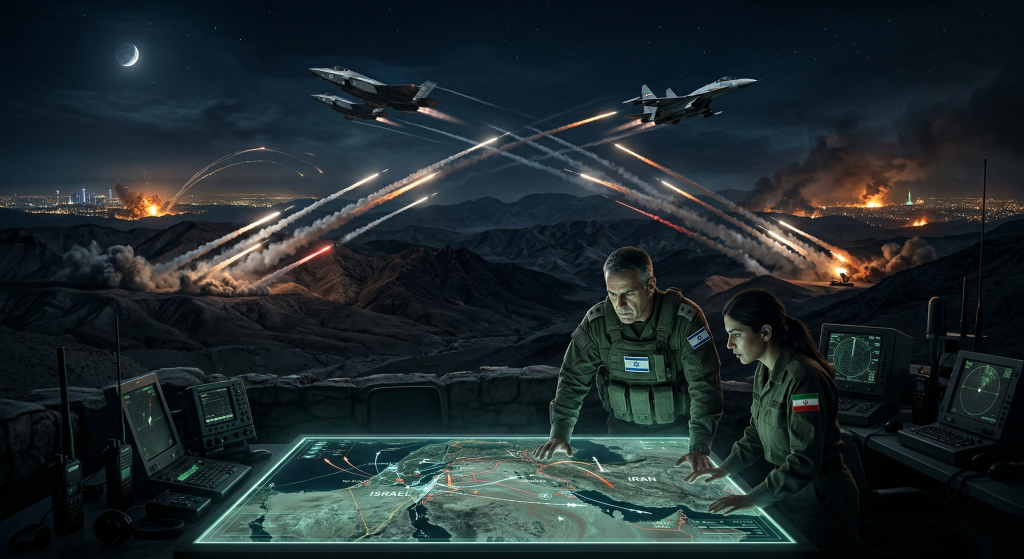
The ongoing US-Israel war on Iran is increasingly raising uncomfortable questions — not just about military outcomes, but about whether the strategy behind the war was fundamentally flawed.
One month into the conflict, early signs suggest that what was expected to be a decisive campaign may be turning into a prolonged and costly confrontation.
Cracks Emerging in Israel’s War Narrative
Recent reports indicate growing tensions within Israel’s political and security leadership.
According to media coverage, disagreements have surfaced between Prime Minister Benjamin Netanyahu and senior intelligence officials over failed expectations of rapidly destabilising Iran.
This shift signals a broader concern reflected in Israel Iran war analysis, where initial confidence is now giving way to strategic uncertainty.
Military Success Without Political Strategy?
From the outset, Israel and the United States relied heavily on military force — targeting infrastructure, leadership, and strategic assets inside Iran.
However, critics argue that the war lacked a clear political roadmap.
This concern aligns with broader debates around US Israel Iran conflict strategy, where military dominance is not matched by long-term planning.
Iran’s Response Defying Expectations
Contrary to early assumptions, Iran has demonstrated a strong capacity to retaliate.
Missile strikes, regional proxy involvement, and sustained resistance have challenged Israeli expectations of a quick victory.
This evolving situation strengthens the argument around Israel miscalculation Iran war, suggesting that Iran’s endurance may have been underestimated.
Expanding Conflict and Regional Pressure
The war is no longer confined to Iran alone.
Hezbollah’s involvement from Lebanon and attacks linked to regional actors have widened the scope of the conflict.
This escalation is a key part of ongoing Middle East war analysis,where multiple fronts are increasing pressure on Israel.
Domestic and Economic Strain Inside Israel
Inside Israel, the war has disrupted daily life and economic activity.
Frequent missile alerts, business closures, and rising uncertainty are testing public resilience — even as support for the war remains relatively strong.
Still, prolonged conflict raises questions about sustainability and long-term impact.
A Pattern of Military-First Approach
Critics argue that Israel’s strategy reflects a long-standing pattern — prioritising military action without parallel political solutions.
From Gaza to Lebanon, and now Iran, similar approaches have produced ongoing instability without clear resolution.
The Role of the United States
The US has been a central partner in the conflict, providing both military and political backing.
However, analysts warn that Washington’s long-term commitment remains uncertain.
If US priorities shift, Israel could face significant strategic challenges — a critical factor in any serious Israel Iran war analysis.
A War Without a Clear Endgame?
Perhaps the most pressing question is whether there is a defined endpoint to the conflict.
So far, neither Israel nor the US has clearly articulated a realistic exit strategy.
This uncertainty reinforces concerns that the war may evolve into a prolonged conflict of attrition rather than a decisive victory.
For ongoing developments, follow our Iran war live updates.
FAQs
Why is Israel’s Iran war strategy being questioned?
Because the conflict is lasting longer than expected and lacks a clear political endgame.
Did Israel underestimate Iran?
Many analysts believe Iran’s resilience and retaliation capacity were underestimated.
What role is the US playing in the war?
The US is supporting Israel militarily and politically, but its long-term commitment is uncertain.
Could the conflict expand further?
Yes, involvement from regional groups like Hezbollah increases the risk of wider escalation.