
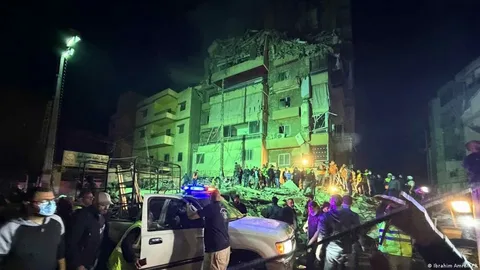

Israeli drone strikes have killed at least eight people, including two children, on a highway south of Beirut. Three strikes hit cars on the highway in Jiyeh, south of Beirut. The deadly attack has intensified global concern over the ongoing Lebanon Israel war 2026, as a fragile ceasefire continues to crumble on the ground.
Background How Did the Lebanon Israel War 2026 Begin?
Since 2 March 2026, there has been an ongoing war in Lebanon between Israel and the Lebanese Shia militant group Hezbollah. It is a resumption of major fighting in the Hezbollah–Israel conflict that began in late 2023 and is part of the wider conflict in the Middle East.
On 28 February 2026, Israel and the United States launched a war against Iran, Hezbollah’s main backer, and assassinated Iranian Supreme Leader Ali Khamenei. In response, Hezbollah resumed rocket strikes on Israel, and Israel responded with airstrikes across Lebanon, including the capital Beirut.
This sequence of events marked the formal beginning of what the world now knows as the Israel invasion of Lebanon 2026. The conflict quickly escalated beyond anything seen since the 2006 war.
Details The Full Picture of the Lebanon Israel War 2026
The Israeli army began ground operations in southern Lebanon on 16 March, eventually deploying five divisions. Hezbollah fired drones and as many as 2,000 rockets into Israel, while Israel conducted hundreds of airstrikes across southern Lebanon, Beirut, and the Beqaa Valley.
The main bridges on the Litani River were blown up by Israel to cut off the south from the rest of Lebanon. On 24 March, the Israeli defense minister announced that Israel would demolish Lebanese border villages and occupy southern Lebanon up to the Litani River.
In the Israel-Lebanon war 2026 map of destruction, entire southern towns have been flattened. Israeli forces have destroyed entire villages in southern Lebanon, prompting comparisons with the devastation caused by Israel’s war against Palestinians in Gaza.
What Happened on April 8, 2026 Black Wednesday
One of the darkest days in this conflict came on April 8. On 8 April 2026, shortly after the announcement of a ceasefire to the 2026 Iran war and Hezbollah signalling a pause in attacks against Israel, Israel launched what it described as its “most powerful attacks” on Lebanon, killing at least 357 people.
Lebanon called the attacks Black Wednesday and accused Israel of carrying out a massacre. Local observers said the attacks occurred in civilian areas of Lebanon, including Beirut, where hospitals were flooded with casualties.
An Israeli airstrike targeted a cemetery in the Beqaa Valley village of Shmustar during a funeral, killing at least 10 mourners and wounding four others. The international community reacted with outrage to these strikes.
Lebanon War 2026 Casualties The Human Cost
The Lebanon war 2026 casualties figures are staggering and continue to rise by the day. Since Israel began its war on Lebanon on March 2, at least 2,846 people have been killed and more than a million displaced. Israel’s offensive has included a major ground invasion and the occupation of southern Lebanon.
Lebanon’s Ministry of Public Health reported that at least 380 people have been killed during the truce alone, bringing the total death toll since the Israeli invasion and bombardment began on March 2 to more than 2,800.
Israel has killed more than 5,000 people in Lebanon since October 2023. Medical workers have not been spared either. The United Nations says at least 103 Lebanese medical workers have been killed and 230 injured in more than 13 separate incidents.
Quotes What Officials and Experts Are Saying
Lebanese Prime Minister Nawaf Salam has made direct appeals to Washington. Lebanese Prime Minister Nawaf Salam said he asked the US Ambassador to Lebanon Michel Issa to “exert pressure on Israel to stop the ongoing attacks and violations, in order to consolidate the ceasefire.”
UN Secretary-General António Guterres “unequivocally” condemned the Israeli attacks, while UN human rights commissioner Volker Türk called them “horrific.”
Dr Tahir Mohammed, a war surgeon who has worked in both Gaza and Lebanon, drew sharp parallels. He said: “We used to see our colleagues in Gaza come through the door all the time. I’ve had colleagues, nurses, medical students killed by Israeli weapons, and so to see the same policy of targeting healthcare workers in Lebanon it’s consistent.”
On the strategic dimension, Michael Young of the Carnegie Middle East Center warned: “It’s not a byproduct [of the war]. They know very well what they’re doing. When they were emptying the southern suburbs, they knew very well that most of these people would head into inner Beirut and into areas which are not areas of Shia majority. And certainly, I think this was their effort to create sectarian tensions and, in a way, put more pressure on the Lebanese state.”
The Fragile Ceasefire in the Hezbollah Israel War 2026
The 2026 Israel–Lebanon ceasefire is a temporary cessation of hostilities agreed between Israel and Lebanon on 16 April 2026. The agreement, brokered by the United States, established a 10-day truce intended to halt active fighting and create conditions for further negotiations toward a longer-term settlement.
On 23 April, US President Donald Trump announced that Israel and Lebanon agreed to a three-week extension of the ceasefire. However, the truce has existed largely on paper.
Israel’s air force says it has targeted more than 1,100 sites in Lebanon since the so-called truce began. Meanwhile, Hezbollah said it had carried out 24 attacks targeting Israeli army positions, soldiers, and military vehicles in southern Lebanon over just 24 hours.
Impact Regional and Global Consequences of the Israel-Lebanon 2026 War
The Hezbollah Israel war 2026 has had far-reaching consequences. Israel’s attacks on Lebanon and pressure on the Lebanese government to disarm Hezbollah are stoking severe internal tensions, analysts say. Israel is leaning on this division as a strategy to pit communities against one another.
The Israeli army has continued to expand its operations in southern Lebanon, issuing forced displacement orders as it maintains a buffer zone that prevents the return of hundreds of thousands of displaced people and demolishes houses within it.
The Israeli actions were condemned by Lebanon, Australia, Bangladesh, Belgium, Brazil, Canada, China, Colombia, Egypt, France, Indonesia, Iran, Ireland, Iraq, Italy, Jordan, Kuwait, Malaysia, Norway, Oman, Algeria, Pakistan, Qatar, Russia, Spain, Syria, Turkey, the United Arab Emirates, and the United Nations.
Conclusion What Comes Next in the Lebanon Israel War 2026?
Peace talks are scheduled but deeply uncertain. The US announced it would mediate a second round of negotiations between Israel and Lebanon on May 14 and 15, despite Lebanese demands that Israeli forces cease strikes before any talks.
Al Jazeera’s Rory Challands from Beirut said the upcoming meeting will “essentially determine the next phase of this ceasefire, which is really hanging on in name only.”
The Lebanon Israel war 2026 stands at a dangerous crossroads. Civilians continue to die. Displacement grows. And diplomacy remains fragile. The world watches to see whether Washington’s mediation can turn a ceasefire on paper into a real end to the Hezbollah Israel war 2026.
Frequently Asked Questions (FAQs)
Is there a war between Israel and Lebanon in 2026?
Yes. Since 2 March 2026, there has been an ongoing war in Lebanon between Israel and Hezbollah. The war has resulted in the deaths of more than 2,600 people and forced displacement of over one million people more than 20% of Lebanon’s population.
When did Israel attack Lebanon?
Israel responded with airstrikes across Lebanon after Hezbollah resumed rocket strikes following the assassination of Iran’s Supreme Leader Ali Khamenei on 28 February 2026. Full ground operations in southern Lebanon began on 16 March 2026.
What happened in Lebanon on April 8, 2026?
On 8 April 2026, Israel launched what it described as its “most powerful attacks” on Lebanon, killing at least 357 people. Lebanon called it Black Wednesday and accused Israel of carrying out a massacre. Lebanese President Joseph Aoun described the event as a “massacre” and the government announced a day of mourning.