
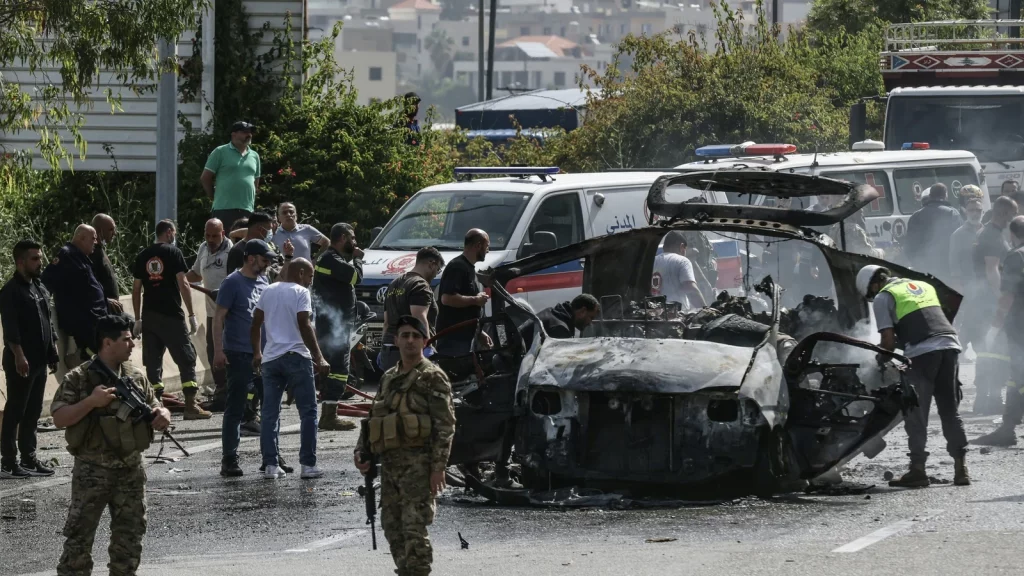
The Lebanon-Israel War 2026 has entered a deeply alarming phase. Israel’s military launched new attacks on Hezbollah targets across several areas of southern Lebanon, even as peace negotiations are scheduled this week in Washington. The death toll continues to climb, and a ceasefire that exists largely in name is crumbling by the hour.
Background Why Is Israel Attacking Lebanon in 2026?
To understand why Israel is attacking Lebanon in 2026, it is important to look at the deeper roots of the conflict. In the aftermath of the Gaza war in October 2023, Israel and the Lebanese Shia militia Hezbollah became engaged in conflict, as part of a longer stretch of hostilities between the two since Hezbollah’s founding in 1982.
After a year of fighting, Israel invaded southern Lebanon in October 2024, pulling out after a US-brokered ceasefire at the end of November but not before killing Hezbollah’s leader, Hassan Nasrallah. That ceasefire never truly held. Israel violated the November 2024 ceasefire more than 10,000 times, according to United Nations peacekeepers.
The current war formally resumed on March 2, 2026, after Hezbollah fired rockets at Israel following the US-Israeli strikes that killed Iran’s Supreme Leader Ali Khamenei. Israel responded with a full-scale military campaign, and the Lebanon-Israel War 2026 escalated rapidly from that point.
The Israel Lebanon Gaza Map A Region on Fire
The Israel Lebanon Gaza map tells a story of simultaneous fronts of conflict. Israel has been fighting in Gaza since October 2023, while also conducting military operations in Lebanon. The southern Lebanon region, particularly the area south of the Litani River, has become the central battleground in the Lebanon-Israel War 2026.
Israel’s evacuation orders in Lebanon covered an area of over 1,470 square kilometres, encompassing 14 percent of the country’s territory. Understanding the Israel Lebanon map shows that Israeli forces have occupied a significant buffer zone stretching from the border northward, with towns from Tyre to the Bekaa Valley under near-constant bombardment.
Historical Context Israel Lebanon War 1978 and the 2006 War
This is far from the first time Israel and Lebanon have gone to war. The Israel Lebanon War 1978 was Israel’s first major ground invasion of Lebanon, aimed at pushing the Palestine Liberation Organization away from the Israeli border. Israel occupied southern Lebanon and helped establish a security zone that lasted for decades.
The Lebanon Israel War 2006 was a 34-day conflict triggered by a Hezbollah cross-border raid that killed and captured Israeli soldiers. In the Lebanon vs Israel war 2006, both sides suffered heavy losses Lebanon saw massive civilian casualties and infrastructure destruction, while Israel failed to achieve a decisive military victory. Most analysts consider the Lebanon Israel War 2006 outcome to be inconclusive, with Hezbollah claiming a “divine victory” for surviving and Israel acknowledging strategic shortcomings. No side decisively “won” the 2006 Lebanon war.
The Israel Lebanon War 1978 and the 2006 conflict both set the stage for the deeper hostilities that define the Lebanon-Israel War 2026 today.
Did Israel Bomb Lebanon Yesterday? Latest Attacks May 13–14, 2026
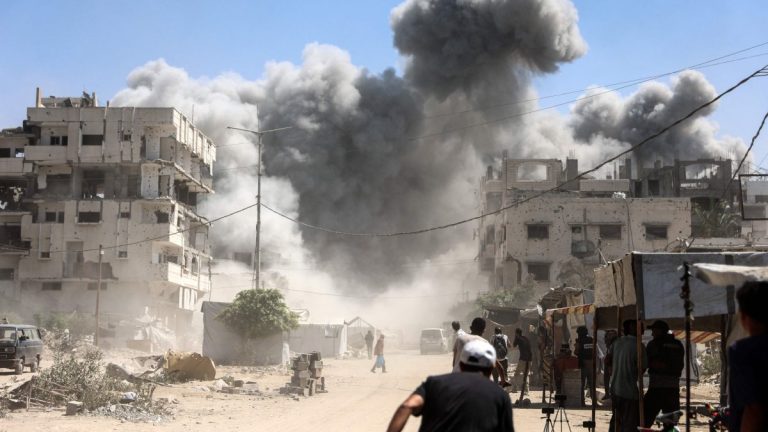
Yes Israel bombed Lebanon on both May 13 and May 14, 2026, in some of the most intense strikes in recent weeks. At least 15 people were killed in Israeli attacks across Lebanon on May 13, including eight people two of them children killed in three Israeli drone attacks on a key highway linking Beirut to southern Lebanon.
On May 14, the Lebanese Ministry of Health announced that three people were killed as a result of Israeli raids targeting cars in Al-Maaliya, Al-Shaitiya and Al-Naqoura in the Tyre district. Multiple towns were struck, including Sadiqin, Kafra, Nabatieh al-Fawqa, and Mansouri.
Israel’s military said it had attacked more than 40 targets belonging to the Iran-backed Hezbollah militia during the past 24 hours, including weapons depots. The Lebanese government has condemned these strikes as ceasefire violations.
Operation Eternal Darkness The Deadliest Single Day
One of the darkest chapters of the Lebanon-Israel War 2026 came on April 8. Shortly after the announcement of a ceasefire to the 2026 Iran war, Israel launched what it described as its “most powerful attacks” on Lebanon, killing at least 357 people.
The Israeli Defense Forces dubbed the attacks Operation Eternal Darkness, which included airstrikes and artillery shelling, targeting what Israel described as Hezbollah command and control centers, intelligence centers, missile infrastructure, and aerial and naval units. Lebanon called it “Black Wednesday” and accused Israel of a massacre.
The strikes hit targets in central Beirut without prior warning, including at least five different neighborhoods in Beirut’s central and coastal areas, during rush hour, causing widespread panic.
Ceasefire in Name Only The April 16 Truce and Its Failures
A ceasefire was brokered on April 16, 2026, but it has done little to stop the bloodshed. The ceasefire began after six weeks of fighting between Israel and Hezbollah, but the following day, Lebanon’s army reported several violations by Israeli forces.
Israel’s air force has targeted more than 1,100 sites in Lebanon since the so-called truce began, and Lebanon’s Ministry of Public Health reported that at least 380 people have been killed during the truce. Both sides accuse the other of violations daily.
Since Israel began its war on Lebanon on March 2, at least 2,846 people have been killed and more than a million displaced. The humanitarian picture is catastrophic and worsening.
Quotes What Officials and Experts Are Saying
Lebanese Prime Minister Nawaf Salam has called on the United States to pressure Israel into halting the attacks before any peace negotiations can meaningfully proceed. Salam asked the US Ambassador to Lebanon to “exert pressure on Israel to stop the ongoing attacks and violations, in order to consolidate the ceasefire.”
Al Jazeera’s Zeina Khodr, reporting from Tyre in southern Lebanon, said the “conflict is only escalating” and is “taking a high toll on the civilians who live in these areas.”
Michael Young, a Lebanon expert at the Carnegie Middle East Center, told Al Jazeera: “It’s not a byproduct of the war. They know very well what they’re doing.” He argued that Israel’s strategy of displacing Shia communities into mixed areas is deliberately designed to stoke sectarian tensions inside Lebanon.
Regional and Global Impact of the Lebanon-Israel War 2026
The Lebanon-Israel War 2026 has created ripple effects far beyond the Israel Lebanon Gaza map. Over 1.2 million Lebanese nationals more than one-sixth of the country’s population have been displaced, and over 40,000 homes in southern Lebanon have been destroyed. The UN has described it as one of the fastest-growing refugee crises in the world.
The war has exacerbated Lebanon’s already severe economic and humanitarian problems, ongoing since the 2019 financial crisis and the 2020 Beirut explosion. Hospitals are overwhelmed, medical workers are being killed, and entire villages have been reduced to rubble.
Internationally, the war has strained relations between Israel and its Western allies. Israel’s actions were condemned by over twenty observer states and the United Nations following Operation Eternal Darkness, and the EU and UK called for Lebanon to be included in the Iran ceasefire.
Washington Talks Can Diplomacy End the Lebanon-Israel War 2026?
The US has stepped in as mediator, hosting a new round of peace negotiations between Israel and Lebanon. The negotiations in Washington, DC are aimed at advancing a comprehensive peace and security agreement that substantively addresses the core concerns of both countries, according to the US Department of State.
Lebanon’s Prime Minister said the government will raise the issue of halting attacks, releasing prisoners, and setting a timetable for Israeli withdrawal during the negotiations, to allow for the return of displaced persons and reconstruction.
However, deep divisions remain. Hezbollah, which is not included in the US-mediated talks, has continued to attack Israeli positions, and both sides continue to trade fire even as diplomats sit at the table.
Conclusion What Comes Next in the Lebanon-Israel War 2026?
The Lebanon-Israel War 2026 is at a critical crossroads. A ceasefire exists on paper, but daily attacks as seen in the Israel bomb Lebanon incidents on May 13 and 14 make it meaningless on the ground. Washington talks may offer a pathway, but only if Israel halts its military operations and both sides commit to genuine diplomacy.
The current ceasefire is likely to expire in the coming days unless it is extended again, leaving the fate of over a million displaced Lebanese civilians hanging in the balance. The world is watching, and the cost of continued failure grows with every passing day.
FAQs
What is the problem between Lebanon and Israel?
The core problem between Lebanon and Israel is the presence and power of Hezbollah, an Iran-backed militant group that operates from Lebanese territory. Israel views Hezbollah as an existential threat and has repeatedly launched military campaigns to degrade its capabilities. Lebanon’s government, weakened and divided, has been unable to disarm Hezbollah, leaving the country caught between Israeli military pressure and Hezbollah’s armed resistance.
Who won the Lebanon vs. Israel war?
In the Lebanon Israel War 2006, no side achieved a clear victory. Hezbollah survived the Israeli offensive and declared a “divine victory,” while Israel acknowledged it failed to achieve its strategic goals. In the ongoing Lebanon-Israel War 2026, the conflict is still active and deeply contested, with no decisive winner declared as of May 2026.
What is the current conflict in Lebanon?
The current conflict in Lebanon is the Lebanon-Israel War 2026, which began on March 2, 2026, after Hezbollah fired rockets at Israel in response to US-Israeli strikes on Iran. Israel launched a full-scale ground and air invasion of southern Lebanon, targeting Hezbollah infrastructure. Despite a nominal ceasefire since April 16, daily attacks continue, over 2,880 people have been killed, and more than a million Lebanese remain displaced.