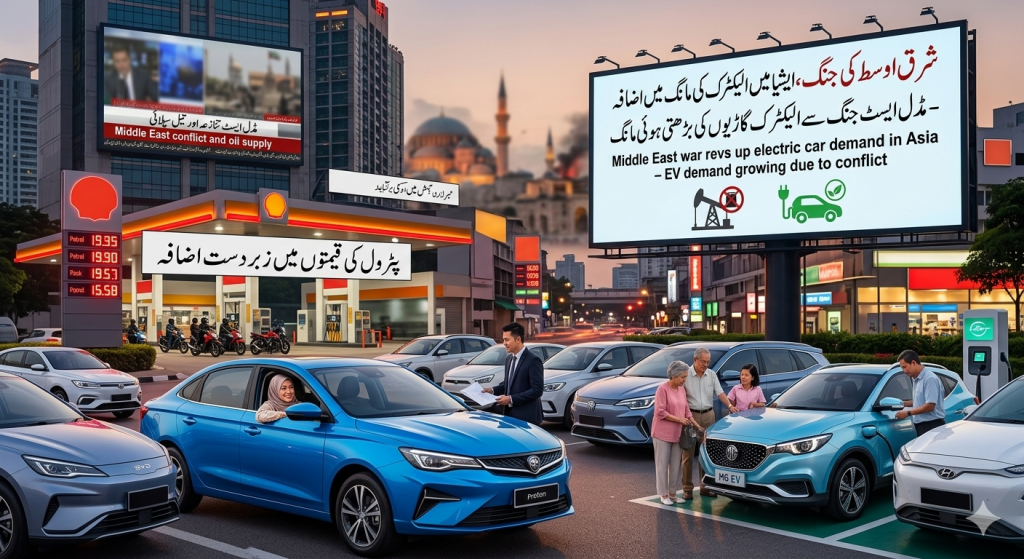

Escalating tensions in the Middle East are reshaping global energy trends, with a noticeable surge in electric vehicle demand across Asia. As fuel prices rise due to instability, consumers and governments are turning toward EVs as a more reliable and cost-effective alternative. The Middle East war electric car demand trend highlights how geopolitical conflicts can accelerate shifts in transportation and energy choices.
Rising oil prices drive EV interest
Conflicts in the Middle East often disrupt global oil supply chains, leading to higher fuel costs worldwide. Asian economies, heavily dependent on imported oil, feel the immediate impact. As petrol and diesel prices climb, consumers are increasingly considering electric vehicles to reduce long-term expenses. This shift is contributing to the rapid growth of the middle east electric vehicle market influence in Asia.
Asia’s growing EV adoption
Countries like China, India, and South Korea are already investing heavily in electric mobility. The recent geopolitical tensions have further accelerated adoption rates. Governments are offering incentives, expanding charging infrastructure, and encouraging local manufacturing. This momentum aligns with the broader trend of middle east electric vehicles influencing global demand patterns.
Impact on the Middle East market
While the conflict is driving EV demand abroad, it is also prompting changes within the Middle East itself. Oil-dependent economies are exploring diversification strategies, including investments in renewable energy and electric transportation. The electric cars middle east sector is gradually gaining traction as countries aim to reduce reliance on fossil fuels.
Energy security becomes a priority
One of the key lessons from ongoing tensions is the importance of energy security. Nations are seeking ways to reduce dependence on volatile oil markets. Electric vehicles, powered by locally generated electricity, offer a more stable alternative. This shift is not only economic but also strategic, helping countries safeguard against external disruptions.
Challenges in EV expansion
Despite the growing demand, several challenges remain in scaling EV adoption. High initial costs, limited charging infrastructure, and battery supply constraints continue to pose obstacles. However, technological advancements and government support are gradually addressing these issues. Over time, these improvements are expected to make electric vehicles more accessible to a wider population.
Environmental benefits of the shift
The increased adoption of electric vehicles also brings significant environmental advantages. Reduced reliance on fossil fuels leads to lower greenhouse gas emissions and improved air quality. As Asian cities struggle with pollution, EVs offer a cleaner and more sustainable transportation solution. This aligns with global climate goals and sustainability efforts.
Industry response and innovation
Automakers are responding to rising demand by expanding their electric vehicle portfolios. Companies are investing in research and development to produce more efficient and affordable EVs. This competition is driving innovation and improving the overall quality of electric vehicles available in the market.
Future outlook for EV demand
The Middle East war electric car demand trend is expected to continue shaping the global automotive industry. As geopolitical uncertainties persist, more countries are likely to accelerate their transition to electric mobility. This could lead to long-term changes in energy consumption patterns and transportation systems worldwide.
Conclusion
The ongoing tensions in the Middle East have highlighted the vulnerabilities of oil-dependent economies, pushing Asia toward electric vehicle adoption. Rising fuel prices and energy security concerns are driving this transformation. As the world adapts to changing geopolitical realities, electric vehicles are emerging as a key solution for a more stable and sustainable future.
FAQs
Are electric cars popular in the Middle East?
Electric cars are gradually gaining popularity in the Middle East, especially as countries invest in renewable energy and sustainability initiatives.
How does the war in the Middle East affect oil prices?
Conflicts in the region can disrupt oil supply, leading to increased global prices due to uncertainty and reduced production or transport.
What are the five types of electric vehicles?
The five main types are Battery Electric Vehicles (BEVs), Hybrid Electric Vehicles (HEVs), Plug-in Hybrid Electric Vehicles (PHEVs), Fuel Cell Electric Vehicles (FCEVs), and Range-Extended Electric Vehicles (REEVs).