Rapper Balen Shah got most symbolic victory of the March 5, 2026 election took place in Jhapa-5, a constituency that had long been considered the invincible stronghold of CPN-UML Chairman and four-time Prime Minister KP Sharma Oli. Oli, a 74-year-old veteran who has dominated Nepali politics for over thirty years, faced a humiliating defeat in his own backyard.
The numbers tell a story of total repudiation:
- Balendra Shah (RSP): 68,348 votes
- KP Sharma Oli (CPN-UML): 18,734 votes
With a staggering margin of nearly 50,000 votes, Shah did not just win; he delivered a “punishment vote” from a constituency where Oli had won six of the last seven elections since 1990. This victory is the crowning achievement of the Rastriya Swatantra Party (RSP), which is now poised to form the government with a comfortable majority, marking the first time in Nepal’s history that a “new” party has swept aside the traditional big three (Nepali Congress, CPN-UML, and the Maoists).
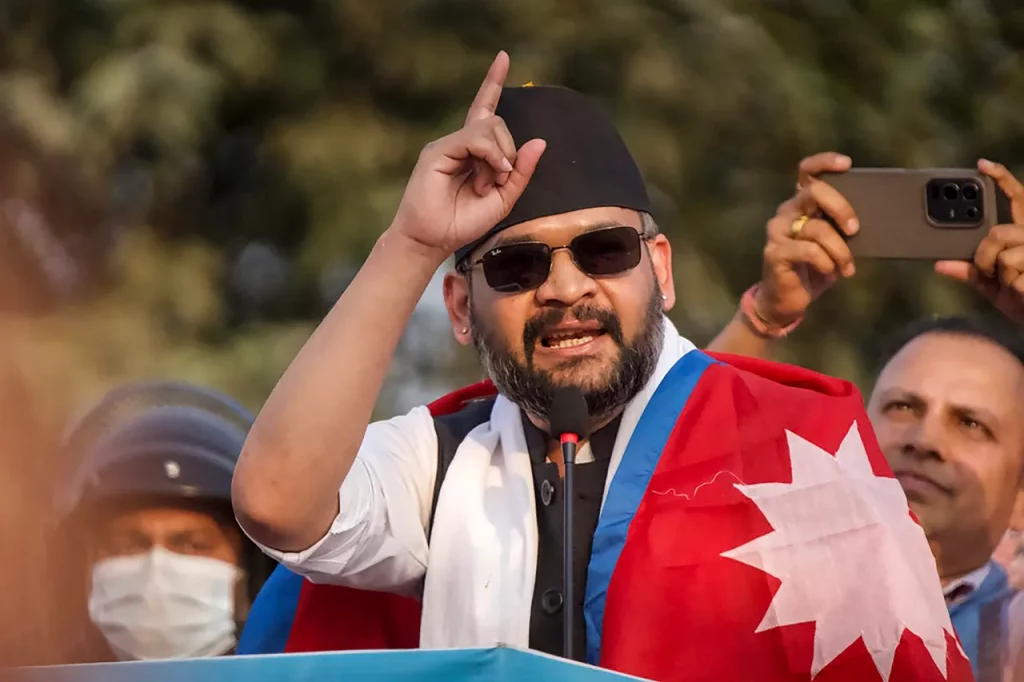
Rapper Balen Shah From the Underground to the Secretariat
Balen Shah’s rise is the stuff of political legend. Before he was the “Mayor of Kathmandu” or the “Prime Minister-elect,” he was a staple of the Nepali underground rap scene. His lyrics often targeted the very corruption, nepotism, and inefficiency that he now aims to dismantle from within the Singha Durbar.
His political trajectory shifted gears in 2022 when he ran as an independent for the Mayor of Kathmandu. Using the symbol of a walking stick, he defeated seasoned veterans, proving that the urban youth were hungry for technocratic leadership over ideological rhetoric. As Mayor, his “bulldozer politics”—focused on clearing illegal structures and improving waste management—earned him a reputation as a decisive, if sometimes controversial, man of action.
The Gen Z Revolution
While his mayoral stint laid the groundwork, the September 2025 Gen Z protests provided the final momentum. Sparked by the Oli government’s sudden ban on 26 social media platforms, the youth-led uprising quickly morphed into a national revolt against corruption and unemployment. After 77 deaths and months of unrest, Oli was forced to resign.
Rapper Balen Shah emerged as the face of this movement. Rather than taking the easy route by running in a safe Kathmandu seat, he chose to challenge the “Old Guard” directly in Jhapa, transforming the election into a referendum on the past versus the future.
A New Era of Governance
As Rapper Balen Shah heads for victory and the Prime Minister’s office, he brings with him a mandate that is fundamentally different from his predecessors. He will be:
- The Youngest PM: At 35, he represents a generational leap in a country where the average age of leadership has hovered in the 70s.
- The First Madhesi PM: Born to a Maithili family, his victory breaks deep-seated ethnic barriers in the highest office of the land.
- Technocratic Focus: With a Master’s in structural engineering, Shah has promised a “data-driven” government focused on infrastructure, digital transparency, and ending the “brain drain” of Nepali youth to foreign countries.
A Gracious Exit?
In a rare moment of political civility following a bitter campaign, KP Sharma Oli took to social media to congratulate his successor. Attaching a photo from 2022—when he gifted Balen a tabla after his mayoral win Oli wished “Balen Babu” a successful and “trouble-free” five-year tenure.
However, analysts suggest that Oli’s concession masks a deeper crisis within the legacy parties. The CPN-UML and Nepali Congress have seen their seat counts decimated, with the RSP even sweeping all 10 constituencies in the capital district of Kathmandu.
Geopolitics and High Hopes
The road for the rapper-turned-leader will not be smooth. Nepal sits in a precarious geopolitical position between India and China. Prime Minister Narendra Modi was among the first to congratulate the people of Nepal on the successful conduct of the polls, signaling India’s readiness to work with the new administration.
Domestically, Rapper Balen Shah must transition from a popular “outsider” to a functional “insider.” His challenges include:
- Healing a Divided Nation: Managing the trauma and demands for justice following the 2025 protests.
- Economic Reform: Addressing the inflation and unemployment that fueled the youth revolt.
- Navigating Bureaucracy: Overcoming the entrenched administrative systems that often stymie independent-minded leaders.
“This is actually the people’s revolt against the established political parties,” noted political analyst Chandra Dev Bhatta. “It is a punishment to the parties for their decades-long poor governance.”
The victory of Balendra Shah over the ex-PM is a turning point in South Asian politics. It proves that social media savvy, a clear technocratic vision, and an authentic connection to the youth can dismantle even the most entrenched political machineries.
As the “bell” (the RSP’s election symbol) rings across the hills and plains of Nepal, the message is clear: the youth are no longer just the voters of the future; they are the leaders of today. Balen Shah’s journey from a rapper with a microphone to a Prime Minister with a mandate is a testament to the fact that in a vibrant democracy, no seat is “safe” and no titan is “unbeatable.”