
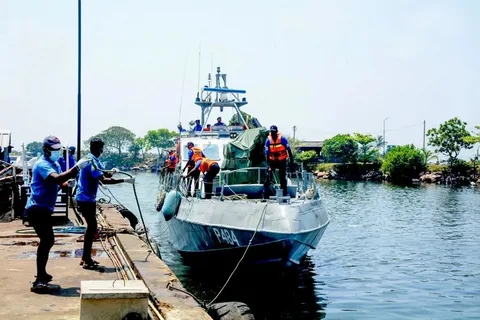
Sri Lanka has completed the repatriation of Iranian sailors following one of the most dramatic naval incidents of the ongoing Iran war. Thirty-two Iranian sailors rescued by Sri Lanka after their frigate was torpedoed by a US submarine have departed on a flight home. The sinking of the IRIS Dena has dragged the island nation into the heart of a global conflict and sent gas prices soaring worldwide.
Background: How the IRIS Dena Was Sunk
The IRIS Dena was an Iranian naval frigate returning peacefully from a multinational exercise. During the 2026 Iran war, the Iranian Navy frigate IRIS Dena was torpedoed and sunk by the United States Navy’s Los Angeles-class submarine USS Charlotte in the Indian Ocean.
Dena had recently taken part in the International Fleet Review 2026 naval exercise hosted by India and was returning home when it was sunk in international waters, approximately 19 nautical miles off the coast from Galle, Sri Lanka.
Sri Lankan coastguards received a distress call from the IRIS Dena at 5:08am, with surviving crew describing an explosion. Rescue vessels arrived to find the frigate already gone, with only an oil slick and floating life rafts remaining at the scene.It was a shocking start to what would become a prolonged crisis for the neutral island nation.
Details: Sri Lanka Rescues and Repatriates Iranian Sailors
Sri Lanka moved quickly to respond on humanitarian grounds. Thirty-two survivors, all seriously injured, were taken to Galle National Hospital, and 87 bodies were recovered from the sea.
Sri Lanka repatriated the remains of 84 Iranian sailors who died when their frigate was sunk, carried out with a chartered aircraft sent by Iran. The repatriation marked a solemn chapter in a conflict that has spilled far beyond the Middle East.
Of the 32 sailors who were rescued by Sri Lanka’s navy, 22 have since been discharged and were held at an air force base in the south of the island. Their eventual departure marked the end of Sri Lanka’s direct role in hosting the rescued crew.
The survivors were repatriated to Iran on 14 April 2026 during the ceasefire period between the US and Iran.
The Second Iranian Ship: IRIS Bushehr
The crisis did not end with the Dena. A second Iranian warship also found itself stranded near Sri Lanka. Sri Lanka evacuated more than 200 crew members from a second Iranian naval vessel off its coast, a day after a US submarine sank the Iranian frigate.
A second Iranian warship, IRIS Bushehr, was allowed into Sri Lankan waters a day after Dena was sunk, and Sri Lanka provided safe harbour for the ship and its crew of 219.
Sri Lankan President Anura Kumara Dissanayake announced that his navy would take custody of the second ship and move it to the northeastern port of Trincomalee for safekeeping, amid fears it could be targeted.Sri Lanka was suddenly hosting the human wreckage of a war being fought on its doorstep.
Quotes: Officials Respond to the Crisis
Sri Lanka’s position as a neutral nation was immediately challenged. Sri Lanka, which declared neutrality and called for “restraint and immediate de-escalation,” found itself hosting the human wreckage from a war being fought on its doorstep.
The incident sparked a debate regarding potential violations of international law by the United States, specifically the Second Geneva Convention, amid allegations that US forces left the scene without attempting to rescue survivors.
The United States had urged Sri Lanka not to repatriate IRIS Dena survivors and IRIS Bushehr crew back to Iran so that Iran could not use them for propaganda, and also asked Sri Lanka if there were any attempts to encourage defection among crew members.Sri Lanka resisted that pressure and proceeded with repatriation based on its treaty obligations.
Israel’s Hezbollah Attacks Are Likely to Continue Beyond the Iran War
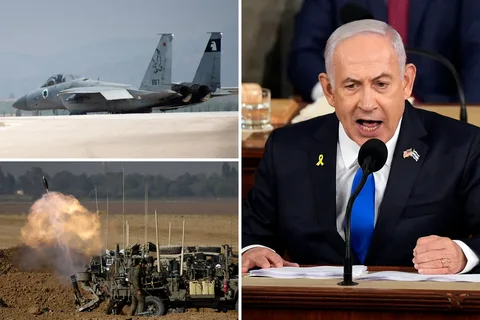
Even as a fragile ceasefire took hold between the US and Iran, the broader conflict showed no sign of ending. Israeli Prime Minister Benjamin Netanyahu vowed to continue attacks against the Iran-backed Lebanese militant group Hezbollah, but said his government would begin direct talks with Lebanon’s government.
Despite the ceasefire, Israel launched “Operation Eternal Darkness,” described as a wide-ranging operation targeting all of Hezbollah’s command and control centers in southern Lebanon, Beirut and the Beqaa Valley the largest attacks since the start of the war, killing at least 357 people and injuring more than 1,200 others.
Although Pakistani Prime Minister Shehbaz Sharif said that the ceasefire includes all fronts of the war, including Lebanon, Israel rejected that condition, asserting that the ceasefire “does not include Lebanon.”Israel’s Hezbollah attacks are likely to continue beyond the Iran war, analysts warn, making a durable peace increasingly difficult to achieve.
Are Gas Prices Going Up Because of Iran?
The Iran war’s impact on global energy markets has been severe and immediate. The national average for gasoline has risen to $4.11 per gallon, up 38 percent since the conflict began, according to the American Automobile Association. Diesel prices have climbed even faster, reaching $5.62 per gallon a 49 percent increase.
Brent oil prices briefly surged past $100 per barrel amid the US blockade of Iranian ports, and shipping costs have increased by more than 10 percent in the past month due to the US-Israel war on Iran.
Gas prices going up because of Iran has become a central political issue. When Fox News host Maria Bartiromo asked President Trump whether he thought oil and gas prices could come down before the midterm elections, he said, “it could be the same or maybe a little bit higher.”
Trump’s own administration has produced reports suggesting that pre-Iran war gas prices won’t return until after 2027, with the Energy Information Administration forecasting retail gas prices to peak at a monthly average of close to $4.30 per gallon in April.
Trump and Sri Lanka: The Pressure on a Neutral Nation
Trump and Sri Lanka’s relationship became complicated by the crisis. While Colombo tried to maintain a strictly humanitarian role, Washington applied diplomatic pressure. The US stated that it did not provide a warning prior to carrying out the strike on the IRIS Dena, which had just participated in the International Fleet Review in India.
Sri Lanka’s decision to allow the IRIS Bushehr safe harbour and to proceed with the repatriation of Iranian sailors, despite US objections, signaled a determination to uphold international law over geopolitical pressure. The episode put the Trump and Sri Lanka dynamic under significant strain.
Impact: A War That Has Crossed Into the Indian Ocean
The sinking of the IRIS Dena has fundamentally changed the geography of the Iran war. The sailors were killed when IRIS Dena was torpedoed just off the coast of Sri Lanka, in a move that extended the ongoing Middle East war to the Indian Ocean and was criticised as a flagrant violation of international law.
More than 34,000 ships have diverted from the Strait of Hormuz over the past month, and the Containerized Freight Index jumped more than 10 percent over the last month, up more than 35 percent from this time last year. The economic shockwaves are being felt from Islamabad to Washington.
High oil costs will also affect food prices, as materials used for fertilizer and creating food packaging are affected by supply chain disruptions, according to energy analysts.
Conclusion: What Comes Next
Oil-producing Gulf states as well as European nations are uniting on two key issues: calling for an end to Israel’s attacks on Lebanon and opposing any attempts to introduce toll fees to ships crossing the Strait of Hormuz.
Peace talks are ongoing but fragile. Vice President Vance led a delegation to Pakistan for peace talks with Iran, with the Israelis looking to reduce their activity in Lebanon to ensure that the negotiation is successful.
For Sri Lanka, the immediate crisis of hosting Iranian sailors is now largely resolved. But the broader questions about international law, Indian Ocean security, and the consequences of a war fought in its waters will linger for years. The world will be watching closely to see whether the ceasefire holds, whether Israel’s Hezbollah attacks continue, and whether gas prices going up because of Iran will push Washington toward a faster exit from the conflict.
FAQs
Q1: Who attacked the Iran ship in Sri Lanka?
The Iranian Navy frigate IRIS Dena was torpedoed and sunk by the United States Navy’s Los Angeles-class submarine USS Charlotte in the Indian Ocean, approximately 19 nautical miles off the coast from Galle, Sri Lanka.
Q2: How far off the Sri Lankan coast was the Iranian warship sunk?
The IRIS Dena was sunk in international waters approximately 19 nautical miles (35 km) off the coast from Galle, Sri Lanka. This placed the attack squarely outside Sri Lankan territorial waters, though it triggered an immediate search and rescue response from Sri Lanka’s navy and air force.
Q3: Why are Iranian ships near Sri Lanka?
The IRIS Dena had recently participated in the International Fleet Review 2026 naval exercise hosted by India, involving ships from 74 countries, and was returning home when it was sunk.The ship was on a routine transit through international waters not engaged in any hostile activity near Sri Lanka when it was struck. A second Iranian ship, IRIS Bushehr, subsequently sought safe harbour in Sri Lankan waters after the attack, in accordance with international maritime law covering neutral ports.