
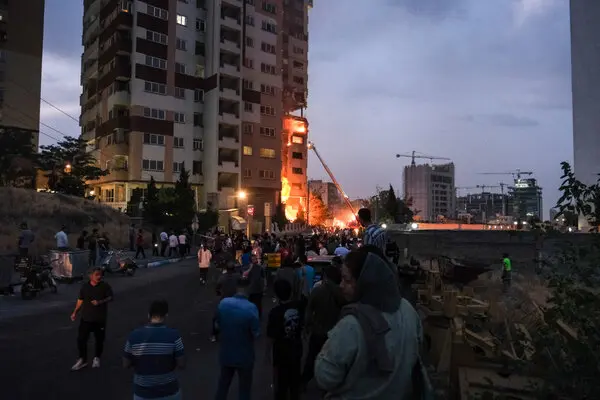
A Tehran earthquake series rattled the Iranian capital overnight on May 13, 2026, sending shockwaves of fear through millions of residents. Nine small earthquakes struck the Pardis area east of Tehran in a single night, renewing fears among experts and residents that the capital could face a major seismic disaster. No casualties or significant damage have been reported so far.
What Happened The Tehran Earthquake Series Explained
A 4.6-magnitude earthquake struck the border area between Tehran and Mazandaran provinces, with tremors felt across several parts of the capital and nearby cities, including Pardis, Varamin, Pakdasht, and parts of Shemiranat.
A second earthquake measuring 4.0 in magnitude struck Tehran at 00:28 local time, registering at a depth of 8 kilometers. A third quake with a magnitude of 3.4 then struck near Pardis at 00:32 local time at a depth of 10 kilometers.
A separate 3.0-magnitude earthquake also struck the capital, causing widespread anxiety among residents near the epicenter, though emergency services quickly moved to assess infrastructure integrity.
Tehran Earthquake Series Map Where Did the Tremors Strike?
The tremors were felt in an area close to the Mosha fault, one of Iran’s most active seismic zones. The fault stretches about 150 km in length and sits approximately 40 km from Tehran’s city center.
Tehran, a metropolitan area of more than 14 million people, lies near major active fault systems including the North Tehran, Mosha, and Rey faults. The Pardis area, located to the east of the capital, was the main epicenter zone of the overnight Tehran earthquake series. Residents across eastern Tehran province felt the repeated shaking clearly throughout the night.
Background Why Is Earthquake in Tehran Such a Major Concern?
Iran sits on one of the most seismically active regions on Earth. The country lies at the convergence of several tectonic plates, making tremors a near-constant reality for its people.
Iran experiences frequent seismic activity due to its location on several active geological fault lines, making it one of the most vulnerable countries in the region to tremors of varying intensities, with persistent expert warnings about the possibility of major earthquakes in the future.
Memories remain vivid of the 2003 Bam earthquake, which killed more than 30,000 people. That disaster continues to serve as a grim reminder of what a major earthquake in Tehran could mean for the densely populated capital.
Expert Quotes Scientists Warn of Bigger Risk
Seismologist Mehdi Zare, quoted by the semi-official Mehr news agency, said it was not clear whether the tremors represented a release of built-up seismic energy that would reduce future risk, or were instead warning signs of stronger future activity along the fault system near Tehran.
Zare warned that Tehran’s vulnerability is amplified not only by active fault lines but also by dense urban development, population concentration, and limited preparedness. He noted that even relatively small earthquakes can cause significant disruption in the capital due to fragile infrastructure and congestion, which complicates emergency response.
Iranian experts have repeatedly stressed that a large-scale earthquake directly beneath Tehran could be catastrophic given the city’s size and the state of many older buildings.
Emergency Response After the Tehran Earthquake Today
Iranian authorities moved swiftly following the overnight earthquake in Tehran. The Iranian Red Crescent Society announced that all relief bases and emergency response teams in Tehran Province were placed on full alert and prepared to respond if necessary.
Officials confirmed that aftershocks continued, while monitoring and assessments remained ongoing. Authorities urged residents to stay calm, avoid damaged structures, and follow official safety guidelines. No major structural collapses or casualties were confirmed as of Wednesday morning.
Regional and Global Impact of the Tehran Earthquake Series
The Tehran earthquake series has once again drawn global attention to Iran’s seismic vulnerability. With a capital city of over 14 million people and aging urban infrastructure, any major earthquake in Tehran could become one of the deadliest urban disasters in modern history.
The repeated overnight activity revived concerns that accumulated tectonic pressure beneath and around the capital, which lies close to several active fault lines, could at some point trigger a much larger earthquake.
International seismic monitoring agencies are tracking the situation closely. The Tehran earthquake series map shows that tremors were spread across a wide area of eastern Tehran province, suggesting broad fault system activity rather than a single isolated event. This makes the situation particularly significant for disaster preparedness planners both inside Iran and globally.
Iran’s History of Devastating Earthquakes
Iran ranks among the most earthquake-prone nations on the planet. Major historical quakes have caused enormous loss of life across the country’s provinces. The 2003 Bam earthquake remains one of the deadliest in the country’s recent history, but Iran has suffered many destructive tremors over the past century.
The North Tehran fault, Mosha fault, and Rey fault collectively place the capital in a high-risk zone. Urban planners and seismologists have long argued that Tehran’s building standards and emergency infrastructure are not adequate to handle a major quake, a concern that the latest Tehran earthquake series has brought sharply back into focus.
Conclusion What Comes Next for Tehran?
The series of tremors hitting Tehran today has renewed urgent calls for stronger disaster preparedness. Whether these earthquakes represent stress release or a precursor to a larger event remains unclear, but the warning from seismologists is unmistakable.
Iranian experts have repeatedly warned that a major earthquake near the capital could have catastrophic consequences. Authorities are expected to continue round-the-clock monitoring of fault activity, and emergency drills and urban resilience programs are likely to gain renewed political and public attention in the days ahead.
Tehran earthquake series activity will remain under close watch by both Iranian seismic agencies and international bodies. Citizens have been advised to keep emergency kits ready and to stay informed through official channels.
Frequently Asked Questions (FAQs)
How common are earthquakes in Iran?
Earthquakes in Iran are very common. The country lies on multiple active tectonic fault lines, making it one of the world’s most seismically active nations. Tremors occur almost daily across different regions, ranging from minor shakes to occasionally destructive events. Major earthquakes have struck Iran repeatedly over the past century, affecting cities, towns, and rural areas alike.
What earthquake killed 830,000 people?
The earthquake that killed an estimated 830,000 people was the 1556 Shaanxi earthquake in China, considered the deadliest earthquake in recorded human history. It struck central China on January 23, 1556, and caused catastrophic destruction across a wide area, with fatalities resulting largely from the collapse of cave dwellings and poorly built structures.
Which country has the worst earthquake history?
China is often cited as having the worst earthquake history in terms of total casualties, largely due to the 1556 Shaanxi earthquake. However, in terms of frequency and ongoing seismic risk, countries like Japan, Indonesia, Iran, Turkey, and Chile are consistently ranked among the most earthquake-prone nations in the world. Iran, in particular, has suffered dozens of deadly earthquakes over the past century and remains one of the highest-risk countries globally.