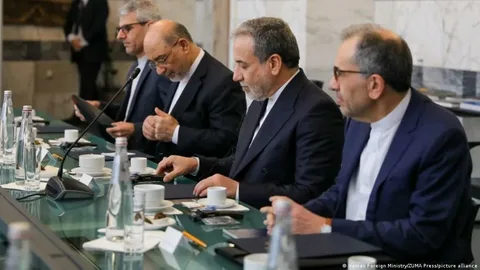
US and Iran negotiations have reached a fragile and critical stage in May 2026. Both sides have exchanged competing peace proposals with Iran presenting a 14-point plan and the US offering its own 14-point framework but no final agreement has been reached. President Trump has called Iran’s latest response “totally unacceptable,” while Tehran accuses Washington of making “unreasonable” demands. The US-Iran war ceasefire remains in place but is under serious strain.
Background: How the US-Iran War Began
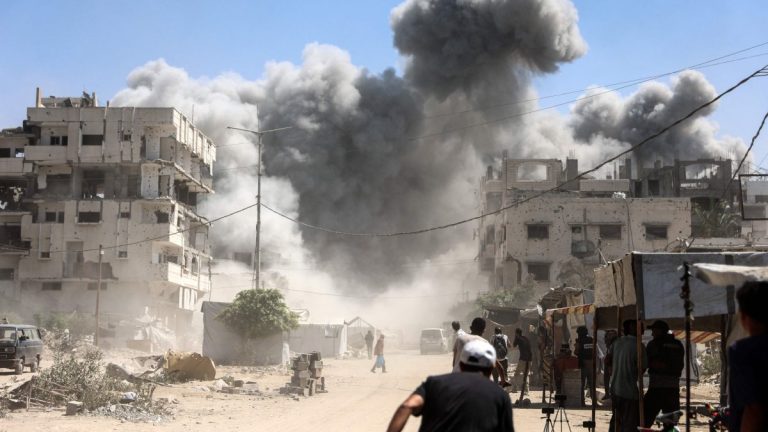
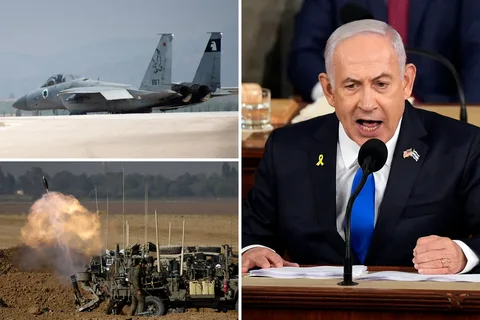
The current conflict between the United States and Iran started on February 28, 2026, when the US and Israel launched a coordinated military campaign against Iran. The strikes targeted Iran’s military infrastructure, nuclear facilities, and key government sites.
Iran’s Supreme Leader Ali Khamenei was killed in the early strikes. His son was subsequently appointed as his successor. Iran responded with counter-strikes against Israel, US military bases in the region, and other locations. One of its most consequential counter-moves was the closure of the Strait of Hormuz, a vital global trade route through which roughly one-fifth of the world’s oil supply passes.
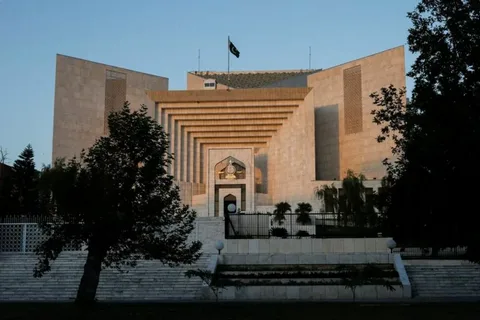
A fragile two-week ceasefire was brokered on April 8, 2026, largely through the mediation of Pakistani Prime Minister Shehbaz Sharif. Pakistan announced that both the US and Iran, along with their allies, had agreed to an “immediate ceasefire everywhere including Lebanon.” However, the situation remained tense, with both sides continuing to exchange fire in the Strait of Hormuz even after the truce was declared.
Details: The Competing Peace Proposals
The US Proposal to Iran
The United States initially delivered a 15-point proposal to Iran via Pakistan on March 25, 2026. That plan demanded the end of Iran’s nuclear program, limits on its ballistic missile capabilities, the reopening of the Strait of Hormuz, and an end to Iranian support for armed groups in the region. Iran rejected it outright.
A revised US framework described as a 14-point memorandum of understanding (MOU) was later presented to Tehran. This document called for Iran to halt all uranium enrichment for at least 12 years, hand over approximately 440 kg of uranium enriched to 60 percent, commit to never seeking a nuclear weapon, and allow snap inspections by UN inspectors. In exchange, the US offered a gradual lifting of sanctions and the release of billions of dollars in frozen Iranian assets.
US officials described the MOU as an interim arrangement designed to halt the fighting and open a 30-day window for detailed follow-up negotiations.
Iran’s 14-Point Plan
Iran submitted its own 14-point response to the United States via Pakistan in early May 2026. The Iranian plan focused primarily on ending the war rather than addressing the nuclear issue immediately.
Key demands in Iran’s 14-point proposal include:
- Immediate cessation of all hostilities, including in Lebanon
- Ending the war within 30 days, rejecting the US offer of a two-month ceasefire
- Security guarantees against future military aggression by the US or Israel
- Withdrawal of US forces from areas surrounding Iran
- Lifting of the US naval blockade and reopening of the Strait of Hormuz
- Release of frozen Iranian assets worth billions of dollars
- Removal of all sanctions imposed on Iran
- Payment of war reparations by the United States
- A new mechanism governing freedom of navigation through the Strait of Hormuz
- Strategic dialogue with Arab Gulf states on a regional security framework
- Involvement of Russia and China as guarantors of any final agreement
- End to fighting in Lebanon as part of a comprehensive regional deal
- A two-phase negotiating structure phase one to end hostilities; phase two to address details within 30 days
- Deferral of complex nuclear issues to a later stage of negotiations
Iranian Foreign Ministry spokesperson Esmaeil Baghaei clarified that the plan was structured to stop the war first and deal with more sensitive matters afterward.
Quotes: What Leaders Are Saying
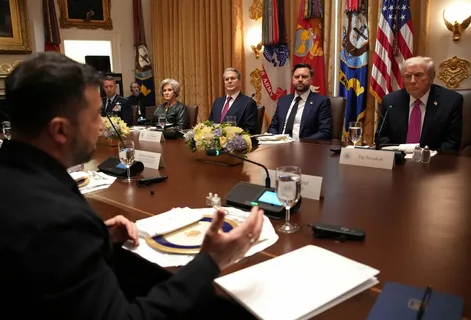
President Donald Trump responded sharply to Iran’s 14-point plan, calling the proposal “totally unacceptable” and labeling Iran’s leaders “lunatics.” He warned that Washington could resume major military operations if Tehran failed to agree quickly.
“They want to make a deal. I’m not satisfied with it, so we’ll see what happens,” Trump said before departing for a state visit to China.
On May 11, Trump declared the ceasefire was on “massive life support” and called Iran’s latest proposal “garbage.”
Iran’s Foreign Ministry spokesperson Esmaeil Baghaei pushed back firmly, accusing the US of presenting “unreasonable” and “one-sided” demands. He insisted that Iran’s 14-point proposal was “legitimate and generous.”
Iran’s Parliament Speaker Mohammad Bagher Ghalibaf, who served as Tehran’s lead negotiator in Islamabad talks, said Iran was “prepared for every option,” while maintaining there was “no alternative but to accept the rights of the Iranian people as laid out in the 14-point proposal.”
Iranian Foreign Minister Abbas Araghchi acknowledged a deadlock on the nuclear enrichment issue, saying on May 15: “We have now come to the conclusion with Americans that, since it is very difficult we are almost in a deadlock on this particular question let’s postpone this to the later stages.”
US Secretary of State Marco Rubio declared that the original US military operation, codenamed Operation Epic Fury, was “concluded,” and that what Washington now sought was a “memorandum of understanding for future negotiations.”
US-Iran War News Update Today: May 15, 2026
As of May 15, 2026, Iran has confirmed it has not reached any agreement with the US on the key issue of uranium enrichment. Iranian Foreign Minister Araghchi held a press conference in which he acknowledged the two sides are in a “deadlock” on enrichment and proposed deferring that topic to later negotiation phases.
In a parallel development, the United States hosted two days of talks between Israel and Lebanon on May 14 and 15 in Washington, D.C. The State Department announced that the Israel-Lebanon ceasefire has been extended for 45 days. The next round of political negotiations between those parties is scheduled for June 2 and 3, with a security-focused military track to begin on May 29.
Trump, speaking in a Fox News interview while on a state visit to China, said the options for Iran are to “make a deal” or face consequences. The White House has not confirmed whether a fresh round of US-Iran talks has been scheduled.
Impact: Global and Regional Consequences
The US-Iran war and the ongoing negotiations are having wide-ranging global effects.
The closure of the Strait of Hormuz has disrupted international energy markets significantly. Oil prices have risen sharply, with Brent crude trading at $104 per barrel as of mid-May 2026. The strait is a vital chokepoint for global oil trade, and its continued partial blockade by Iran has created energy supply uncertainty for importing nations across Asia and Europe.
China, which absorbed more than 80 percent of Iran’s shipped oil in 2025, has complicated the US strategy of economic pressure on Tehran. Beijing ordered its domestic companies to defy US sanctions on Chinese oil refineries purchasing Iranian crude, escalating tensions between Washington and Beijing on the sidelines of negotiations.
Pakistan has played a central mediating role throughout the conflict. Pakistani officials brokered the initial April ceasefire and continue to facilitate communication between Washington and Tehran. Senior Pakistani officials have been in direct contact with both sides as the talks intensify.
The United Kingdom’s economy has also been affected, with reports suggesting the ongoing Iran war could cost the UK around 160,000 jobs as Heathrow passenger numbers fell.
Can China Help End the Iran War?
The question of China’s role in the US-Iran peace deal has gained significant attention. US officials have openly pressed Beijing to use its leverage to push Tehran toward opening the Strait of Hormuz. However, analysts say China’s ability to act as a pressure mechanism on Iran is limited by its own economic and diplomatic confrontation with Washington.
China’s stance on the Iran nuclear deal has historically been one of cautious support for a negotiated solution. Russian President Vladimir Putin has also expressed support for a “fair nuclear deal” between the US and Iran. The prospect of Moscow and Beijing serving as guarantors of any future agreement is included in Iran’s own 14-point plan
Conclusion: What Comes Next?
The path to a final US-Iran peace deal remains difficult and uncertain. Both sides are engaged in active back-channel communications via Pakistan, and the White House believes an interim memorandum of understanding may still be achievable. However, the gap between the two sides on nuclear enrichment timelines, sanctions relief, and the Strait of Hormuz remains wide.
The nuclear enrichment question appears to have been temporarily shelved, as both sides acknowledged it has reached a deadlock. Analysts suggest that unless both Washington and Tehran make meaningful concessions, the fragile ceasefire could collapse and full-scale US-Iran war could resume.
The next few weeks will be decisive. Trump’s return from his China state visit, the scheduled Lebanon talks on June 2–3, and the potential for a new round of direct US-Iran negotiations in Islamabad or Geneva will all shape the outcome of this historic standoff.
FAQs
Q: What is the USA negotiating with Iran?
The United States is negotiating a framework agreement with Iran to end the ongoing war that began on February 28, 2026. Key issues on the US side include the reopening of the Strait of Hormuz, a halt to Iran’s uranium enrichment program, limits on Iran’s ballistic missile capabilities, and an end to Iranian support for armed groups in the region. In exchange, the US has offered to lift sanctions gradually and release frozen Iranian assets.
Q: Has Iran agreed to a ceasefire?
Iran agreed to a conditional ceasefire on April 8, 2026, which was brokered by Pakistan. However, that ceasefire has been described as “fragile” and both sides have continued to exchange fire in the Strait of Hormuz. No permanent ceasefire or final peace deal has been agreed upon as of May 15, 2026. President Trump has said the ceasefire is on “massive life support.”
Q: Does China support the Iran Nuclear Deal?
China has historically supported a negotiated solution to Iran’s nuclear program and participated in previous JCPOA negotiations. In the current 2026 conflict, Beijing has resisted US pressure to use its economic leverage against Iran. China continues to purchase Iranian oil despite US sanctions, and recently ordered domestic companies to defy US sanctions on Chinese refineries buying Iranian crude. Beijing’s support for a peace deal exists in principle, but it has not acted as an active pressure mechanism on Tehran.