War Diary Day 25 Iran conflict finds the partial operational pause that emerged around day 18 to 20 still nominally holding — with the rate of US-Israeli offensive strikes against Iranian military infrastructure having reduced from its peak intensity and Iran’s ballistic missile and drone campaigns against Gulf nations and Israel operating at lower tempo than the conflict’s most dangerous days.
War Diary Day 25 Iran conflict pause assessment is cautiously positive in the narrow military sense — fewer strikes fewer missiles fewer casualties in the past 72 hours than the equivalent period in the conflict’s second week. But the War Diary Day 25 Iran conflict underlying dynamics assessment is considerably darker — with the structural forces driving the conflict toward wider geographic scope greater actor involvement and more severe economic consequences showing no signs of resolution despite the operational pause.
War Diary Day 25 Iran conflict widening risk is visible across 3 simultaneous dimensions that the operational pause has not addressed. The Pakistan-India water weaponisation dimension has added a nuclear-armed bilateral crisis to the regional pressure cooker. The Russia-China intelligence support to Iran documented in signals warfare analysis has drawn the great powers deeper into active operational participation in the conflict. And QatarEnergy LNG force majeure has demonstrated that the economic consequences of the Iran conflict are now systemically embedded in global energy markets in ways that will persist regardless of the operational pause tempo.
War Diary Day 25 — Military Situation
Strike Operations on Day 25
War Diary Day 25 Iran conflict military situation on the US-Israeli side shows strike operations continuing at a reduced but sustained pace — with US CENTCOM conducting overnight strike packages targeting Iranian military targets selected for their significance to Iran’s residual missile production capability and IRGC command and control infrastructure.
War Diary Day 25 Iran conflict total strike count has now exceeded 3,700 confirmed targets struck across Iran since February 28 2026 — representing the most intensive sustained precision bombardment campaign in modern military history measured by the combination of strike accuracy target count and duration.
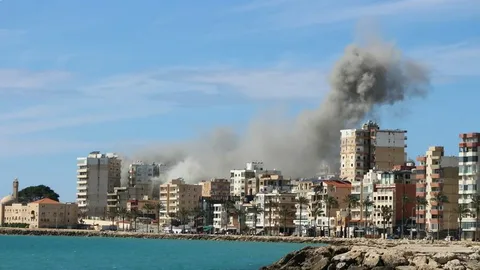
War Diary Day 25 Iran conflict Israeli operations have continued the dual-track approach of simultaneous strikes on Iranian military targets in coordination with CENTCOM and the ongoing Lebanon campaign against Hezbollah — with IDF operations in the Dahiya Bekaa Valley and southern Lebanon maintaining pressure on Hezbollah infrastructure despite the operational pause in the main Iran conflict.
Iranian Operations on Day 25
War Diary Day 25 Iran conflict Iranian retaliation has operated at reduced tempo compared to the conflict’s peak intensity — with fewer ballistic missile salvoes against Gulf nations and Israel in the past 72 hours than the conflict’s second and third weeks produced.
War Diary Day 25 Iran conflict Iranian maritime operations have continued despite the operational pause in aerial and ballistic missile attacks — with IRGC naval forces maintaining drone boat and sea mine deployment activity in the Strait of Hormuz in what analysts describe as Iran’s most durable and hardest-to-counter asymmetric capability.
War Diary Day 25 Iran conflict Iranian pause explanation offered by analysts includes 2 competing interpretations — that Iran is conserving ballistic missile inventory after the consumption rate of 25 days of intensive operations has reduced available stocks to levels requiring replenishment before another high-intensity salvo campaign and that Iran is deliberately creating operational space for the Qatar-mediated diplomatic engagement to produce results before resuming full-intensity retaliation.
The Pause — What Is Holding and What Is Not
What the War Diary Day 25 Pause Represents
War Diary Day 25 Iran conflict pause is not a ceasefire — no agreement between the parties has been reached and no formal cessation of hostilities has been declared. The pause represents a mutual de-escalation in operational tempo that has emerged organically from the combination of Iranian missile inventory management needs US domestic political pressure to show restraint and the diplomatic space created by the Guterres end war US Israel Iran initiative and the Qatar back-channel.
War Diary Day 25 Iran conflict pause durability is the critical uncertainty — with military analysts divided between those who see the reduced tempo as the beginning of a diplomatic off-ramp and those who see it as a temporary operational pause before a resumption of high-intensity operations that the underlying conflict dynamics make inevitable.
War Diary Day 25 Iran conflict what is holding includes the reduction in ballistic missile exchanges the Strait of Hormuz partial opening that Iran has maintained for certain vessel categories and the continued functioning of the Qatar back-channel as a diplomatic communication conduit between Washington and Tehran.
War Diary Day 25 Iran conflict what is not holding includes the maritime threat environment — with Iranian drone boats and sea mines continuing to threaten Strait of Hormuz commercial shipping. Israeli-Hezbollah operations in Lebanon are continuing at full intensity. Russia-China intelligence support to Iran shows no reduction. And the economic consequences of 25 days of conflict — QatarEnergy LNG force majeure oil above $100 US gas prices elevated and Goldman Sachs recessionary risk warnings — continue to accumulate regardless of the operational pause in kinetic military exchanges.
Underlying Dynamics Pointing to Widening
Three Forces Driving Widening of Scope
War Diary Day 25 Iran conflict widening scope analysis identifies 3 structural dynamics that the operational pause has not addressed and that point toward escalation rather than resolution as the more likely medium-term trajectory absent a breakthrough diplomatic development.
Dynamic 1 — Pakistan-India Water Crisis
War Diary Day 25 Iran conflict regional context has been complicated by the Pakistan India water weaponisation UN confrontation that has added a separate nuclear-armed bilateral crisis to an already dangerously overloaded regional security environment.
War Diary Day 25 Iran conflict Pakistan-India dimension is not a direct extension of the Iran war but it is a consequence of the broader regional destabilisation that the Iran war has accelerated — with the geopolitical pressure and great power realignment created by the conflict having reduced the diplomatic bandwidth available for de-escalation of the India-Pakistan water dispute and emboldened actors on both sides to take more assertive positions than they might have adopted in a more stable regional environment.
War Diary Day 25 Iran conflict Pakistan-India nuclear dimension is the most alarming aspect of this widening scope risk — with 2 nuclear-armed states engaged in a serious bilateral confrontation over existential water security at exactly the moment when regional security architecture is most stressed and great power attention is most distracted by the main Iran conflict.
Dynamic 2 — Russia-China Operational Involvement
War Diary Day 25 Iran conflict great power dimension has deepened since the early weeks of the conflict — with the Russia China help Iran battlefield signals intelligence and electronic warfare support having become more sophisticated and more operationally consequential as the conflict has extended and Russian and Chinese intelligence support operations have had more time to optimise their contribution to Iranian defensive and offensive awareness.
War Diary Day 25 Iran conflict Russia-China involvement creates the most dangerous widening of scope risk — because any US or Israeli action that directly targets Russian or Chinese intelligence assets supporting Iran would cross a threshold from proxy great power competition into direct great power confrontation with consequences that extend catastrophically beyond the Iran conflict itself.
War Diary Day 25 Iran conflict Russian involvement specifically includes the possibility of more direct Russian military support to Iran — with war dates in history showing that Russian reluctance to become directly involved in conflicts affecting its strategic partners has limits that sustained pressure and Iranian requests for more direct assistance could eventually breach.
Dynamic 3 — Economic Systemic Embedding
War Diary Day 25 Iran conflict economic situation shows the conflict’s consequences increasingly embedded in global economic systems in ways that will be difficult to reverse even after the military conflict ends.
War Diary Day 25 Iran conflict QatarEnergy LNG force majeure has demonstrated that the conflict’s energy market disruption has crossed the threshold from elevated prices that markets can absorb to supply contract non-performance that fundamentally disrupts the long-term supply architecture that global energy security depends on.
War Diary Day 25 Iran conflict economic widening means that even nations with no direct military involvement in the Iran conflict are now experiencing consequences — through energy prices food costs supply chain disruptions and the inflation and growth impacts that Goldman Sachs and other institutions are documenting — that give them direct material interest in the conflict’s resolution.
War Dates in History — Context for Day 25
What Day 25 Means in Historical Conflict Context
War dates in history provide crucial context for assessing where the War Diary Day 25 Iran conflict stands in the arc of modern military conflicts — and that context is both sobering and instructive.
War dates in history 6-Day War 1967 — Israel defeated Egypt Jordan and Syria in 6 days demonstrating that modern warfare can achieve decisive outcomes in extremely compressed timeframes when the military balance is sufficiently asymmetric. War Diary Day 25 Iran conflict has not achieved equivalent decisiveness despite the enormous military disparity between US-Israeli conventional power and Iranian capacity — demonstrating that Iran’s asymmetric strategy has been more effective at preventing decisive military outcome than the 6-Day War precedent would suggest.
War dates in history 1973 Yom Kippur War — lasted 19 days from October 6 to 25 1973 with a ceasefire imposed by US-Soviet pressure at a point when Israeli forces had achieved significant territorial gains but at a cost that both sides found excessive and that the superpowers were unwilling to allow to continue escalating. War Diary Day 25 Iran conflict has now exceeded the duration of the Yom Kippur War without producing the equivalent of the superpower-imposed ceasefire that ended the 1973 conflict.
War dates in history 33-day Lebanon War 2006 — provides the most direct recent precedent for an Israeli-Iranian proxy conflict with a defined duration. The 2006 war lasted 33 days before a UN-brokered ceasefire was achieved — with Hezbollah surviving the conflict militarily despite significant damage and Israel failing to achieve its stated objective of destroying Hezbollah’s military capability. War Diary Day 25 Iran conflict is 8 days short of the 2006 war’s duration — with the parallels between the 2 conflicts including the absence of decisive military outcome the growing international pressure for ceasefire and the economic costs accumulating for all parties providing a sobering template for where the War Diary Day 25 Iran conflict may be heading.
War dates in history 1991 Gulf War — lasted 43 days from air campaign start to ground war conclusion providing a precedent for a US-led coalition achieving rapid decisive military victory over a Middle Eastern adversary. War Diary Day 25 Iran conflict has not produced Gulf War-equivalent decisiveness despite superior US military capability — because Iran’s asymmetric strategy sea denial and proxy network have prevented the clean military victory that the 1991 precedent represents.
Diplomatic Situation — Day 25 Assessment
Qatar Back-Channel — Day 25 Status
War Diary Day 25 Iran conflict diplomatic situation shows the Qatar back-channel operating under the greatest stress since the conflict began — with QatarEnergy LNG force majeure and Iran attacks Qatar intensification having tested Qatar’s continued willingness and ability to serve as the primary diplomatic conduit between Washington and Tehran.
War Diary Day 25 Iran conflict Qatar Prime Minister’s public statement expressing concern about the untenable nature of Qatar’s position — hosting the largest US military base in the Middle East while absorbing Iranian attacks and serving as the primary mediation channel — reflects the genuine diplomatic strain that has built through 25 days of conflict without resolution.
War Diary Day 25 Iran conflict Guterres end war framework remains the most concrete international diplomatic proposal on the table — with the UN Secretary-General’s dual accountability statement and specific ceasefire framework proposal providing the architecture within which a negotiated pause and eventual settlement could be structured if the political will exists on both sides to engage with it.
War Diary Day 25 Iran conflict diplomatic gap between Iran 3 conditions to end the war and US demands for unconditional surrender has narrowed marginally — with back-channel reports suggesting that both sides have moved slightly from their opening maximalist positions in private while maintaining them in public. The gap remains large but is no longer infinite — which represents the first genuine diplomatic progress of the conflict.
Economic Situation — Day 25 Update
War Diary Day 25 Economic Scorecard
War Diary Day 25 Iran conflict economic situation scorecard documents the accumulated economic damage of 25 days of conflict across all relevant indicators.
Oil price — Brent crude trading between $95 and $108 per barrel — down from the $119 peak of day 5 but still approximately $25 to $35 per barrel above pre-war levels representing a sustained oil price shock that is feeding through to inflation across the global economy.
US gas prices — national average approximately $3.65 per gallon — up from $2.98 before the conflict representing the consumer-level transmission of oil price increases that is generating the domestic political pressure documented in polling showing 60 percent of Americans opposing the war.
LNG prices — European TTF natural gas prices surging following QatarEnergy LNG force majeure to levels approaching the 2022 crisis peak creating energy security emergencies across European importing nations.
Strait of Hormuz — still effectively closed to the majority of commercial shipping with the partial opening allowing approximately 15 to 20 percent of pre-war transit volumes through selected vessel categories.
Global inflation — Goldman Sachs recessionary risk assessment moved from possible to probable if current conditions persist through day 30 — creating the economic urgency that is the most powerful structural driver of pressure for diplomatic resolution on all parties.
Quotes on War Diary Day 25 Iran Conflict
US Defense Secretary Pete Hegseth stated on day 25 that the operational pause in US strike activity did not represent a change in US objectives or a weakening of US resolve — adding that the administration was assessing intelligence on Iranian missile inventory status and would resume full-intensity operations if Iranian retaliation resumed at conflict-peak levels.
Iranian Foreign Minister Abbas Araghchi stated through state media on day 25 that Iran had demonstrated both its capacity for sustained resistance and its willingness to engage with serious diplomatic proposals — framing the operational pause as evidence of Iranian strategic confidence rather than military constraint and reiterating Iran 3 conditions for ending the conflict as the non-negotiable baseline for any negotiation.
Qatar’s Prime Minister Sheikh Mohammed bin Abdulrahman Al Thani stated that the day 25 pause represented the most significant diplomatic opening since the conflict began and called on both sides to use the window to engage seriously with the Guterres ceasefire framework — warning that QatarEnergy LNG force majeure and Iran attacks Qatar had placed Qatar’s ability to continue its mediation role under serious strain that could not be sustained indefinitely.
UN Secretary-General Guterres issued a day 25 statement noting the reduction in military tempo and urging both sides to convert the operational pause into a formal ceasefire commitment — stating that the pause demonstrated that de-escalation was possible and that the international community expected both parties to take the next step from operational pause to negotiated ceasefire.
Goldman Sachs chief economist Jan Hatzius stated on day 25 that the economic damage assessment for 25 days of conflict had reached approximately 800 billion dollars in total global economic costs — adding that each additional week of conflict at current intensity would add approximately 150 billion dollars to this figure and that the recessionary threshold would be crossed if the conflict continued beyond day 35 without meaningful Strait of Hormuz restoration.
A senior Western diplomat speaking anonymously described day 25 as the most hopeful day of the conflict — not because the peace was close but because for the first time both sides had shown in their operational choices that they were at least considering what de-escalation looked like — adding that the distance between considering de-escalation and agreeing to it remained significant but was smaller than at any previous point.
Impact: War Diary Day 25 Iran Conflict Assessment
Military Assessment
War Diary Day 25 Iran conflict military assessment shows a conflict that has achieved significant but incomplete objectives on the US-Israeli side — with Iran’s nuclear programme destroyed IRGC military capacity substantially degraded and Iranian senior leadership significantly depleted but with Iran’s strategic deterrence capability through asymmetric warfare sea denial and proxy networks substantially intact.
War Diary Day 25 Iran conflict Iranian military assessment shows a force that has absorbed 25 days of the world’s most capable military’s sustained strikes while maintaining the capacity to retaliate across multiple domains — demonstrating the resilience of Iran’s distributed asymmetric military architecture and the effectiveness of Russia-China intelligence support in protecting key Iranian assets.
Political Assessment
War Diary Day 25 Iran conflict political assessment shows both sides facing mounting domestic pressure — the Trump administration from polling showing 60 percent opposition and Democratic congressional pressure and Mojtaba Khamenei supreme leader from the economic devastation that 25 days of war has inflicted on an already sanctions-weakened Iranian economy.
War Diary Day 25 Iran conflict political pressure assessment suggests that neither side can comfortably sustain the conflict indefinitely — with the domestic political and economic costs accelerating in ways that create genuine incentives for the diplomatic engagement that the Guterres framework and Qatar back-channel have been attempting to structure.
Strategic Assessment
War Diary Day 25 Iran conflict strategic assessment identifies the conflict as having entered the phase that military strategists call the culminating point — the moment at which military operations reach the limit of what additional force can achieve and when political solutions must take over if the conflict is to end on any basis other than exhaustion.
Frequently Asked Questions
What Is the Conflict Between Israel and Iran?
The conflict between Israel and Iran is a multi-decade strategic confrontation that has escalated from proxy warfare and covert operations to direct military confrontation in 2026. Iran does not recognise Israel’s right to exist — with successive Iranian supreme leaders having called for Israel’s elimination since the 1979 Islamic Revolution. Iran has built and funded Hezbollah Hamas and other groups that have consistently attacked Israel from Lebanese and Palestinian territory for decades. Iran’s nuclear programme — which Israel assessed as approaching weapons capability — was considered an existential threat by Israeli planners who concluded that diplomatic means had been exhausted. The War Diary Day 25 Iran conflict represents the direct military expression of this decades-long confrontation — with the US joining Israel in strikes on Iranian nuclear and military infrastructure and Iran retaliating across multiple domains against US bases Gulf nations and Israeli cities simultaneously.
Who Started the Iran War in 2026?
The US-Israel attacks on Iran began on February 28 2026 — making the United States and Israel the initiators of the military strikes that started the Iran War 2026. The Trump administration launched the strikes citing 3 primary justifications — Iran’s nuclear programme approaching weapons capability the IRGC’s support for groups that had killed American personnel and the broader objective of eliminating the Iranian military threat to US allies in the region. Iran responded with immediate multi-domain retaliation — launching ballistic missiles and drones against US military bases Gulf nations and Israeli cities. Who started the Iran War 2026 is therefore clear in the military sense — the US and Israel launched the first strikes — while being more complicated in the political and strategic sense given the decades of Iranian proxy attacks on US allies and the nuclear programme development that the Trump administration cited as justifying preemptive military action.
What Conflicts Has Iran Had?
Iran’s conflict history since the 1979 Islamic Revolution includes several significant military engagements. The Iran-Iraq War 1980 to 1988 was the most devastating — with approximately 1 million casualties over 8 years of conventional warfare that ended in a UN-brokered ceasefire without decisive outcome. The 1988 tanker war with the United States saw direct US-Iran naval clashes in the Persian Gulf including Operation Praying Mantis in which the US destroyed Iranian naval vessels in response to Iranian mine warfare. Iran’s proxy conflict with Israel has been continuous since 1979 — conducted through Hezbollah Hamas and other groups that Iran funds trains and equips. Iran’s conflict with Saudi Arabia has been primarily proxy-based — conducted through Houthi forces in Yemen and political interference across the Arab world. The War Diary Day 25 Iran conflict represents the first direct large-scale military confrontation between Iran and the United States — making it qualitatively different from all previous Iran conflict history in its scale directness and potential strategic consequences.
Conclusion
War Diary Day 25 Iran conflict finds the world at a moment of genuine but fragile possibility — with the operational pause providing the diplomatic space that 25 days of escalating conflict had not previously allowed and with the Guterres ceasefire framework and Qatar back-channel providing the institutional architecture within which a negotiated pause could be structured.
But War Diary Day 25 Iran conflict widening scope dynamics — Pakistan-India water crisis Russia-China operational involvement and QatarEnergy LNG force majeure economic embedding — remind us that conflicts rarely stay contained and that every day the Iran conflict continues without diplomatic resolution is a day in which the conditions for its widening into something even more catastrophic become more rather than less likely.
War dates in history provide both warning and hope — warning that conflicts at this stage can escalate as easily as they can de-escalate and hope that the combination of military exhaustion economic pressure and diplomatic engagement that has ended every previous Middle Eastern conflict eventually produces the same result here.
The pause holds. For now. The question that day 26 and beyond will answer is whether holding the pause long enough to build something diplomatic on top of it is within the political will of the parties — or whether the underlying dynamics that make widening likely will overwhelm the fragile space that 25 days of terrible cost have finally created.