
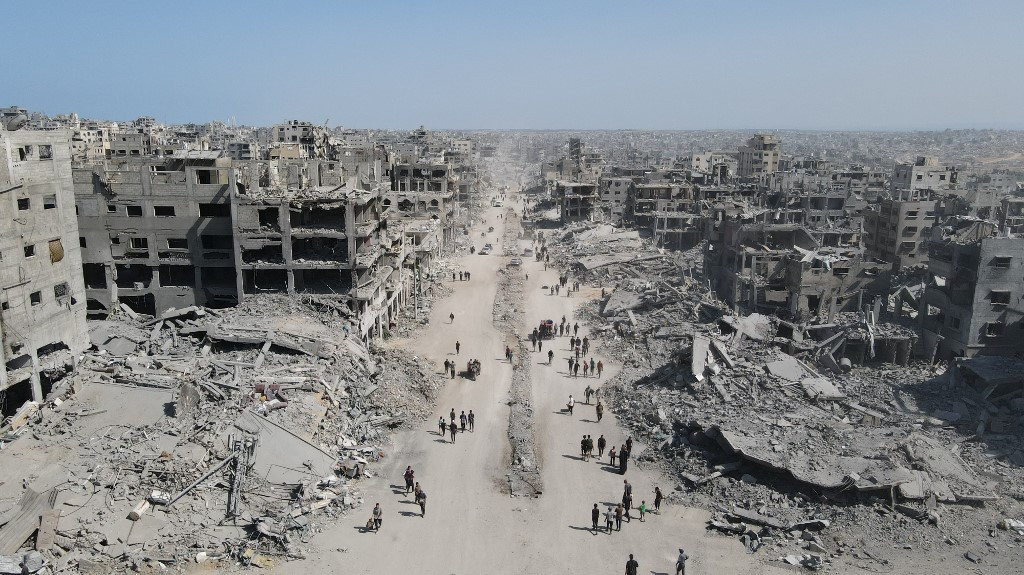

More than ten months after the United States brokered a ceasefire to end the war in Gaza, officials overseeing the deal admit it is being tested almost daily. Continued Israeli strikes and an unfinished disarmament process have left the situation on the ground far more complicated than the word “ceasefire” suggests.
This piece takes a closer look at where the Gaza ceasefire status actually stands today, and what is keeping it from becoming a full and lasting peace.
Background: A Long Road to This Point
The current truce is the third major ceasefire attempt since the Gaza war began following the October 7, 2023 attack on Israel. Earlier agreements, including one reached in January last year, collapsed after just a couple of months, with fighting resuming in March. The current ceasefire, which came into effect in October, is tied to a broader US-backed peace plan overseen by the Board of Peace, a body established under President Donald Trump to guide the deal’s implementation.
Under this plan, Hamas agreed to eventually disarm and transfer civilian governance of Gaza to another authority, a step the group formally acknowledged in July when it announced the resignation of its civil administration.
Details: Why the Ceasefire Keeps Being Tested
Despite the formal truce, Israeli forces have continued to carry out strikes inside Gaza, with officials citing ongoing security threats from Hamas as justification. According to reports from Gaza’s civil defence agency, strikes this week alone killed six people over two consecutive days, including three members of a single family in the town of Al-Qarara.
At the same time, Hamas has been criticised for not fully following through on its disarmament commitments, despite publicly pledging late last month to move forward with the process. This standoff, Israel continuing military action while citing security concerns, and Hamas delaying disarmament while citing political guarantees, has left the ceasefire in an uneasy holding pattern rather than a fully resolved peace.
Quotes From International Officials
Nickolay Mladenov, the Board of Peace’s high representative for Gaza, told the UN Security Council that the ceasefire was technically still in place, but warned that repeated unnecessary use of force was eroding the trust needed to keep the process moving forward. He described the choice ahead in stark terms, saying Gaza could either be disarmed, rebuilt, and reconnected to the world, or remain rearmed, divided, and in rubble, raising the risk of a future conflict.
On the Israeli side, Prime Minister Benjamin Netanyahu has stated that Israeli forces will not withdraw from their current positions in Gaza until Hamas has handed over all of its weapons. Israeli Defence Minister Israel Katz has also taken a hard line on smaller flashpoints, warning that any further kite-flying from Gaza into Israeli airspace would be treated as an act of terrorism.
Impact: A Ceasefire Watched Closely Around the World
The fragile nature of the Gaza ceasefire has significant implications well beyond the immediate region. Gaza’s reconstruction needs have been estimated at roughly 70 billion dollars, a figure experts say has no real modern precedent in scale, and any prolonged instability risks delaying that rebuilding process even further.
The situation has also become a point of diplomatic friction internationally, with some governments, including Pakistan, publicly questioning how a ceasefire can be described as holding while Palestinian civilian deaths continue to be reported on a near-daily basis.
Conclusion: What Needs to Happen Next
For the ceasefire to move from a fragile truce to a genuinely stable peace, mediators say two things need to happen in parallel: Hamas must complete its disarmament process, and Israel must reduce strikes that go beyond responding to immediate, verified threats. Until both sides meet these conditions, sporadic violence is likely to continue even as officials publicly maintain that the broader agreement remains intact.
With the Board of Peace continuing to push both sides toward full implementation, the coming weeks are likely to prove decisive in determining whether this ceasefire holds longer than the two that came before it.
FAQs
What is the current status of the Gaza war?
The Gaza war is currently under a ceasefire that took effect in October last year, the third such agreement since the conflict began in 2023. While officials describe the truce as technically holding, it remains fragile, with continued Israeli strikes and an incomplete Hamas disarmament process creating ongoing tension and periodic violence on the ground.
Did Israel recently strike Gaza?
Yes, Israeli forces have carried out multiple strikes on Gaza this week alone. On Friday, a strike in Al-Qarara, east of Khan Yunis, killed three members of one family, while a separate strike a day earlier also killed three people, which Israel said targeted individuals it accused of planning attacks. These incidents are among many reported since the ceasefire began, despite the truce technically remaining in effect.
When was the last attack on Gaza?
The most recently confirmed attack occurred on Friday, when Israeli strikes killed three people in Al-Qarara, near Khan Yunis, according to Gaza’s civil defence agency and Nasser Hospital officials. This followed a similar strike the day before that also resulted in three deaths, underlining how such incidents have continued to occur even under the current ceasefire arrangement.