
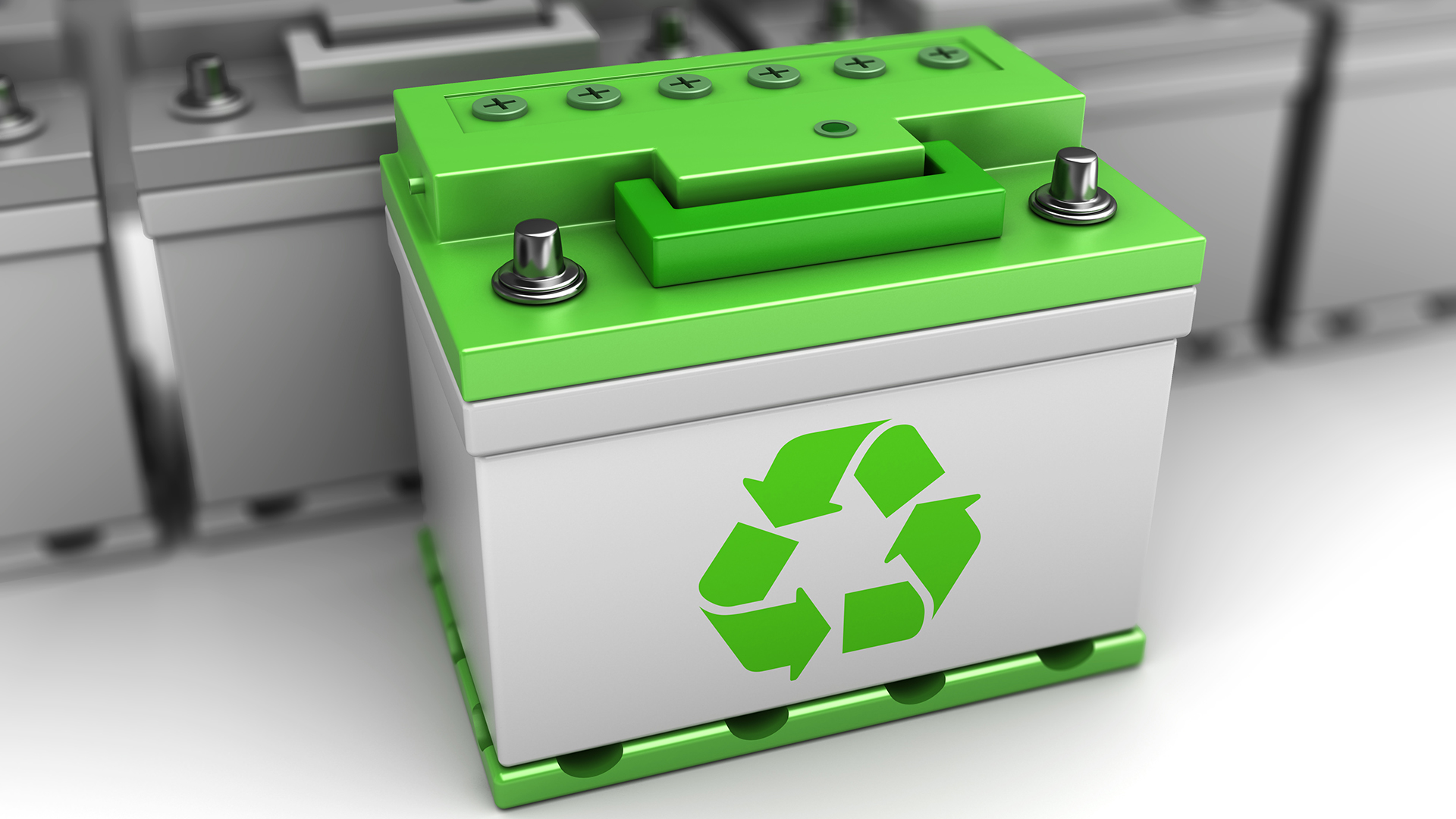
Global Regulations for Sustainable Battery Recycling: Challenges and Opportunities

Governments across the world are tightening the rules on what happens to a battery once it dies. The push behind this is simple: electric vehicles and grid storage are multiplying faster than anyone can safely landfill the batteries that power them.
Summary
New battery recycling rules are now active or close to finalized in the European Union, the United States, and China. Together they set collection targets, recovery quotas for lithium and cobalt, and reporting requirements meant to keep spent battery packs out of landfills and back inside the supply chain. Recyclers, carmakers, and battery manufacturers are being pulled into a compliance race that most of them did not expect to move this fast.
Background
Lithium-ion batteries went from a niche component in laptops to the backbone of transport and energy storage within about fifteen years. That growth solved one problem and created another. A used EV battery still holds most of its original lithium, cobalt, nickel, and copper, but until recently there was no consistent global rulebook for getting that material back out safely.
The gap became harder to ignore once the first wave of EVs sold in the early 2010s started reaching the end of their working life. A battery recycling process that once ran informally through scrap yards and small-scale exporters was suddenly expected to handle packs containing enough energy to start a serious fire if mishandled. Regulators moved from guidance documents to binding law.
Details
The European Union set the pace with its Battery Regulation, in force since 2023 and phasing in through the decade. It requires lithium-ion battery recycling efficiency to reach 65% by 2025, rising to 70% by 2030. Material recovery targets go further still: 50% lithium recovery by 2027, climbing to 80% by 2031, alongside 95% recovery for cobalt, copper, and nickel. Producers must also disclose a battery’s carbon footprint and, from 2027, attach a digital “battery passport” that tracks its materials and history.
In the United States, the picture is shaped by two separate tracks. The Inflation Reduction Act ties EV tax credit eligibility to where critical minerals are sourced, and by 2026 a large share of those minerals must be extracted or processed domestically for a vehicle to qualify. Separately, the Environmental Protection Agency is finalizing new hazardous-waste standards under the Resource Conservation and Recovery Act that will, for the first time, treat lithium-ion batteries as their own distinct waste category with dedicated rules for storage, labeling, and transport.
China, still the largest single market for both battery production and battery waste, has taken a different approach, leaning on manufacturer take-back obligations and domestic recycling capacity targets rather than a single omnibus law. Combined with the EU and US frameworks, the effect is that a battery recycling process which used to vary wildly by country is now converging around a shared set of expectations: collect more, recover more, and prove it on paper.
Quotes
Regulators involved in drafting the EU rules have described the battery passport requirement as the mechanism that finally makes recycling targets enforceable rather than aspirational, since it forces every battery placed on the market to carry a traceable record of what it contains. On the industry side, recyclers have pointed to the gap between ambition and infrastructure: efficient hydrometallurgical recovery is proven technology, but building enough capacity to process the coming wave of end-of-life EV packs is a different, more expensive problem than passing a regulation on paper.
Impact
The regulatory push is reshaping where and how recycling gets done. Domestic “urban mining,” recovering metals from local waste streams instead of importing fresh ore, is becoming a genuine hedge against the kind of raw-material supply shocks that hit carmakers hard in recent years. Recycled metals are expected to cover roughly 10 to 15% of global nickel and cobalt demand for batteries, and around 5 to 10% of lithium demand, and that share only grows as more of today’s EV batteries reach retirement.
There is an environmental case too. Lifecycle studies on recycling lithium-ion batteries into battery-grade materials have found greenhouse gas reductions of between 58% and 81% compared with mining and refining virgin material. For countries with limited mineral reserves of their own, that is as much an energy-security argument as an environmental one.
None of this is friction-free. Compliance costs fall hardest on smaller recyclers who lack the capital for hydrometallurgical plants, and cross-border shipping of battery waste now runs into a thicker stack of transport and customs rules than it did five years ago.
Conclusion
The direction of travel is clear even if the pace varies by region: more binding collection targets, tighter material-recovery quotas, and mandatory traceability are becoming the global norm rather than the exception. Over the next few years, expect recycling capacity, not battery chemistry, to be the bottleneck that determines how much of this material actually gets recovered.
FAQs
What is the process of battery recycling?
A typical battery recycling process starts with collection and safety discharge, since a damaged lithium-ion cell can catch fire if handled carelessly. Batteries are then dismantled and mechanically shredded into a mixed material known as “black mass,” which contains the valuable lithium, cobalt, nickel, and manganese locked inside the electrodes. From there, recyclers use either pyrometallurgical methods (high-temperature smelting) or hydrometallurgical methods (chemical leaching in acid baths) to separate and purify the individual metals so they can be sold back into battery manufacturing. A newer approach called direct recycling skips the breakdown step entirely and tries to recover the cathode material intact, which uses less energy but currently works only with certain battery chemistries.
Can lithium batteries be 100% recycled?
Not quite, though the technology is getting close on some materials. Hydrometallurgical recycling routes can now recover upward of 95% of the cobalt, nickel, and lithium in a battery, but plastics, electrolytes, and some trace materials are still lost or downcycled in the process. Regulation is pushing that ceiling higher: the EU’s recovery targets already require the vast majority of key metals to be reclaimed by the early 2030s, and researchers are actively working on direct-recycling methods that would push recovery rates further.
Is battery recycling environmentally friendly?
Broadly yes, when compared with mining fresh materials. Recycling lithium-ion batteries into battery-grade metals cuts greenhouse gas emissions substantially against virgin extraction, and it keeps toxic electrolytes and heavy metals out of landfills and waterways. That said, the recycling process itself is not impact-free, since leaching and smelting still use significant energy, water, and chemical inputs. That is why regulators are increasingly demanding carbon-footprint disclosure alongside recovery targets, rather than treating recycling as an automatic environmental win.