
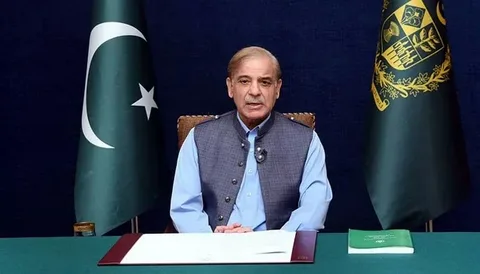
PARC restructuring has been officially approved by Prime Minister Shehbaz Sharif.
The restructuring plan envisions bringing PARC’s operations and research priorities into closer alignment with Pakistan’s broader goals of boosting agricultural exports and ensuring food security for the nation.
The PARC restructuring follows a 4-phase roadmap running to 2030. It includes five new centres of excellence, an AI-powered research system, and 25 percent private sector co-funding.
The prime minister emphasised that agricultural research plays a critical role in increasing productivity, boosting exports, and addressing food security challenges.
Background
The PARC restructuring was driven by two clear realities.
First, institutional failure. Overlapping mandates between federal and provincial research bodies have created inefficiencies, while many institutions continue to work in isolation.
Second, climate pressure. Erratic weather patterns including floods, droughts and heatwaves strain agricultural output in a country where farming remains a key pillar of the economy and a major source of employment.
Both made PARC restructuring unavoidable.
PARC Restructuring Plan
The PARC restructuring changes three things at once.
The reform vision is to align the national agenda strictly with export targets and food security goals. PARC will be repositioned as a strategic coordinator, shifting away from direct implementation, with embedded international partnerships systematically across the research system.
The prime minister directed that PARC be developed into a top agricultural research institution modelled on the Chinese Academy of Agricultural Sciences.
The private sector will contribute 25 percent of research funding via co-investment and 20 percent through commercialisation income and licensing revenue. The national agriculture research and development budget will rise from 0.5 percent to 1 percent of agriculture GDP.
PARC Restructuring — 4-Phase Roadmap
The implementation roadmap for PARC restructuring will be completed in four phases.
The first phase covers institutional setup — establishing governance bodies, defining targets, and creating an evaluation cell.
The second phase operationalises five centres of excellence at NARC and pilots the new model in Punjab and Sindh.
The third phase rolls the model out nationally to all provinces, integrates the AI-powered National Agricultural Research Information System, and hits the 25 percent private co-funding target.
The fourth phase ensures continuous global benchmarking, international peer reviews, and establishes Pakistan as a regional innovation leader in agricultural research.
Role of PARC
PARC restructuring reshapes how Pakistan Agricultural Research Council delivers on its core mandate.
PARC would be reorganised under a comprehensive, time-bound plan to transform it into a modern and effective institution aligned with contemporary research needs, linking agricultural research more closely with industry needs and ensuring clearer performance targets.
Key reforms include improving governance structures, hiring top-tier researchers, enhancing international collaboration, strengthening coordination with provincial governments, and introducing clear performance metrics.
Four ecology-based regional centres will also be established, focusing on tropical, dryland, mountain, and arid zone agriculture across the country.
Is PARC Government or Private
PARC is a government institution. It operates under the Ministry of National Food Security and Research and is funded through the federal budget.
PARC restructuring does not change its ownership. What it changes is the funding mix — with 25 percent of research funding coming from private co-investment by Phase 3.
Pakistan Agricultural Research Council stays fully government-owned and government-governed. Performance accountability, however, will mirror private sector standards for the first time in its history.
PARC History
PARC was established in 1981 as Pakistan’s apex body for coordinating agricultural research across federal and provincial institutions.
The National Agricultural Research Centre in Islamabad — PARC’s main research arm — was inaugurated by the President of Pakistan in March 1984.
In 2019, PARC helped release 20 climate-resilient, high-yielding wheat and maize varieties through a partnership with the International Maize and Wheat Improvement Center.
The PARC restructuring now underway is the most significant institutional change in its 44-year history.
Quotes
“Agricultural research plays a key role in the promotion of the country’s agriculture and food security sectors.” — PM Shehbaz Sharif
“Research must move beyond siloed structures and adopt cross-disciplinary approaches, ensuring practical and commercially viable outcomes.” — Rana Tanveer Hussain, Minister for National Food Security and Research
“PARC would be reorganised under a comprehensive, time-bound plan to transform it into a modern and effective institution aligned with contemporary research needs.” — PM’s Office Statement
Impact
For food security, Pakistan’s 240 million people depend on a sector contributing over 20 percent of GDP. PARC restructuring gives the institution a real performance mandate for the first time in 44 years.
For regional competitiveness, India’s ICAR runs over 100 research institutes. China’s CAAS leads globally. PARC restructuring is Pakistan’s direct attempt to close that widening regional gap.
For future policy, PARC restructuring signals that agricultural research is now treated as a strategic national asset — not an administrative budget line that gets cut under fiscal pressure.
FAQs
What is the role of PARC?
PARC conducts and coordinates agricultural research across Pakistan. It develops crop varieties, manages soil and pest research, advises government on food policy, and collaborates with international bodies like FAO and the World Bank.
Is PARC government or private?
PARC is a government institution under the Ministry of National Food Security and Research. PARC restructuring introduces 25 percent private co-funding by Phase 3 but the council remains fully government-owned.
What is the history of PARC?
PARC was established in 1981. Its main research arm NARC opened in 1984. The 2026 PARC restructuring is the biggest reform in its 44-year history.
Conclusion
PARC restructuring has a mandate, a model, and a roadmap.
The prime minister directed that PARC be transformed into a modern, high-performing institution to strengthen Pakistan’s agriculture sector and ensure food security.
The first phase delivers by end of 2026. That is the real test. If governance bodies are functional by year-end, PARC restructuring has a foundation.
If not, 2026 becomes another approval without an outcome — and Pakistan’s food security cannot afford that.