
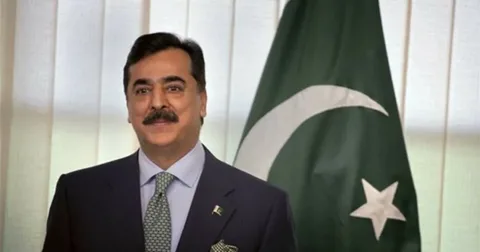
Gilani austerity measures Pakistan have officially taken effect at the Senate Secretariat.
Senate Chairman Yousuf Raza Gilani directed wide-ranging austerity measures projecting a reduction of more than 50 percent in the Senate Secretariat’s remaining budgetary utilisation for the current fiscal year, translating into savings of approximately Rs700 to Rs750 million.
The Gilani austerity measures Pakistan plan starts from the top. Cuts begin at the chairman’s own office before extending to all departments.
A dedicated Senate Austerity Committee will now approve all future procurement across the secretariat.
Background
The Gilani austerity measures Pakistan announcement fits into a wider national economic response.
The austerity measures for the secretariat align with a broader initiative taken by the government to deal with a global fuel crunch resulting from the ongoing Middle East conflict.
The government has also cancelled the Pakistan Day parade, citing the deepening energy crisis and sweeping nationwide austerity across state institutions.
The Gilani austerity measures Pakistan plan arrived one day after a controversy over the purchase of a Rs90 million vehicle for the Senate chairman — a sequence that drew significant public attention.
Gilani Austerity Measures Pakistan — Full Plan
Adopting a top-down approach to fiscal discipline, Gilani directed that cuts would start from his own office before being extended to other areas of the secretariat’s spending.
The Gilani austerity measures Pakistan initiative targets more than 50 percent reduction in the remaining budget for the current fiscal year.
The chairman emphasised that public office is a sacred trust requiring the highest standards of financial prudence, and that transparency, accountability, and fiscal discipline must remain the guiding principles in all administrative and financial matters of the secretariat.
Any future procurement is now subject to review and approval by the newly formed Senate Austerity Committee.
What the Cuts Include
The Gilani austerity measures Pakistan plan covers six immediate actions across the secretariat.
These include a complete ban on foreign travel, a 50 percent reduction in POL consumption, the grounding of 60 percent of official vehicles, a strict ban on non-essential procurements, and the implementation of salary deductions or contributions in line with government policy.
The Senate Secretariat will observe a four-day working week. Additionally, 50 percent of staff will perform duties through physical presence in offices while the remaining 50 percent will work virtually from home on a rotational basis, ensuring continuity of official functions while reducing operational costs.
Standing committee meetings are being shifted to virtual platforms to reduce travel costs further.
The Rs90m Car Controversy
The Gilani austerity measures Pakistan rollout came one day after a significant public controversy.
The Senate Secretariat issued a rebuttal to reports of the purchase of a luxury vehicle for Gilani, but the statement appeared to further complicate the matter by essentially confirming the purchase and reiterating details already reported. The vehicle was delivered in March 2026, whereas the payment was made from the previous year’s budget savings.
Critics questioned the timing of the austerity drive. Many observers noted that the Gilani austerity measures Pakistan announcement followed directly after the vehicle story gained national attention.
The Senate Secretariat did not disclose the cost of the vehicle in its rebuttal statement.
Yousaf Raza Gilani Background
Yusuf Raza Gilani was born in Multan, Punjab, to a Saraiki family of Sufi Sayyids. He attended Government College University and obtained his BA in journalism, followed by an MA in Political Journalism from the University of the Punjab.
Gilani was born into a prominent family of landowners from Punjab, many of whom were involved in politics, including his father, who was a provincial minister.
He served as Speaker of the National Assembly from 1993 to 1997. He was then imprisoned for nearly six years under the Musharraf government on charges widely seen as politically motivated.
Gilani served as the 16th Prime Minister of Pakistan from 2008 to 2012 and is currently serving as Chairman of the Senate since 2024. He remains Pakistan’s first and only ethnic Saraiki prime minister.
Are Gilani Shia or Sunni
This is one of the most searched questions about the Senate chairman.
The Gilani family subscribes to Sunni doctrines and traces descent from Shaikh Abdul Qadir Jilani, a Sunni theologian and Sufi scholar.
However, some sources describe his background differently. He was born in an influential Shia family of Multan. His father was a descendant of Syed Musa Pak, who was a spiritual leader of the Sufi order.
Gilani has not made public statements clarifying his sectarian identity and is widely regarded as a mainstream politician who does not emphasise sectarian affiliation.
Quotes
“Public office is a sacred trust requiring the highest standards of financial prudence. Transparency, accountability, and fiscal discipline must remain the guiding principles in all administrative and financial matters of the secretariat.” — Yousaf Raza Gilani, Senate Chairman
“Austerity is not merely a policy directive but a collective national responsibility.” — Yousaf Raza Gilani, Senate Chairman
“No office is above accountability.” — Senate Secretariat Statement
Impact
For the Senate, the Gilani austerity measures Pakistan plan sets a clear institutional precedent. This is the first time cuts have been ordered starting from the chairman’s own office downward — making it harder for other departments to resist compliance.
For the wider government, the initiative reinforces a national austerity framework triggered by the Middle East energy crisis. The National Assembly Secretariat has implemented similar measures across its own operations.
For public confidence, the timing of the Gilani austerity measures Pakistan announcement — one day after the Rs90m vehicle controversy — reduced its initial credibility. Whether the projected Rs700m in savings is actually delivered will determine how the initiative is ultimately judged.
FAQs
What is the background of Yousaf Raza Gilani?
Gilani was born in Multan into a prominent landowning family. He studied journalism in Lahore, served as National Assembly Speaker from 1993 to 1997, and was Prime Minister from 2008 to 2012. He has been Senate Chairman since 2024.
Is Pakistan in crisis now?
Yes. Pakistan is navigating an economic crunch driven by the Middle East conflict, rising fuel costs, and fiscal pressure. The government has implemented nationwide austerity including vehicle cuts, travel bans, and salary deductions across public institutions.
Are Gilani Shia or Sunni?
Sources differ on this question. His family traces descent from the Sunni Sufi scholar Abdul Qadir Jilani, but some sources describe him as coming from a Shia family. Gilani does not publicly emphasise sectarian identity.
Conclusion
Gilani austerity measures Pakistan represent the Senate’s most direct response to the country’s economic pressure.
The plan is in place. The committee is formed. The cuts are announced.
Whether the Gilani austerity measures Pakistan initiative survives public scrutiny — especially after the Rs90m vehicle controversy — will depend entirely on whether the savings delivered match the savings promised.
Pakistan’s fiscal credibility at the institutional level is now on the line.