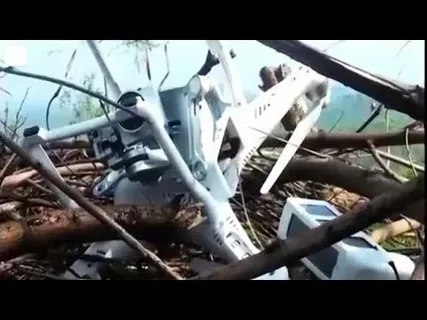
The Rawalpindi drone crash has been confirmed by security sources after an unmanned aerial vehicle fell on a residential house in the Chaklala area.
Security sources said that an unmanned aerial vehicle fell on a house in the Chaklala area of Rawalpindi early Tuesday morning. No loss of life was reported in the incident, though the house sustained some damage.
The Rawalpindi drone crash is the latest in a series of UAV incidents linked to ongoing military operations and cross-border tensions along Pakistan’s northwestern frontier.
Background
Rawalpindi Drone Crash — What Led Here
The Rawalpindi drone crash did not occur in a vacuum. It follows a pattern of drone activity that has escalated sharply since Pakistan launched Operation Ghazab-lil-Haq.
Pakistan’s military said drones, described as locally produced and rudimentary, were intercepted before reaching their targets, though falling debris wounded two children in Quetta and civilians in Kohat and Rawalpindi, where the Pakistani military is headquartered.
The incidents are taking place amid heightened tensions under Operation Ghazab lil-Haq, launched on February 26 following cross-border hostilities attributed to Afghan Taliban forces.
The Rawalpindi drone crash comes in a city that has now recorded multiple UAV-related incidents within a short span — making it one of the most frequently targeted urban centres in the current wave of drone activity.
Details
Rawalpindi Drone Crash — Full Incident Report
An unmanned aerial vehicle fell on a residence in the Chaklala area of Rawalpindi. No loss of life was reported in the incident, though the house sustained some damage.
Security sources confirmed the Rawalpindi drone crash but did not immediately specify the origin of the UAV or whether it had been intercepted by air defence systems before falling.
The Chaklala area where the Rawalpindi drone crash occurred is a strategically significant neighbourhood. It is home to the Chaklala Garrison and Nur Khan Airbase, making any UAV activity in the area a matter of elevated security concern.
Pakistani security forces earlier intercepted two rudimentary drones near Rawalpindi linked to the Afghan Taliban-backed group Fitna al-Khawarij. No damage was reported in that instance, with the statement confirming that no military or civilian infrastructure was damaged aside from minor debris from the forced crashing of the drones.
Pattern of Drone Incidents in Pakistan
The Rawalpindi drone crash is part of a wider pattern. Security forces have been using both soft and hard kill methods to neutralise incoming drones throughout the current period of heightened tension.
The provincial police in Khyber Pakhtunkhwa used an anti-drone jamming system which forced a drone’s motor to shut down and crash safely in Kohat. The provincial government has approved a package to strengthen police operational capacity, including modern weapons, anti-drone systems, and advanced technologies.
Are Drones Banned in Pakistan
The Rawalpindi drone crash has renewed public interest in the question of whether drones are banned in Pakistan.
Pakistan imposed an immediate nationwide ban on all drone operations, citing a heightened security environment and ongoing counterterror operations. The directive from the Interior Ministry covers commercial, recreational and privately owned unmanned aerial vehicles of every category. Any violation of the ban will invite legal action, while public cooperation has been described as mandatory.
Punjab also imposed an immediate and complete ban on flying drones outdoors across the province for 30 days, citing risks to public safety, security of public and private property, and the maintenance of public order. Intelligence and law enforcement agencies were exempted from the ban.
So are drones banned in Pakistan? Yes — under the current security environment, a sweeping nationwide ban on civilian drone operations is in force. This makes any UAV in Pakistani airspace outside of military and law enforcement use a potential security threat.
Is It Easy to Crash a Drone
The Rawalpindi drone crash also raises the technical question of whether it is easy to crash a drone.
It depends on the method and the drone. Rudimentary drones like those described in the recent incidents are significantly easier to bring down than advanced military UAVs. Pakistan’s security forces have deployed both soft kill methods — electronic jamming systems that cut the drone’s signal or shut down its motor — and hard kill methods involving physical interception or shooting.
The provincial police used an anti-drone jamming system which forced a drone’s motor to shut down and crash safely, demonstrating that is it easy to crash a drone when the right countermeasures are deployed against low-technology UAVs.
For higher-end military drones, however, it is not easy to crash a drone without sophisticated air defence systems. The Rawalpindi drone crash highlights how debris from even successfully intercepted UAVs can cause property damage and civilian injuries.
Quotes
“No military or civilian infrastructure was damaged aside from minor debris from the forced crashing of the drones.” — Inter-Services Public Relations, on drone interceptions near Rawalpindi
“The Taliban regime’s claim includes no verifiable evidence and exposes its established role as a proxy supporter of terrorism.” — Ministry of Defence Statement, responding to Afghan claims about drone strikes
“Any attempt to destabilise peace in Kohat or elsewhere will be thwarted.” — Special Assistant to the KP Chief Minister on Information
“Full control of low-altitude airspace is now considered essential to national security.” — Interior Ministry Statement, on the nationwide drone ban
Impact
For Rawalpindi residents, the Rawalpindi drone crash is a stark reminder that the Pakistan-Afghanistan conflict is not confined to border regions. A UAV falling on a residential house in Chaklala brings the security threat directly into an urban neighbourhood within one of Pakistan’s most heavily garrisoned cities.
For Pakistan’s air defence posture, each Rawalpindi drone crash incident strengthens the case for accelerated investment in layered anti-drone systems across major cities. The KP government has already approved a significant package for anti-drone technology and the Punjab government has imposed a 30-day civilian drone ban under Section 144 — but the incidents keep coming.
For the Pakistan-Afghanistan conflict overall, the drone dimension is escalating. What began as rudimentary UAVs crossing the border has produced a series of urban incidents — in Rawalpindi, Quetta, and Kohat — that are testing Pakistan’s ability to protect civilian areas from drone debris even when the UAVs themselves are successfully intercepted.
FAQs
What is the drone attack in Pakistan Rawalpindi?
An unmanned aerial vehicle fell on a house in the Chaklala area of Rawalpindi early Tuesday morning. Security sources confirmed no loss of life but said the house sustained damage.The Rawalpindi drone crash follows a series of similar incidents linked to Afghan Taliban drone activity during Operation Ghazab-lil-Haq.
What weapon can disable a drone?
Multiple systems are used. Electronic jamming devices cut the drone’s signal and force a motor shutdown — the method used in Kohat. Radar-guided missiles and anti-aircraft guns are used for hard kill interceptions. Pakistan has also deployed dedicated anti-drone units in Punjab and KP with modern jamming technology. In military contexts, laser-based systems and signal-spoofing technologies are increasingly deployed against UAVs of all sizes.
Has Pakistan shot down Indian drones?
Yes. Pakistan’s Inter-Services Public Relations confirmed that 30 Indian kamikaze drones were downed over multiple cities including Rawalpindi, Gujrat, Attock, Gujranwala, Lahore, Sheikhupura, Nankana, Ghotki and Karachi’s Malir district. It was the first time an Israeli-made Heron MK 2 UAV flying at altitudes as high as 35,000 feet was neutralised during combat by Pakistan.
Conclusion
The Rawalpindi drone crash is a small incident in terms of casualties — none reported — but a significant one in terms of what it signals.
A UAV falling on a residential home in Chaklala, one of the most sensitive military neighbourhoods in Pakistan, is not a routine event. It is a marker of how far the drone threat has penetrated beyond the frontier regions into Pakistan’s urban heartland.
Are drones banned in Pakistan? Yes, comprehensively, under the current security order. Is it easy to crash a drone? For rudimentary Taliban UAVs, increasingly yes — Pakistan’s anti-drone systems are improving. But as the Rawalpindi drone crash shows, even a crashed drone leaves damage behind.