
IMF global inflation US-Israel Iran war concerns have now reached an official warning level as the world’s top financial institution raised alarms over the conflict’s deepening economic consequences.
The International Monetary Fund said it was monitoring the impacts of the war in Iran on global inflation and output, and confirmed that no countries had so far approached it for emergency assistance related to the conflict.
The IMF warns that if oil prices remain elevated above $100 per barrel for a sustained period, global inflation could rise by up to two percent while output falls — a combination that risks pushing the most vulnerable economies toward crisis.
The israel iran war has now triggered an IMF response that places the conflict firmly in the category of global systemic risks — alongside the israel war with palestine 2023 and the Russia-Ukraine conflict as defining economic shocks of this decade.
Background
IMF Global Inflation US-Israel Iran War — How the Crisis Built
The IMF global inflation US-Israel Iran war warning did not emerge suddenly. It reflects three weeks of escalating economic damage that has compounded daily since the conflict began.
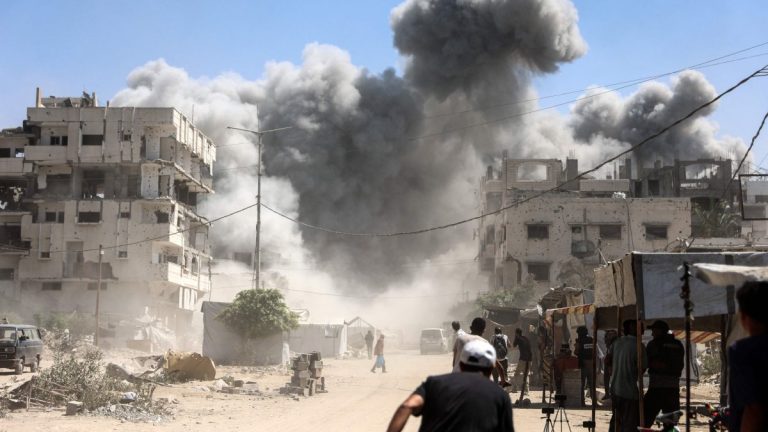
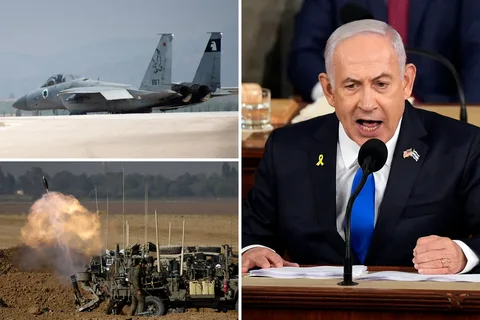
The US and Israel launched strikes on Iran on February 28, sparking a war that has engulfed the Middle East and seen Tehran virtually blockade the key Strait of Hormuz waterway. About 20 percent of the world’s oil and natural gas passes through the strait, and the crisis has sent energy prices spiralling with potential knock-on effects on inflation worldwide.
Oil prices surged from less than $70 a barrel in February to a peak of nearly $120, and were currently trading around $90 to $110. Every 10 percent increase in oil prices, provided they persist for most of the year, will push up global inflation by 0.4 percent and reduce worldwide economic output by as much as 0.2 percent, according to the IMF managing director.
The IMF global inflation US-Israel Iran war concern connects directly to the chain reaction that the israel iran war has set off in energy markets — a chain reaction that economists are now comparing to the oil shocks of 1973 and 1978.
Details
IMF Global Inflation US-Israel Iran War — The Full Warning
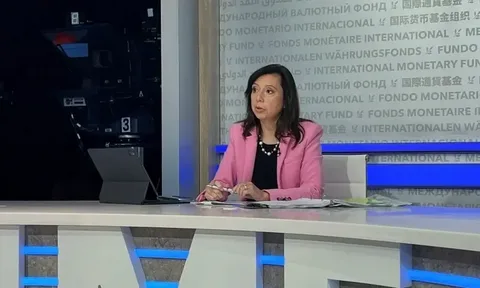
IMF chief spokesperson Julie Kozack said at a press briefing that if prolonged, higher energy prices will lead to higher headline inflation. She said that if oil prices remained above $100 for a year or more, the estimated impact on global inflation could be a rise of up to two percent, with output dropping proportionally.
The IMF warns the damage will not fall evenly. Kozack said the world’s most economically vulnerable states would be first in line to feel the fallout. They have limited policy space, limited buffers, and this in a world where financing conditions may be becoming more challenging for them.
The IMF managing director Kristalina Georgieva warned that if the war is prolonged, it poses an inflationary risk on the global economy. We are seeing resilience tested again by the new conflict in the Middle East, she said at a symposium hosted by Japan’s Ministry of Finance while warning policymakers to be prepared for it.
The Stagflation Danger
The IMF global inflation US-Israel Iran war warning carries a specific fear that goes beyond simple price rises — the risk of stagflation.
Oil price shocks have historically summoned stagflation — increasing inflation coupled with rising unemployment. Economists pointed to the crises of 1973, 1978, and 2008 as evidence that every significant spike in oil prices has been followed in some form by a global recession. The 1973 crisis is particularly relevant given that the current israel iran war has produced a Strait of Hormuz closure that directly parallels the Arab oil embargo of that year.
The israel iran war has placed central banks in an impossible bind. Higher energy prices feed inflation as well as hurting the economy. Should central bankers raise rates to curb inflation or cut them to give the economy a lift? In the US, the Fed is already divided between policymakers who think a weak American job market needs help from lower rates and those still worried that inflation remains stuck above the central bank’s 2 percent target.
Who Is Most Exposed
The IMF global inflation US-Israel Iran war assessment identifies specific categories of countries at highest risk.
The economies of energy importers, including most of Europe, South Korea, Taiwan, Japan, India, and China, will feel the pain of higher prices the most. Any countries with significant agriculture sectors, including the US, are also vulnerable. The effects are going to be most devastating in low-income countries where agricultural productivity may already be challenged.
Schneider at the Middle East Council on Global Affairs warned that debt-ridden Global South countries may face a debt crisis if interest rates are hiked in the Global North to combat the IMF global inflation US-Israel Iran war pressures.
The Stock Market Damage
The IMF warns its concerns are already visible in market data. Global stocks have fallen 5.5 percent since the war began. The New York Stock Exchange Composite Index had fallen by 6 percent. The Nasdaq had fallen by 2.4 percent. The Shanghai Composite had fallen by 1.86 percent since the israel iran war began.
The war has not only sent oil prices surging but has also upended global travel, pushing airline ticket costs on some routes sky-high. Australia’s Qantas Airways, Scandinavia’s SAS, Air New Zealand and India’s two biggest carriers IndiGo and Air India have all announced airfare hikes, blaming an abrupt spike in fuel costs linked to the israel iran war.
No Emergency Financing Requests Yet
Despite the severity of the IMF global inflation US-Israel Iran war warning, one notable fact has emerged from the Fund’s briefing.
The IMF confirmed it had not received any formal requests for emergency financing in the wake of the US-Israel war on Iran.
The absence of emergency requests reflects the early stage of economic impact — most economists expect such requests to follow if the conflict continues beyond the coming weeks.
From Israel War With Palestine 2023 to the Israel Iran War
The IMF global inflation US-Israel Iran war concern must be understood in the context of a region that has been in successive states of conflict for years.
The israel war with palestine 2023 — which began in October 2023 after Hamas’s attack on Israel and Israel’s subsequent military campaign in Gaza — had already strained regional economies, disrupted Red Sea shipping through Houthi attacks, and elevated geopolitical risk premiums across global energy markets.
The israel iran war of 2026 represents a dramatic escalation beyond the israel war with palestine 2023 in both scale and economic consequence. Where the israel war with palestine 2023 disrupted Red Sea shipping lanes, the israel iran war has effectively closed the Strait of Hormuz — a far more critical chokepoint carrying 20 percent of global oil rather than the roughly 12 percent that transited the Red Sea.
The IMF warns that the cumulative economic damage of the israel war with palestine 2023 followed immediately by the israel iran war has left global supply chains, energy markets, and developing economies with significantly reduced buffers to absorb further shocks.
Quotes
“If prolonged, higher energy prices will lead to higher headline inflation.” — Julie Kozack, IMF Chief Spokesperson
“They have limited policy space, limited buffers and this in a world where financing conditions may be becoming more challenging for them.” — Julie Kozack, IMF Chief Spokesperson, on the most vulnerable states
“We are seeing resilience tested again by the new conflict in the Middle East.” — Kristalina Georgieva, IMF Managing Director
“Now we’re in the nightmare scenario.” — Maurice Obstfeld, former IMF Chief Economist, on the Strait of Hormuz closure
“The Strait of Hormuz has to be reopened. It’s 20 million barrels of oil a day going through there. There is no excess capacity anywhere in the world that can fill that gap.” — Simon Johnson, MIT economist and 2024 Nobel Prize recipient
“The economic impact of the Strait of Hormuz closure is only beginning to emerge.” — Senior economist, Middle East Council on Global Affairs
“It’s hard to see Iran backing down now that it’s announced this new leader.” — Simon Johnson, on the outlook for the israel iran war
Impact
For the global economy, the IMF global inflation US-Israel Iran war warning confirms what markets have been pricing in since the conflict began. A 52 percent rise in Brent crude, a 5.5 percent fall in global stocks, surging airfares, disrupted supply chains, and a central bank policy dilemma that no rate decision can cleanly resolve.
For developing countries, the IMF warns the israel iran war will be most devastating where buffers are thinnest. Countries with food import dependencies, dollar-denominated debt, and limited fiscal space face the prospect of a debt crisis if the Global North raises rates to combat inflation driven by the israel iran war energy shock.
For the israel war with palestine 2023 legacy, the economic damage of that conflict had not yet healed when the israel iran war began. The cumulative strain on regional economies — Lebanon, Jordan, Egypt, Iraq — is now approaching crisis levels according to IMF monitoring data.
For central banks, the IMF warns the stagflation risk from the IMF global inflation US-Israel Iran war scenario echoes the 1970s. Raising rates hurts growth. Cutting rates fuels inflation. There is no clean exit from this bind while the Strait of Hormuz remains effectively closed.
FAQs
When did the Iran war start in 2026?
The US and Israel launched strikes on Iran on February 28, sparking the israel iran war that has engulfed the Middle East and triggered the Strait of Hormuz blockade that is now driving the IMF global inflation US-Israel Iran war warning.The conflict began after indirect talks between the US and Iran mediated by Oman failed to prevent military action.
Why has inflation gone up in Iran?
Iran’s inflation was already critically high before the israel iran war began. Consumer price inflation in Iran has remained exceptionally high for years, estimated at around 42.4 percent in 2025 and projected to remain above 40 percent in 2026 due to currency weakness, structural constraints, and US sanctions. Successive administrations ran deficits financed by heavy borrowing and money printing, fuelling an inflationary spiral.The israel iran war has added wartime destruction, oil infrastructure damage, and complete international financial isolation to these pre-existing pressures — pushing Iran’s inflation trajectory sharply higher in 2026.
What is the IMF forecast for Iran’s inflation in 2026?
The IMF forecast Iran’s inflation at 42.4 percent for 2025 and projected it to remain above 40 percent in 2026 before the israel iran war began.The World Bank, accounting for the war’s impact, projected inflation to push above 50 percent in 2026 to 2027, with poverty rising from 33.2 percent to 35.4 percent and potentially reaching 38.8 percent — pushing an additional 3 million Iranians into poverty.The IMF warns these projections will worsen further if the israel iran war continues to disrupt Iran’s oil exports, currency stability, and fiscal position simultaneously.
Conclusion
The IMF global inflation US-Israel Iran war warning is the most significant institutional economic alarm since the conflict began.
Two percent additional global inflation. Output falls across every major economy. The most vulnerable countries hit first and hardest. Central banks paralysed between inflation and recession. A Strait of Hormuz that remains closed with no credible exit timeline in sight.
The question is how long it is going to go on. It is hard to see Iran backing down now that it has announced its new leader.
The IMF warns and monitors. The israel iran war continues. The israel war with palestine 2023 never fully ended. And the global economy — which absorbed the pandemic, the Ukraine war, and Trump’s tariffs — is being asked to absorb one shock too many at a moment when its buffers are already thin.
Whether it can is the question that the IMF global inflation US-Israel Iran war warning has now placed at the centre of global economic policy.