
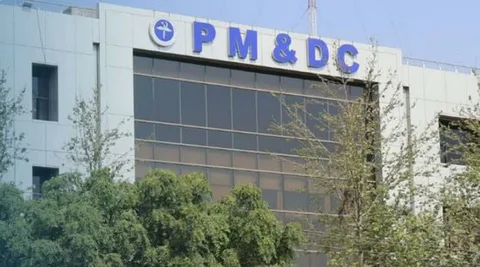
PMDC unrecognised postgraduate programmes have become a critical concern for Pakistan’s medical education sector as the Pakistan Medical and Dental Council formally identified ten universities offering postgraduate programmes that do not meet the statutory recognition requirements under the PMDC Act 2022.
The PMDC registrar has strictly refrained all colleges and universities from advertising or offering any unrecognised postgraduate medical and dental programmes, warning that non-compliance will result in disciplinary proceedings under Section 35(i) of the PMDC Act 2022.
The PMDC unrecognised postgraduate programmes crackdown directly affects thousands of doctors and dentists currently enrolled in or recently graduated from MS, MD, MDS, MPhil, PhD, FCPS, MCPS, and diploma programmes whose qualifications now face registration refusal.
Background
PMDC Unrecognised Postgraduate Programmes — Why This Crisis Emerged
The PMDC unrecognised postgraduate programmes problem did not arise overnight. It is the product of a regulatory transition that left many institutions — and the doctors enrolled in them — caught between two different legal frameworks.
The Pakistan Medical and Dental Council has clarified that postgraduate qualifications obtained from training institutions not recognised under Section 25 of the PMDC Act 2022, and not covered under the earlier amnesty deadline of December 31 2023, cannot be registered. The Secretariat has been directed to process all pending applications strictly in accordance with the law and Council decisions.
The PMDC unrecognised postgraduate programmes crisis intensified when doctors began discovering that their degrees — obtained from institutions they believed were compliant — were being rejected during the registration process.
Over 70 MS, MD, and MDS doctors approached key offices including the Prime Minister of Pakistan, urging the constitution of a high-powered committee to investigate serious concerns regarding PMDC’s licensing and accreditation procedures, alleging systematic bias against university-based postgraduate medical programmes while providing preferential treatment to certain other institutions.
Details
PMDC Unrecognised Postgraduate Programmes — What the Council Has Decided
The Core Regulatory Position
In its Postgraduate Medical Education Committee meeting, the Council decided that postgraduate qualifications obtained from training institutions not recognised under Section 25 of the PMDC Act 2022, and not covered under the earlier amnesty deadline, cannot be registered. The Council also decided to harmonise the registration process for postgraduate qualifications awarded by universities and CPSP.
The PMDC unrecognised postgraduate programmes ruling applies across the complete range of medical and dental specialisations. The affected qualifications include MS, MD, MDS, MPhil, PhD, FCPS, MCPS, and all diploma programmes awarded by Pakistani universities, medical institutions, and the College of Physicians and Surgeons Pakistan.
What Section 25 of the PMDC Act 2022 Requires
Section 25 is the legal foundation of the entire PMDC unrecognised postgraduate programmes determination. Under this section, both the degree-awarding institution and the training site must be independently recognised by PMDC before any qualification obtained from them can be registered.
The Council reaffirmed its decision emphasising that recognition of both the postgraduate qualification and the training institute is mandatory under the current law. Inspection and formal recognition of training institutes are statutory prerequisites. Applications submitted under the repealed PMC Act 2020 cannot be processed under the prevailing legal regime and fresh applications must be filed in compliance with the PMDC Act 2022.
This dual-recognition requirement is the single most consequential element of the PMDC unrecognised postgraduate programmes ruling — because many institutions had their programme recognised without ensuring that the training site itself had also been separately inspected and formally approved.
Who Is Affected and Who Is Protected
The Act does not apply retrospectively. Candidates who were enrolled or had completed their qualifications before January 16 2023 will be considered under the previously applicable legal framework. However, those who enrolled after this date must ensure that their degree-awarding institution and training site are recognised by PMDC in accordance with Section 25 of the Act.
The PMDC unrecognised postgraduate programmes determination therefore divides affected doctors into three categories.
The first category covers doctors enrolled or graduated before January 16 2023 — they fall under the old PMC Act 2020 framework and are not affected by the new ruling.
The second category covers doctors whose final examinations were completed on or before December 31 2023 — they were protected by the one-time amnesty previously granted by PMDC.
The third category covers doctors enrolled after January 16 2023 in institutions whose programmes or training sites were not formally recognised under Section 25 — these are the doctors whose qualifications fall under the PMDC unrecognised postgraduate programmes ruling and who face registration refusal.
The Discrimination Allegations
The PMDC unrecognised postgraduate programmes ruling has not gone unchallenged. A major controversy surrounds allegations that the ruling disproportionately harms university-based postgraduate graduates while protecting CPSP fellows trained at the same hospitals.
Complainants claimed that hundreds of medical professionals who completed MS, MD and MDS degrees from HEC-chartered universities were facing discrimination in licensing despite having equivalent or superior training credentials. They alleged that PMDC had established differential licensing pathways that systematically favour graduates of the College of Physicians and Surgeons Pakistan while denying equivalent recognition to university postgraduate degree holders, despite both groups training at the same teaching hospitals and having comparable international recognition.
Complainants further alleged that current and former CPSP office-bearers were holding positions within PMDC, HEC and as vice chancellors, and demanded mapping of overlapping appointments, decision-making authority and timelines of policy changes.PMDC rejected these allegations directly.
The Council said the complaint contained multiple generalised allegations without verifiable evidence and appeared to be filed with ulterior motives and mala fide intentions to malign the statutory regulatory authority and create confusion among stakeholders.
Disciplinary Consequences for Universities
Universities currently offering PMDC unrecognised postgraduate programmes face formal disciplinary action.
In case of non-compliance with the intimation, PMDC will initiate disciplinary proceedings under Section 35(i) of the PMDC Act 2022. PMDC will continue working towards the targets the Council has set to raise the standard of medical and dental education and licensing in Pakistan while continuing to discipline individuals and organisations who do not meet the benchmarks of excellence set by PMDC.
PMDC Permanent License — How It Connects
The PMDC unrecognised postgraduate programmes ruling has direct implications for the pmdc permanent license pathway that every specialist in Pakistan must complete.
A pmdc permanent license is the final professional licence that allows a doctor to practise independently in Pakistan without any conditions or time restrictions. To obtain a pmdc permanent license in the speciality pathway, a doctor must have a registered postgraduate qualification. If the qualification is from a PMDC unrecognised postgraduate programme, the pmdc permanent license application cannot proceed — leaving the doctor in professional limbo regardless of the quality of their clinical training.
The pmdc permanent license application requires submission of the postgraduate degree certificate, PMDC registration documents, internship completion certificate, and evidence that both the degree-awarding institution and the training site are formally recognised under Section 25 of the PMDC Act 2022. Doctors whose qualifications fall under the PMDC unrecognised postgraduate programmes ruling must first resolve the recognition status of their training institution before their pmdc permanent license application can be processed.
PM&DC Complaint Portal and Helpline
Doctors and institutions affected by the PMDC unrecognised postgraduate programmes ruling can engage with the regulatory process through official channels.
The pm&dc complaint portal is available through the official PMDC website at pmdc.pk and allows practitioners and institutions to submit formal complaints, registration queries, and accreditation concerns directly to the Council’s administrative secretariat. The pm&dc complaint portal is the recommended first step for any doctor whose qualification has been refused registration under the PMDC unrecognised postgraduate programmes ruling.
The pm&dc helpline number provides direct telephone access to PMDC’s information and support services. The pm&dc helpline number for general enquiries and registration support is available on the official PMDC website. Both the pm&dc complaint portal and the pm&dc helpline number have seen significantly increased activity since the PMDC unrecognised postgraduate programmes ruling was issued — reflecting the scale of confusion and concern across Pakistan’s postgraduate medical community.
Quotes
“PMDC shall register only those postgraduate qualifications which are duly inspected and recognised by the Council and are included in the second schedule of the PMDC Act 2022.” — PMDC Registrar, official statement
“These measures are aimed at protecting the quality and integrity of medical education and specialist training across Pakistan. The council remains committed to transparent governance, regulatory compliance and the continuous strengthening of postgraduate medical education in the country.” — Prof Dr Rizwan Taj, President PMDC
“Equal treatment will be ensured for every specialist in accordance with the law.” — Prof Dr Rizwan Taj, PMDC President
“How can PMDC maintain double standards for postgraduate trainees from two different setups? There is a strong feeling within AUPSP that PMDC is being managed by certain elements.” — AUPSP Representative, Association of University Physicians and Surgeons Pakistan
“Some hospitals started FCPS while others initiated MS, MD or MDS programmes. After PMDC came into existence in 2023, it announced that instead of hospitals, programmes would be inspected, which was acceptable. However, when the issue of existing trainees arose, PMDC granted amnesty to FCPS trainees but refused to extend the same to those enrolled in MS, MD or MDS programmes.” — Dr Asad Noor, General Secretary AUPSP
Impact
For affected doctors, the PMDC unrecognised postgraduate programmes ruling creates immediate professional consequences. Those who enrolled after January 16 2023 in unrecognised programmes cannot register their qualifications, cannot obtain their pmdc permanent license in that speciality, and cannot practise as registered specialists — despite having completed years of clinical training.
For universities, the ten institutions identified as offering PMDC unrecognised postgraduate programmes face formal disciplinary proceedings, potential debarment from postgraduate programme delivery, and reputational damage that affects their ability to recruit future postgraduate students.
For Pakistan’s healthcare system, the PMDC unrecognised postgraduate programmes crisis risks creating a shortage of formally registered specialists at a time when specialist healthcare capacity is already under pressure. Doctors unable to obtain a pmdc permanent license in their speciality are removed from the formal specialist workforce regardless of their clinical competence.
For the PMDC’s institutional credibility, the allegations of differential treatment between CPSP graduates and university postgraduate degree holders have created a controversy that the pm&dc complaint portal alone cannot resolve — and that will require visible, independently verifiable evidence of equal treatment before the medical community’s trust in the regulatory process is restored.
FAQs
Can dentists use Dr title in Pakistan?
Yes. Dentists in Pakistan who have completed a BDS degree from a PMDC-recognised institution and obtained their PMDC registration — including their pmdc permanent license — are legally entitled to use the Dr title. The PMDC Act 2022 governs the registration of both medical and dental practitioners under a unified framework. Dental specialists who have completed postgraduate MDS qualifications from PMDC-recognised programmes and training sites are similarly entitled to use the Dr title in their respective speciality. Dentists whose postgraduate qualifications fall under PMDC unrecognised postgraduate programmes, however, cannot use the specialist title associated with that degree until their qualification is formally registered.
Is MRCGP internationally recognised by PMDC?
PMDC maintains a list of recognised foreign additional qualifications on its official website at pmdc.pk under the Foreign Additional Qualifications section.The MRCGP — Membership of the Royal College of General Practitioners — is a UK postgraduate qualification. Whether it is currently on PMDC’s recognised foreign qualification list can be verified directly through the PMDC website or the pm&dc helpline number. Doctors holding MRCGP who wish to practise in Pakistan or obtain recognition for that qualification should consult the pmdc complaint portal or contact PMDC directly for the most current recognition status, as the PMDC unrecognised postgraduate programmes ruling applies to domestic Pakistani institutions rather than to foreign additional qualifications, which are governed by a separate regulatory pathway.
What is the last date to apply for PMDC?
PMDC registration applications do not operate on a single annual deadline — they are processed on a rolling basis throughout the year. However, specific processes within the PMDC system do have deadlines. The amnesty previously granted for PMDC unrecognised postgraduate programmes had a final deadline of December 31 2023 — that window is now closed. For MDCAT, the registration deadline for the current cycle is announced by PMDC each year ahead of the September test date. For postgraduate qualification registration, applications can be submitted year-round through the pm&dc complaint portal or by contacting the pm&dc helpline number directly. Doctors whose qualifications may be affected by the PMDC unrecognised postgraduate programmes ruling are advised to check the current status of their institution on the PMDC website and contact PMDC immediately rather than waiting for a deadline to approach.
Conclusion
The PMDC unrecognised postgraduate programmes ruling is one of the most consequential regulatory decisions in Pakistani medical education in recent years.
It draws a clear and enforceable line — both the degree-awarding institution and the training site must be formally recognised under Section 25 of the PMDC Act 2022 for any postgraduate qualification to be registered. There are no further amnesties. There are no exceptions for doctors who trained in good faith at institutions they believed were compliant.
The Council remains committed to transparent governance, regulatory compliance and the continuous strengthening of postgraduate medical education in the country.
For doctors caught in the PMDC unrecognised postgraduate programmes net, the pm&dc complaint portal and the pm&dc helpline number are the starting points — not for appealing the ruling itself, but for understanding exactly where their institution and qualification stand, and what steps remain available to them.
For institutions, the message from PMDC is equally clear. Offer unrecognised programmes, and disciplinary proceedings follow. The era of operating outside the PMDC framework while producing graduates who expect a pmdc permanent license at the end of it is over.