
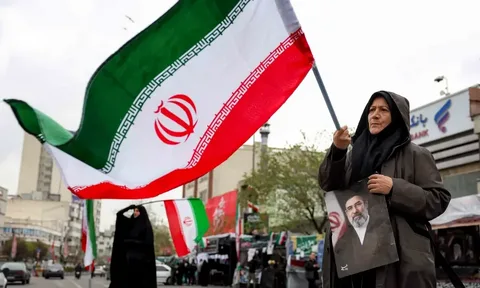
Iran rejects US proposal war conditions in the most direct diplomatic rebuff since the conflict began, publicly dismissing the Trump administration’s 15-point ceasefire plan and presenting five conditions of its own that Washington will find deeply uncomfortable.
A senior Iranian political security official said Iran had responded negatively to the American initiative, stressing that the end of the imposed war would depend solely on conditions set by the Islamic Republic. Iran will not allow US President Donald Trump to dictate the timing of the war’s end, the official said, adding that Iran will end the war when it decides to do so and when its own conditions are met.
The Iran rejects US proposal war conditions announcement comes as the latest news about US Iran war shows the conflict entering its most diplomatically complex phase yet — with Trump deploying paratroopers while simultaneously pursuing negotiations, and Iran fighting while publicly setting terms.
Background
Iran Rejects US Proposal War Conditions — The 15-Point Plan Tehran Refused
The Iran rejects US proposal war conditions response was directed at a specific American initiative that had been quietly delivered through Pakistan.
The US sent Iran a 15-point plan aimed at resolving the conflict in the Middle East. The proposal was delivered via Pakistan and outlines steps addressing Iran’s nuclear and ballistic missile programmes as well as maritime security in the Strait of Hormuz. The US and Israel have been carrying out airstrikes on Iran since February 28, killing more than 1,340 people so far, including then-Supreme Leader Ayatollah Ali Khamenei.
A draft of the 15-point ceasefire proposal includes calls for Iran to commit to never pursuing nuclear weapons and dismantling any existing nuclear capabilities. Trump confirmed the 15 points on Monday and expressed optimism about reaching an agreement, saying Iran had agreed to one core point — that they will never have a nuclear weapon. Iran has consistently said it is not pursuing a nuclear weapon.
The Iran rejects US proposal war conditions rejection comes despite Trump having announced a five-day tactical pause on strikes against Iranian power plants — a pause Tehran described as a ploy to heighten tensions rather than a genuine de-escalation signal.
As part of the latest news about US Iran war, Washington has pursued negotiations through multiple diplomatic channels, presenting proposals that Iran considers excessive and disconnected from what it described as US battlefield failures.
Details
Iran Rejects US Proposal War Conditions — All 5 Demands Explained
The Iran rejects US proposal war conditions response included a specific five-point counterproposal that Iran said must be accepted in full before any ceasefire discussion can begin.
Iran’s complete list of conditions includes: a complete halt to aggression and assassinations by the enemy; the establishment of concrete mechanisms to ensure that the war is not reimposed on the Islamic Republic; guaranteed and clearly defined payment of war damages and reparations; the conclusion of the war across all fronts and for all resistance groups involved throughout the region.
The fifth and most controversial condition in the Iran rejects US proposal war conditions counterproposal is the one least likely to be accepted by Washington.
Iran’s exercise of sovereignty over the Strait of Hormuz is and will remain Iran’s natural and legal right, and it constitutes a guarantee for the implementation of the other party’s commitments, and must be recognised.
That demand — international legal recognition of Iranian sovereignty over the world’s most critical oil chokepoint — represents a direct challenge to the principles of freedom of navigation that the United States has enforced globally for decades. It is, as analysts covering the latest news about US Iran war have noted, a potential non-starter for Washington.
Trump on Monday floated the possibility that the Strait of Hormuz could be controlled jointly by himself and the ayatollah — a framing Iran explicitly rejected. Iran has communicated to all intermediaries acting in good faith that a ceasefire is contingent upon the acceptance of all of its conditions and that no negotiations will be held prior to that.
Demand 1 — Halt to All Aggression and Assassinations
The first of Iran’s five war conditions demands a complete and unconditional end to US and Israeli military strikes on Iranian territory, infrastructure, personnel, and leadership. The term assassinations refers specifically to the killing of Supreme Leader Ali Khamenei and other Iranian officials in the February 28 strikes — actions Iran has consistently described as war crimes under international law.
Demand 2 — Guarantees Against Future War
The second condition demands not just a ceasefire but binding mechanisms that legally prevent the United States and Israel from relaunching military operations against Iran at a future date of their choosing. Iran frames this as a demand for structural security guarantees rather than a temporary pause — reflecting Tehran’s characterisation of the 2026 strikes as a continuation of decades of US-Israeli aggression rather than an isolated incident.
Demand 3 — War Reparations
Additional conditions include ending the conflict across all regional fronts involving allied groups and securing international recognition of Iran’s authority over the Strait of Hormuz. Iran also seeks war-related reparations.The reparations demand is both a financial and a symbolic claim — Iran is asserting that the US and Israel caused damages for which they bear legal and financial responsibility. No figure has been publicly specified, but analysts covering who is winning the iran war note that the total cost of damage to Iranian infrastructure, civilian buildings, and the broader economy is estimated in the hundreds of billions of dollars.
Demand 4 — Ceasefire Across All Fronts
The fourth condition extends the ceasefire demand beyond the Iran-US bilateral context to include all resistance groups — meaning Hezbollah in Lebanon, Hamas in Gaza, Houthi forces in Yemen, and Iran-backed militias in Iraq. Iran is demanding that Israel cease operations on all these fronts simultaneously as a condition of any peace, effectively linking the Iran war to the full resolution of the broader regional conflict.
Demand 5 — Sovereignty Over the Strait of Hormuz
The fifth and most strategically significant element of the Iran rejects US proposal war conditions counterproposal is Tehran’s demand for international recognition of its sovereignty over the Strait of Hormuz. This goes beyond the current de facto closure — it is a demand that the world formally accept Iran’s legal authority to regulate passage through the waterway as a permanent right rather than a temporary wartime measure.
About 90 percent of crude oil destined for Asia passes through Hormuz. Recently Iran has allowed some ships from countries it deems neutral parties to the current conflict to pass, with ships linked to Pakistan and India waved through and governments of China and Iraq in negotiations with Iranian authorities to enable safe passage.
The Geneva Negotiations Reference
The Iran rejects US proposal war conditions statement referenced a previous round of diplomacy that Tehran describes as having been betrayed.
The official noted that these stipulations are in addition to demands previously presented by Tehran during the second round of negotiations in Geneva, which took place just days before the US and Israel carried out a fresh round of aggression on February 28.
Tehran’s leaders have summoned Vice President Vance to conduct negotiations, alleging they feel stabbed in the back by Trump’s actions after talks in Geneva were described as progressive but resulted in no deal before strikes began the following day.
Iran’s framing of the February 28 strikes as a betrayal of the Geneva negotiating process explains the uncompromising tone of the Iran rejects US proposal war conditions counterproposal — and makes the prospect of Iran accepting any US terms without complete compliance on all five points extremely unlikely.
US Military Escalation Continues
The Iran rejects US proposal war conditions announcement came simultaneously with significant US military movement that tells a different story than Trump’s diplomatic optimism.
Between 2,000 and 3,000 US Army paratroopers from the 82nd Airborne Division have received written orders to deploy to the Middle East. The troops are expected to come from the division’s Immediate Response Force, which can mobilise worldwide within 18 hours. The deployment, combined with two Marine Expeditionary Units already moving toward the Persian Gulf, could bring 6,000 to 8,000 US ground troops into close proximity to Iran.
The simultaneous pursuit of diplomacy and military positioning is central to the latest news about US Iran war — Washington is keeping every option open while Iran rejects US proposal war conditions.
Israel Continues Strikes
Israel launched a fresh wave of attacks on Iran in the fourth week of the war in the Middle East with no sign of easing. Israel’s military continued to pound Beirut and its southern suburbs, saying it was targeting sites belonging to the Iran-backed militant group Hezbollah. Lebanon’s health ministry said at least 33 people were killed in the overnight strikes, including a 3-year-old child. Israel’s operations in Lebanon have killed more than 1,000 people this month and displaced more than 1 million, according to Lebanese authorities.
Global Economic Damage
The UN assesses the war has already caused some $63 billion in economic losses across the Arab region. The US and Israeli attacks are hitting homes, hospitals, schools and cultural sites in Iran, while Iranian attacks are striking energy and water infrastructure in Gulf Arab countries. Many of the strikes in this conflict raise serious concerns under international law, which prohibits attacks targeting civilians and their infrastructure.
Quotes
“Iran will end the war at a time of its own choosing and only if the conditions it has set are fulfilled. It will not allow Trump to determine the timing of the war’s end.” — Iran’s Consulate General in Mumbai, via X
“Iran has responded negatively to the American proposal. The strategic power you boasted about has turned into a strategic defeat.” — Spokesperson for the Central Headquarters of Khatam al-Anbiya
“They’re not going to have a nuclear weapon. That’s number one. That’s number one, two and three.” — Donald Trump, on the core US demand in the 15-point proposal
“We have to continue our efforts. It’s all about diplomacy and negotiations.” — Egyptian Foreign Minister, responding to Iran’s rejection
“China supports all efforts that help ease tensions, de-escalate the situation, and restore dialogue.” — Chinese Foreign Ministry Spokesperson Lin Jian
“Although the response may be a blow to the US proposal, it signalled the opening of some sort of negotiating between the two countries as the war approaches the one-month mark.” — War analysis commentary
“My message to the United States and Israel is that it is high time to end the war — as human suffering deepens, civilian casualties mount, and the global economic impact is increasingly devastating.” — UN Secretary-General Antonio Guterres
Impact
For the latest news about US Iran war trajectory, the Iran rejects US proposal war conditions announcement confirms that the conflict has entered a phase where both sides are negotiating and fighting simultaneously — a pattern that historically precedes either a dramatic breakthrough or a serious escalation.
For global energy markets, the Iran rejects US proposal war conditions rejection extended the Strait of Hormuz uncertainty that has already pushed oil prices above $100 per barrel. Oil prices fell briefly when Trump announced his five-day pause but climbed again once Iran’s rejection became clear — with the market reading the five conditions as incompatible with near-term resolution.
For who is winning the iran war, the answer depends entirely on the metric applied. Iran has kept the strait closed, maintained its resistance networks, and forced the US into a public negotiating position. The US and Israel have destroyed Iran’s nuclear infrastructure, killed its Supreme Leader, and degraded its military capabilities. Neither side has achieved a decisive outcome — and the Iran rejects US proposal war conditions announcement confirms that neither is yet willing to accept the other’s terms.
For Iran war when will it end, the five conditions now provide the clearest framework yet. The war ends when the US and Israel accept all five demands — or when one side achieves a military outcome that makes negotiation irrelevant. Neither scenario appears imminent. The Iran rejects US proposal war conditions rejection means the conflict continues into its fifth week with no agreed pathway to resolution.
FAQs
Did Iran reject the US nuclear proposal?
Yes. Iran rejected the US proposal, saying Washington’s demands were excessive and disconnected from what it described as US battlefield failures. Tehran will continue its military operations and inflict heavy blows until its demands are fulfilled.The core US demand — that Iran permanently abandon nuclear weapons capability and dismantle existing capabilities — is one Iran has not accepted. Iran has always maintained it is not pursuing nuclear weapons, making the US demand one Tehran characterises as an accusation rather than a legitimate negotiating point.
Did Iran agree to stop the war?
No. The Iran rejects US proposal war conditions announcement confirms Iran has not agreed to stop the war. Iran has communicated to all intermediaries acting in good faith that a ceasefire is contingent upon the acceptance of all of its conditions and that no negotiations will be held prior to that.Iran is willing to end the war — but only on its own five conditions, all of which must be accepted simultaneously. The war continues.
Who gave nuclear power to Iran?
The United States helped Iran create its nuclear programme through the Atoms for Peace programme under President Eisenhower, intended to help developing countries use nuclear power for energy and other peaceful purposes.The US built a nuclear reactor in 1967 on the campus of Tehran University and provided Iran with fuel for that reactor — weapons-grade enriched uranium.After the 1979 Islamic Revolution ended US involvement, Iran covertly obtained centrifuge designs from the Pakistani Abdul Qadeer Khan network and rebuilt its nuclear infrastructure with Russian help, completing the Bushehr nuclear power reactor in 2011 under IAEA safeguards.The same nuclear programme that the United States helped establish in the 1950s and 1960s is now at the centre of the conflict that the Iran rejects US proposal war conditions announcement has made harder than ever to resolve.
Conclusion
Iran rejects US proposal war conditions — and in doing so, has redrawn the map of this conflict.
Iran’s demands include war reparation payments and recognition of its sovereignty over the Strait of Hormuz. Although the response may be a blow to the US proposal, it signalled the opening of some sort of negotiating between the two countries as the war approaches the one-month mark.
The five conditions Iran has laid out are not opening bids in a conventional negotiation. They are declarations of what Tehran considers non-negotiable — sovereignty, security, reparations, regional ceasefire, and control of the world’s most critical oil chokepoint.
The latest news about US Iran war shows a conflict that is simultaneously fighting and talking, escalating and pausing, destroying and negotiating. Trump is deploying paratroopers while his envoys carry ceasefire plans. Iran is firing missiles while its officials write counterproposals.
Who is winning the iran war remains genuinely contested. When will iran war end remains genuinely unknown.
What is certain — as of today — is that the Iran rejects US proposal war conditions announcement has made the path to peace longer, harder, and more complicated than it was yesterday.