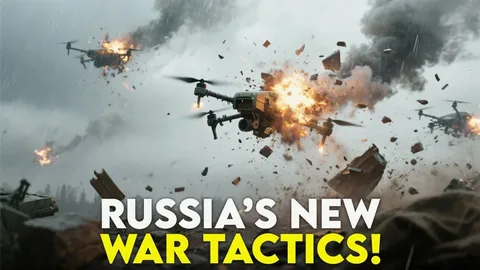

Missile Drone Conflict Transforms Battlefields Around the World
The world’s skies have become contested battlegrounds as missile drone conflict emerges as the defining feature of modern warfare in the twenty first century. From Ukraine to the Middle East, from the Caucasus to the South China Sea the missile drone conflict dynamic is reshaping how wars are fought, who can fight them, and what the consequences of conflict look like for soldiers and civilians alike. The history of drone warfare and the explosive rise of FPV drone warfare have together produced a revolution in military affairs that is as significant as the invention of the tank or the aircraft carrier and whose full implications are only beginning to be understood.
Background: Understanding Missile Drone Conflict Through History
To understand the current missile drone conflict landscape it is essential to trace the history of drone warfare from its earliest origins to the sophisticated and ubiquitous systems that fill combat skies today. The history of drone warfare begins not in the post-September 11 era as many assume but considerably earlier with experiments in remotely piloted aircraft that stretch back to the early twentieth century.
The history of drone warfare traces its first significant military application to target drones developed in the 1930s and 1940s that were used for anti-aircraft gunnery practice. The history of drone warfare then passes through the Vietnam era when American forces deployed reconnaissance drones over North Vietnam at a scale that was remarkable for its time though largely unknown to the public. These early chapters of the history of drone warfare established the conceptual foundation for the armed drone systems that would later define the missile drone conflict of the post-Cold War world.
The history of drone warfare took its most transformative turn with the development of the Predator drone by the United States in the 1990s and its subsequent arming with Hellfire missiles after September 11 2001. This moment in the history of drone warfare marked the birth of the missile drone conflict as we know it today creating a template for lethal remote warfare that has since been adopted, adapted, and democratised by dozens of state and non-state actors around the world.
Details: How Missile Drone Conflict Has Evolved
The missile drone conflict of today bears only a superficial resemblance to the early chapters of the history of drone warfare. Where the first armed drones were expensive, relatively rare, and operated exclusively by major military powers the missile drone conflict of 2026 involves cheap mass-produced systems operated by state militaries, non-state armed groups, and even individual soldiers with minimal technical training.
The missile drone conflict in Ukraine has been the most extensively documented and analysed expression of this evolution with both Russian and Ukrainian forces deploying drones at a scale and intensity that has no precedent in the history of drone warfare. The Ukrainian conflict has demonstrated that missile drone conflict can be sustained at industrial scale with thousands of drones deployed weekly transforming the economics and logistics of modern warfare in ways that military establishments around the world are scrambling to understand and adapt to.
The missile drone conflict in the Middle East has shown a different dimension of this evolving warfare with Iranian-backed groups deploying sophisticated drone and missile combinations against targets in Israel, Saudi Arabia, and beyond. These missile drone conflict episodes have demonstrated that non-state actors can now field drone capabilities that challenge the air defence systems of technologically advanced militaries creating a fundamental disruption in the traditional military hierarchy.
History of Drone Warfare Milestones That Shaped Today
The history of drone warfare contains several pivotal milestones that directly shaped the missile drone conflict environment of today. The American drone campaign in Pakistan, Yemen, and Somalia that intensified after 2008 represented the first sustained missile drone conflict campaign conducted outside of a declared war zone establishing legal and ethical precedents whose implications the history of drone warfare is still working through.
The history of drone warfare was transformed again by the 2020 Nagorno-Karabakh conflict in which Azerbaijan’s use of Turkish-made Bayraktar drones and Israeli-made loitering munitions produced a decisive military outcome against Armenian forces that were entirely unprepared for the missile drone conflict environment they encountered. Military establishments around the world drew urgent lessons from this chapter of the history of drone warfare fundamentally revising their assessments of what affordable drone systems could achieve in conventional warfare.
The history of drone warfare milestone most relevant to current missile drone conflict is the explosion of FPV drone warfare in Ukraine which has demonstrated that first-person view consumer drones costing a few hundred dollars can be modified into lethal weapons capable of destroying armoured vehicles worth millions. This development has democratised the missile drone conflict in ways that the earlier history of drone warfare could not have predicted.
FPV Drone Warfare Revolutionises the Battlefield
FPV drone warfare represents perhaps the most disruptive development in the entire history of drone warfare and its implications for missile drone conflict are profound and far-reaching. FPV drone warfare involves the use of small first-person view drones originally developed for recreational racing and photography that have been adapted into precision strike weapons through the addition of explosive payloads and the development of specialised operator training programs.
FPV drone warfare has fundamentally altered the economics of missile drone conflict by making lethal aerial attack capabilities available at a tiny fraction of the cost of traditional military systems. A soldier equipped with an FPV drone warfare kit costing a few hundred dollars can now destroy or disable equipment worth millions and deliver lethal effects against personnel with a precision that was previously achievable only by expensive guided munitions.
FPV drone warfare has also transformed the tactical dynamics of the missile drone conflict by enabling small units to conduct continuous surveillance, fire support, and precision strike operations without the support of traditional artillery or air power. The FPV drone warfare revolution has therefore not just added a new weapon to existing tactical frameworks but has begun to reshape those frameworks from the ground up.
The psychological dimension of FPV drone warfare adds another layer to the missile drone conflict transformation it is producing. The omnipresence of FPV drone warfare systems over contemporary battlefields creates a constant sense of observation and vulnerability that degrades the morale and operational effectiveness of forces that lack adequate counter-drone capabilities.
Expert Quotes on Missile Drone Conflict
Military strategists analysing the missile drone conflict transformation have described the current moment as a genuine revolution in military affairs comparable in significance to the introduction of gunpowder or the mechanisation of warfare in the twentieth century. Experts have noted that the history of drone warfare has accelerated so dramatically in recent years that military doctrines, procurement programs, and training systems have been left far behind the pace of technological and tactical change on the battlefield.
Defence technology analysts studying FPV drone warfare have warned that the democratisation of lethal aerial strike capabilities that FPV drone warfare represents poses profound challenges not just for military planners but for civilian protection frameworks and international humanitarian law. The missile drone conflict enabled by FPV drone warfare systems is being conducted at a granular tactical level that existing legal and ethical frameworks were not designed to govern.
Historians of military technology placing the current missile drone conflict in the context of the broader history of drone warfare have noted that every previous revolution in military technology has eventually produced countermeasures and new equilibria but that the current pace of innovation in drone and counter-drone systems makes predicting where the missile drone conflict equilibrium will settle uniquely difficult.
Impact of Missile Drone Conflict on Warfare and Society
The missile drone conflict revolution is having profound impacts not just on how wars are fought but on the societies that fight them and the civilians caught in their crossfire. The history of drone warfare suggests that each expansion of drone capabilities has been accompanied by an expansion of the geographic and temporal scope of conflict with missile drone conflict increasingly transcending the traditional boundaries between war zones and civilian spaces.
The FPV drone warfare revolution in particular is accelerating the erosion of frontlines and rear areas in missile drone conflict as cheap ubiquitous drones extend the lethal reach of every combatant unit to distances and against targets that were previously beyond their operational range. Civilians living near missile drone conflict zones face threats from aerial systems that are increasingly difficult to detect, track, and defend against with conventional means.
The missile drone conflict transformation is also driving rapid changes in defence spending priorities around the world as militaries invest heavily in both offensive drone capabilities and the counter-drone systems needed to defend against them. The history of drone warfare suggests that this action-reaction cycle will continue to accelerate driving costs, complexity, and the risk of miscalculation higher across the missile drone conflict landscape.
Conclusion: Missile Drone Conflict Demands New Thinking
The troubled skies of the missile drone conflict era demand new thinking from military planners, policymakers, legal scholars, and ethicists alike. The history of drone warfare has brought the world to a point where the skies above every conflict zone are filled with systems that blur the boundaries between intelligence gathering, harassment, and lethal strike in ways that existing frameworks struggle to address.
FPV drone warfare and the broader missile drone conflict revolution are not temporary phenomena that will fade as the novelty of new technology wears off. They represent a fundamental and permanent transformation of the warfare landscape that will shape conflict and security for generations to come. Navigating the troubled skies of the missile drone conflict era wisely and humanely is one of the defining challenges of our time.
FAQs
What is a Drone Missile Attack?
A drone missile attack is a form of missile drone conflict in which an unmanned aerial vehicle is used to deliver explosive munitions against a target either through an onboard missile system or by functioning as a flying explosive itself in the manner of FPV drone warfare systems. The history of drone warfare shows that drone missile attacks have evolved from rare and expensive operations conducted only by major military powers to routine tactical events conducted at mass scale in contemporary conflicts. Drone missile attacks in the missile drone conflict era range from large sophisticated strikes by military-grade systems like the American Reaper or Turkish Bayraktar to FPV drone warfare attacks using modified consumer drones that cost a few hundred dollars but can deliver lethal effects against vehicles, equipment, and personnel with remarkable precision.
What are the 4 Main Types of Drones?
The four main types of drones relevant to missile drone conflict are multi-rotor drones, fixed-wing drones, single-rotor drones, and hybrid fixed-wing multi-rotor drones each with distinct capabilities and applications in the history of drone warfare. Multi-rotor drones including quadcopters are the most common type and form the foundation of FPV drone warfare due to their accessibility, manoeuvrability, and low cost. Fixed-wing drones offer greater range, endurance, and payload capacity making them the preferred platform for large-scale surveillance and strike missions in conventional missile drone conflict. Single-rotor drones similar to helicopters offer better efficiency than multi-rotor systems for certain payload and endurance requirements. Hybrid systems combine the vertical takeoff capabilities of multi-rotor designs with the endurance advantages of fixed-wing platforms and represent an increasingly important category as the history of drone warfare continues to evolve toward greater sophistication and versatility.
What is the Vocabulary of Missile?
The vocabulary of missile in the context of missile drone conflict includes several key terms that are essential for understanding modern aerial warfare. A missile is a guided munition that uses propulsion to reach its target and can be guided by various means including infrared homing, radar guidance, laser designation, or GPS. In missile drone conflict the distinction between missiles and drones has become increasingly blurred as loitering munitions sometimes called kamikaze drones combine the flight characteristics of a drone with the strike function of a missile. The history of drone warfare has expanded missile vocabulary to include terms like loitering munition, cruise missile drone, anti-radiation missile, and in the context of FPV drone warfare improvised drone munition. Other important vocabulary of missile in the missile drone conflict context includes warhead referring to the explosive payload, terminal guidance referring to the final phase of flight toward the target, and standoff range referring to the distance from which a missile can be launched safely outside the adversary’s defensive perimeter.