The RSV vaccine during pregnancy has become one of the most debated topics in modern maternal healthcare. While health authorities recommend it to protect newborns from a dangerous respiratory virus, questions around RSV vaccine pregnancy side effects, preterm birth risks, and emerging safety data have fueled significant controversy. Parents and healthcare providers alike are weighing the RSV vaccine during pregnancy pros and cons very carefully.
Background: What Is RSV and Why Does It Matter?
Respiratory syncytial virus, or RSV, is a common but potentially dangerous virus that affects the lungs and airways. It is especially threatening for newborns and infants in their first six months of life, whose immune systems are not yet strong enough to fight it off.
Every year in the United States, RSV causes about 1.5 million outpatient visits, 500,000 emergency department visits, 70,000 hospitalizations, and 100–300 deaths in children under five years of age. Most of the hospitalizations and deaths occur in children less than six months of age.This alarming data pushed pharmaceutical companies to develop a maternal vaccine solution so that antibodies could pass from mother to baby before birth.
RSV Vaccine Pregnancy: When Did It Come Out?
The approval of the RSV vaccine for pregnant women was a landmark moment in vaccine history. On August 21, 2023, the U.S. Food and Drug Administration approved Abrysvo®, the first vaccine approved for use in pregnant individuals to prevent lower respiratory tract disease caused by RSV in infants from birth through six months of age. Abrysvo® is approved as a single dose for use at 32 through 36 weeks of gestational age.
Pfizer’s bivalent RSVpreF vaccine, trade name Abrysvo, is the only RSV vaccine approved by the FDA and recommended since 2023 by the CDC and the American College of Obstetricians and Gynecologists for use during pregnancy to prevent severe RSV disease in young infants. So when people ask about the RSV vaccine pregnancy when did it come out the answer is August 2023.
How Does the RSV Vaccine During Pregnancy Work?
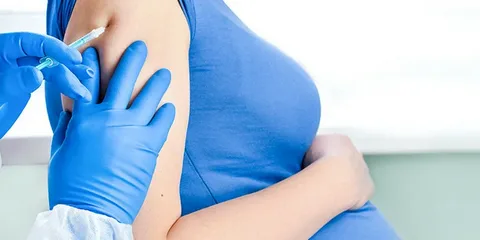
When a pregnant woman gets the RSV vaccine during the specific recommended time frame, antibodies pass through the placenta to help provide protection after birth, when the baby’s immune system is not yet strong enough to make protective antibodies if the baby is exposed to RSV.
The CDC recommends a single dose of Pfizer’s Abrysvo for women who are 32 to 36 weeks’ gestation. These vaccines are administered September through January in most of the United States.The timing is designed to maximize the antibody transfer to the baby just before birth, during the RSV season.
RSV Vaccine During Pregnancy Side Effects
Like all vaccines, Abrysvo comes with a list of potential side effects. Some are mild and common, while others have raised more serious concerns among researchers.
The most frequently reported non-pregnancy-specific adverse events were headache, injection site redness, and injection site pain. For pregnancy-specific adverse events, preterm birth was the most frequently reported at 12.8%, followed by preterm premature rupture of membranes and caesarean section, each at 3.3%, as well as cervical dilatation, haemorrhage during pregnancy, and uterine contractions during pregnancy, each at 1.4%.
Beyond the preterm birth concern, another safety flag has emerged more recently. The FDA has required safety labeling changes to the prescribing information for Abrysvo describing an increased risk of Guillain-Barré syndrome. The FDA has also required the manufacturer to conduct a study to assess this risk following administration of Abrysvo in pregnant individuals. These developments have intensified the RSV vaccine pregnancy controversy among medical communities.
RSV Vaccine Pregnancy Controversy: The Preterm Birth Debate
The most hotly debated RSV vaccine pregnancy side effect is the potential link to preterm birth. This is the central issue in the ongoing RSV vaccine pregnancy controversy.
The GSK RSV trial in pregnant people was stopped prematurely because preterm births occurred in 6.8% of infants in the vaccine group and 4.9% in the placebo group, a statistically significant difference. For every 54 infants born to people who received vaccine rather than placebo during pregnancy, one additional preterm birth occurred. The time from vaccination to preterm births varied from weeks to months, making it difficult to identify a particular mechanism.
A 2025 meta-analysis including six randomised controlled trials with over 17,000 births found that RSV vaccination seemed to be associated with increased odds for preterm birth. The study concluded that RSV vaccination needs continuous population-level observational safety data monitoring on perinatal outcomes during the early phases of vaccine rollouts.
However, the picture is not entirely clear. Although a higher rate of preterm births was observed in the vaccinated group in WHO safety data, the increase was not statistically significant for the approved Pfizer vaccine. Owing to low uptake of the vaccine to date, it will probably be several years before enough people have been vaccinated for definitive conclusions to be drawn.
Why Not to Get the RSV Vaccine While Pregnant: The Other Side
For some women, the risks may outweigh the benefits. Here are the key reasons some doctors and patients hesitate:
Preterm birth risk: As detailed above, the preterm birth signal while debated is real enough that the FDA added it as a formal warning label. The FDA is requiring the company to conduct post-marketing studies to assess the serious risk of preterm birth and hypertensive disorders of pregnancy, including pre-eclampsia.
Hypertensive disorders: There are conflicting data on whether there is a slight increase in hypertensive disorders of pregnancy for women who received the RSV vaccine compared to those who did not. The CDC has reaffirmed the warning that the RSV vaccine may be associated with an increase in hypertensive disorders of pregnancy, though this may be related to confounding variables.
An alternative exists: Crucially, vaccination during pregnancy is not the only option. There is no preferential recommendation for using the RSV vaccine during pregnancy versus administering the RSV monoclonal antibody nirsevimab to the infant after birth. Both products have been shown to provide significant protection against RSV in infants entering their first RSV season.
RSV Vaccine: During Pregnancy or After Birth?
This is one of the most common questions expectant parents ask, and the answer depends on personal choice and medical guidance.
To protect infants from RSV, either the pregnant person should receive the RSVpreF vaccine during pregnancy, or their infant should receive the RSV monoclonal antibody nirsevimab within one week after birth. Pregnant people and their health care providers should discuss the relative advantages and disadvantages of each product and consider patient preferences when deciding which is best.
Clinicians should clarify for the pregnant patient that if she declines maternal RSV vaccination, the infant should receive a monoclonal antibody. Either nirsevimab or clesrovimab can be used. Clesrovimab was approved by the FDA in June 2025 and by the CDC in August 2025 for infants aged younger than eight months in their first RSV season.
This means parents now have more options than before making the RSV vaccine during pregnancy or after birth decision more flexible and personalized.
RSV Vaccine During Pregnancy Pros and Cons
Pros:
- Maternal RSV vaccination reduces severe RSV-associated lower respiratory tract infection and hospitalization within 180 days of birth, with a reassuring perinatal safety profile across most outcome measures.
- Antibodies transfer passively through the placenta, protecting the newborn from day one.
- No live virus is used, so the mother cannot get RSV from the vaccine.
- It can be given alongside flu and COVID-19 vaccines.
Cons:
- Available evidence suggests RSV vaccination may be associated with increased odds for preterm birth, and continuous safety data monitoring is required during early rollout phases.
- The FDA has flagged risks of Guillain-Barré syndrome requiring further study.
- Women at high risk for preterm birth need extra caution and individualized guidance.
- A comparable alternative the monoclonal antibody given to the baby after birth — is available.
Expert Quotes on RSV Vaccine and Pregnancy
ACOG advises: “If you are at high risk for preterm birth, ask your ob-gyn about the best time to get the vaccine. It’s OK to get your RSV vaccine at the same time as other vaccines check with your ob-gyn to see which of the vaccines they might be able to give you at the same time, including flu, Tdap, and COVID-19.”
A major Cochrane-style review concluded: “There are no safety concerns about intrauterine growth restriction and congenital abnormalities. However, there may be a safety signal warranting further investigation related to preterm birth. The evidence base would be much improved by more randomised controlled trials with substantial sample sizes and well-designed observational studies with long-term follow-up.”
Also in the News: Hinglaj Mata Temple in Balochistan
On a completely separate note drawing public attention recently the Hinglaj Mata Temple, recently seen in the news, is located in the Lasbela district of Balochistan, Pakistan. The Balochistan government decided to declare the historic Hinglaj Mata Temple as a world tourism site. The decision was taken during a meeting between Chief Minister Sarfraz Bugti and Senator Danesh Kumar, where they discussed initiatives to promote minority religious tourism in the province.
The Hinglaj Mata Temple lies in the middle of Hingol National Park and is one of the 51 Shakti Peethas in the Shaktism denomination of Hinduism. It is one of the two Shakti Peethas in Pakistan, and over the last three decades, it has become the largest Hindu pilgrimage in Pakistan, drawing around 250,000 people during the spring season.The declaration as a world tourism site marks a significant step for religious heritage recognition in the region.
Impact: A Global Maternal Health Question
The RSV vaccine during pregnancy debate is not limited to the United States. The maternal RSV vaccine Abrysvo is now authorized for use in over 40 countries, with various limits on gestational age for its use.As more countries roll it out, the safety data will grow and so will public scrutiny.
The controversy reflects a larger challenge in modern medicine: how to communicate nuanced, evolving risk data to the public in a way that is honest without causing unnecessary fear. The RSV vaccine pregnancy pros and cons debate is a prime example of this challenge playing out in real time.
Conclusion
The RSV vaccine during pregnancy remains a recommended option by major health bodies including the CDC, FDA, and ACOG but it is not without genuine, documented concerns. The RSV vaccine pregnancy preterm birth signal has not been definitively resolved, and new safety labeling on Guillain-Barré syndrome adds another layer of caution. The good news is that parents are not without a choice the post-birth monoclonal antibody option provides a viable alternative.
As always, the most important step is an open conversation with your doctor, weighing your personal health history, risk factors, and the latest evidence. Medicine, like any science, evolves and this is a story still being written.
FAQs
Is the RSV vaccine safe during pregnancy
? The FDA-approved RSV vaccine Abrysvo is considered generally safe for most pregnant women between 32 and 36 weeks of pregnancy. However, the FDA labeled the potential risk for preterm birth as a warning and approved RSVpreF vaccine for use at 32–36 weeks’ gestation specifically to avoid the potential risk of preterm birth at earlier gestational ages.Women should discuss their individual risk factors with their healthcare provider.
Is it mandatory to take the RSV vaccine during pregnancy?
No, the RSV vaccine during pregnancy is not mandatory. There is no preferential recommendation for using the vaccine during pregnancy over giving the monoclonal antibody nirsevimab to the infant after birth, and patient preferences should be considered when deciding which product is best.It is a personal medical decision made in consultation with your doctor.
Which vaccines should be avoided during pregnancy?
The following RSV vaccines are not approved for use in pregnancy: GSK’s RSV vaccine Arexvy and Moderna’s RSV vaccine MRESVIA. Only Pfizer’s Abrysvo is approved for pregnant individuals.More broadly, live attenuated vaccines are generally avoided during pregnancy. Your doctor can guide you on which vaccines are safe and recommended for your specific stage of pregnancy.