
Cricket, long celebrated as a gentleman’s game, has been rocked by a wave of controversy in recent months. The 2025 Asia Cup will be remembered not for the runs scored or the wickets taken but for the disgrace it brought upon the game.From handshake snubs and trophy refusals to viral misinformation and historical match-fixing bans, this cricket match controversy analysis covers it all.
Background: When Cricket Became Political Theatre
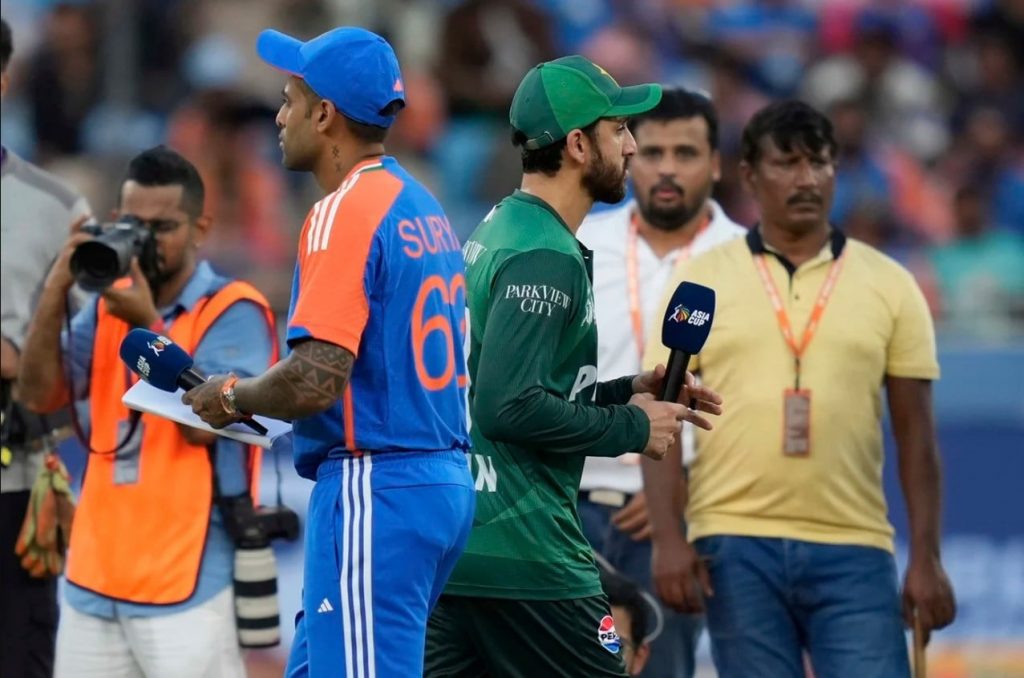
The India-Pakistan cricket rivalry is the most watched in world cricket. But in 2025, it crossed a line that shocked fans globally. When India and Pakistan faced each other in the Asia Cup cricket tournament in Abu Dhabi, the most discussed incident was not a six, boundary or a wicket but after the games finished, when the players did not shake hands
The context matters. The final was the third contest between the rivals in the tournament, happening more than four months after they fought a short but intense aerial war, triggered by a deadly April 22 attack on tourists in Pahalgam in Indian-administered Kashmir.Sports and geopolitics had become inseparable.
Details: The Asia Cup 2025 Pakistan Match Controversy Event by Event
The Handshake Row
The fallout of the handshake row carried over when Pakistan refused to take the field against the UAE in protest against match referee Andy Pycroft. Pakistan insisted that Pycroft be removed from their fixture, as he was the key official in the India match and helped carry out India’s request that the captains not shake hands at the toss.
The PCB issued a formal complaint. The ICC rejected it. India’s cricketers refused to shake hands with Pakistan after their first and second games at the Asia Cup. Pakistan even threatened to quit the tournament over the “handshake controversy,” which ultimately came to naught.
The Gesture Controversy
This cricket match controversy deepened in the field. Pakistani cricketers Haris Rauf and Sahibzada Farhan made insensitive gestures: while Rauf made a “jet crashing” gesture and a “6-0” finger sign interpreted as a symbolic reference to Pakistan’s claim of shooting down six Indian aircraft during Operation Sindoor Farhan celebrated his half-century by mimicking firing a rifle with his bat.
India’s response was not innocent either. The BCCI lodged a complaint with the ICC against Rauf and Farhan for his mock gun celebration. Pakistan also lodged a complaint against India’s captain Yadav for using his post-match press comments to mention the Indian missile attacks in Pakistan.
The Trophy Refusal The Biggest Pakistan Match Controversy Moment
This was the defining flashpoint of the entire cricket match controversy analysis. There was a delay as the Indian team refused to accept the trophy from Asian Cricket Council chief Mohsin Naqvi, who is also chief of the Pakistan Cricket Board and Pakistan’s interior minister.
India refused to take the trophy because Naqvi is also Pakistan’s federal interior minister. “We have decided not to take the Asia Cup trophy from the ACC chairman, who happens to be one of the main political leaders of Pakistan,” BCCI chairman Devajit Saikia stated.
Indian captain Suryakumar Yadav said: “This is one thing which I have never seen since I started playing cricket a champion team is denied a trophy, that too a hard-earned one. I feel we deserved it.”
Fatima Sana Spray: Viral Controversy Debunked
One of the most-discussed incidents in the cricket match controversy space involved Pakistan women’s captain Fatima Sana. A video went viral claiming she sprayed deodorant or air freshener on the pitch to mock India. This was completely false and the facts tell a very different story.
A bizarre incident occurred during the Pakistan vs India ICC Women’s Cricket World Cup match in Colombo on October 5, 2025, when a swarm of insects descended on the ground shortly after the floodlights were turned on. The tiny bugs caused noticeable discomfort to the players.
Pakistan captain Fatima Sana herself stepped up to handle the situation, resorting to an unconventional but practical solution bug spray. She began spraying near the bowling crease and around the players to repel the insects, drawing applause from both teammates and spectators for her quick thinking.
Misleading captions falsely suggested disrespect toward Indian players. No credible reports indicate that the Pakistani player sprayed deodorant in the air during the match. The play was temporarily stopped after swarms of insects invaded the field.
This episode is a perfect example of how the Pakistan match controversy narrative is often fuelled by misinformation spread on social media, turning non-events into flashpoints.
Quotes: What Officials and Experts Said
Pakistan skipper Salman Agha said: “If a kid is watching in India or Pakistan, we’re not sending them a good message. People think of us as role models, but if we’re behaving like this, we’re not inspiring them.”
Dure Shahwar Bano, a lecturer at Kinnaird College for Women in Lahore, told Al Jazeera: “I think, keeping in view the political tension and constant military hostility, sports observers expected that it was inevitable.”
Analysts pointed to the sheer hypocrisy at play, noting that the Board of Control for Cricket in India has for years refused to play bilateral cricket with Pakistan, citing political tensions yet both boards agreed to share a multilateral stage.
Who Got Banned for Match Fixing? Pakistan’s Dark History
No cricket match controversy analysis is complete without addressing match fixing. Pakistan has, sadly, had multiple such episodes that permanently scarred its cricketing reputation.
The ICC banned three Pakistan players team captain Salman Butt, and fast bowlers Mohammad Asif and Mohammad Amir for terms of between five and ten years for spot-fixing during the 2010 Lord’s Test against England. In November 2011, Butt and Asif were also found guilty by a London court on criminal charges. All four involved were given prison sentences, ranging from six months to 32 months.
The PSL match fixing scandal added more names to this list. Nasir Jamshed received a 10-year ban and Shahzaib Hasan’s ban was extended to four years following the 2017 Pakistan Super League spot-fixing scandal. Sharjeel Khan allegedly received money to play two dot balls in a match against Peshawar Zalmi.
Danish Kaneria, once Pakistan’s leading spin bowler, was handed a lifetime ban by the England and Wales Cricket Board after being found guilty of fixing-related activities in 2012. Saleem Malik was also banned for life in 2000 for match-fixing after being found guilty in Justice Qayyum’s investigation.
Which Batsman Has 0 Ducks? The Remarkable Record
On a lighter note within this cricket match controversy analysis, it is worth noting an extraordinary statistical curiosity: which batsman has 0 ducks zero times out for zero? Several elite batsmen have managed to retire or play long careers without a single duck, but this remains very rare.
The record for the most ducks in Test cricket is held by West Indies player Courtney Walsh, who was out for zero on 43 occasions. Players who have scored 0 ducks across an entire international career are incredibly rare because, as cricket history shows, even the greatest batters occasionally fail to score.
When combining all formats, the player with the most ducks in international cricket across Tests, ODIs, and T20Is is Muttiah Muralithara though as a specialist bowler, this reflects opportunity rather than weakness. The question of who has 0 ducks in an extended career remains one of cricket’s most celebrated statistical achievements, with only a handful of players achieving this distinction over long careers.
Impact: What This Means for Cricket Globally
The 2025 Asia Cup Pakistan match controversy has had real consequences for the sport’s image. It can be argued that banning both India and Pakistan from international events until they restore a sense of decency is the only way forward. Why should Sri Lanka, Bangladesh, Afghanistan or neutral fans worldwide be forced to endure the poisoning of multilateral tournaments? Yet such a ban is easier said than done India is cricket’s financial powerhouse, and Pakistan remains a crucial draw.
Five weeks after the conclusion of the Asia Cup, the ICC found Rauf, Farhan and Yadav guilty of breaching its code of conduct and bringing the game into disrepute. Yadav and Rauf were fined 30 percent of their match fees and received two demerit points each.Rauf’s repeated offence in the final led to a two-match ban.
Small gestures matter precisely because of cricket’s symbolic weight. A handshake, or refusal of one, can echo far beyond the stadium. Cricket, which used to be a substitute for people-to-people contact and to some extent melted political divisions, now reflects the worst of bilateral tensions.
Conclusion: Can Cricket Survive the Politics?
The Pakistan match controversy, the broader cricket match controversy analysis, the Fatima Sana spray misinformation, and the long shadow of match fixing all point to one reality: cricket is under pressure like never before. The game has always reflected society, but when sport becomes an extension of conflict, it loses its most powerful quality the ability to unite.
Pakistan captain Salman Agha’s words remain the most resonant from the entire controversy: “People think of us as role models. But if we’re behaving like this, we’re not inspiring them.”That, ultimately, is the challenge for both boards and the ICC heading into 2026 and beyond.
FAQs
Why did Fatima Sana spray?
During the Pakistan vs India ICC Women’s Cricket World Cup match in Colombo on October 5, 2025, a swarm of insects descended on the ground after the floodlights were turned on. As the situation worsened, Pakistan’s reserve players ran onto the field with insect repellent sprays, and Captain Fatima Sana took charge, spraying around her teammates.The viral claim that she sprayed deodorant to mock India was confirmed false by multiple fact-checkers.
Which batsman has 0 ducks?
Several elite specialist batsmen across international cricket history have managed careers without recording a single duck, though this is extremely rare over long careers. Courtney Walsh holds the record for the most ducks in Test cricket with 43, while Don Bradman’s famous duck in his final innings at The Oval in 1948 cost him a Test average of 100.Batsmen who have 0 ducks across substantial international careers are among cricket’s rarest statistical achievements.
Who got banned for match fixing?
The most famous case involved Pakistan captain Salman Butt, and fast bowlers Mohammad Asif and Mohammad Amir, who were banned for between five and ten years and received prison sentences after the 2010 Lord’s spot-fixing scandal. Other notable cases include Danish Kaneria (lifetime ban by ECB), Saleem Malik (life ban in 2000), and PSL players including Nasir Jamshed, who received a 10-year ban.