
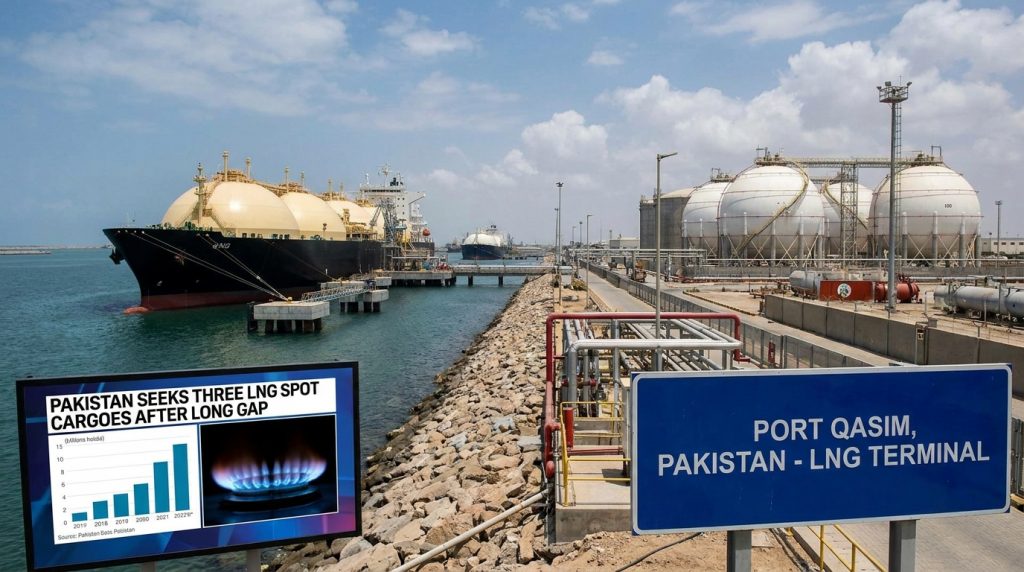
The Pakistan LNG spot cargo tender marks a significant move as the country returns to the spot market for liquefied natural gas after a gap since December 2023. Pakistan LNG Limited has issued a tender to procure three cargoes to meet rising domestic energy demand.
The decision reflects increasing pressure on the energy sector as consumption grows and supply challenges persist.
First Tender Since December 2023
The Pakistan LNG spot cargo tender is the first of its kind in several months, signaling renewed activity in the global LNG market. Officials indicate that the move is aimed at addressing short-term supply gaps and ensuring uninterrupted energy availability.
The pakistan lng limited tender process will determine suppliers based on competitive pricing and delivery timelines.
Why Pakistan Is Turning to Spot Market
Pakistan typically relies on long-term LNG contracts, but spot purchases become necessary when demand exceeds contracted supply. The Pakistan LNG spot cargo tender suggests that existing agreements may not be sufficient to meet current requirements.
Spot market purchases allow flexibility but can also expose the country to price volatility.
Role of LNG in Pakistan’s Energy Mix
Liquefied natural gas plays a crucial role in powering industries, electricity generation, and domestic consumption in Pakistan. The country’s infrastructure, including major pakistan lng terminals, supports the import and regasification of LNG.
The Pakistan LNG spot cargo tender highlights the ongoing dependence on imported energy resources.
Market and Economic Implications
The move to procure LNG through the spot market may have financial implications, especially if global prices are high. The Pakistan LNG spot cargo tender could impact energy costs and influence broader economic conditions.
Authorities will likely aim to secure favorable pricing to minimize the burden on the economy.
Future Outlook
Energy experts suggest that Pakistan may continue to use a mix of long-term contracts and spot purchases to balance cost and supply reliability. The Pakistan LNG spot cargo tender could be an indication of shifting procurement strategies in response to changing energy needs.
Further tenders may follow depending on demand trends and market conditions.
Conclusion
The Pakistan LNG spot cargo tender signals a return to flexible energy procurement as the country addresses immediate supply challenges. While it offers short-term relief, it also highlights the need for long-term energy planning and stability.
Balancing cost, demand, and supply will remain critical for Pakistan’s energy future.
FAQs
Where does Pakistan get LNG from?
Pakistan imports LNG from countries like Qatar and other global suppliers through long-term contracts and spot market purchases.
Who is the 4th largest importer of LNG?
Pakistan has ranked among the top LNG importers globally in recent years, often cited around the fourth position depending on annual data.
What are the main uses of LNG?
LNG is mainly used for electricity generation, industrial fuel, and domestic gas supply, making it a key energy source in many countries.