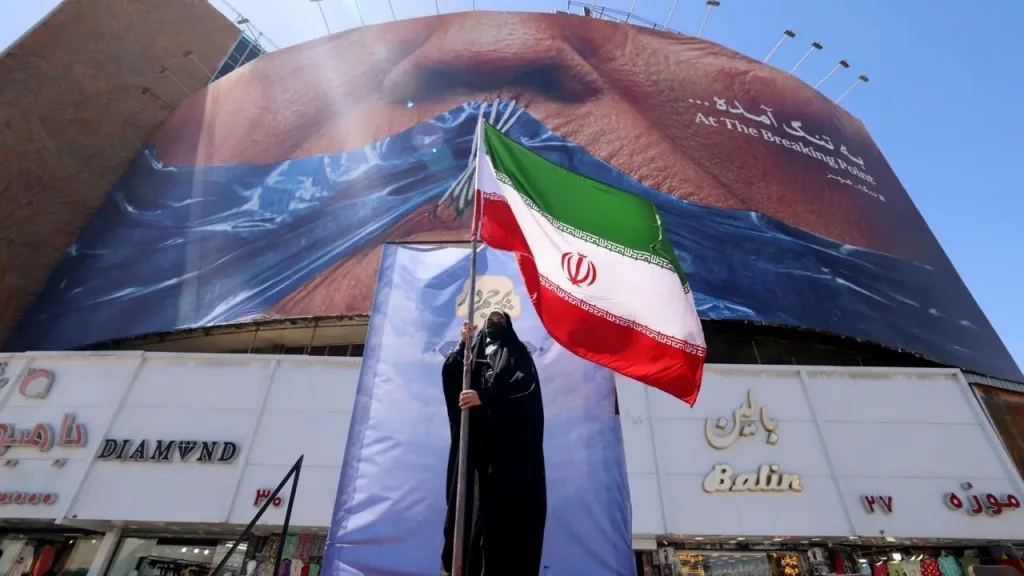

Iran has formally delivered its response to the latest US peace proposal, using Pakistan as a diplomatic mediator. The Iranian side described its reply as “realistic and positive,” but US President Donald Trump wasted no time rejecting the message, calling it “totally unacceptable” on Truth Social. The Iran-US war news live situation remains tense, with both sides still trading fire even as talks continue.
Background
The United States and Iran have been engaged in a complex and deeply fraught series of negotiations since early 2026. Following US-Israeli strikes on Iran that began on February 28, a temporary ceasefire came into effect on April 8. However, the ceasefire has remained fragile, with skirmishes continuing in the Persian Gulf and around the Strait of Hormuz.
Iran has been subject to devastating US sanctions for decades. The partial lifting of some of those sanctions under the 2015 nuclear agreement was reversed when Trump unilaterally exited the deal in 2018 during his first term, leaving billions of dollars in Iranian assets frozen in foreign banks.
What Was the US Proposal?
Washington sent Tehran a 14-point proposal earlier this week. Under its conditions, Iran would have to agree not to develop a nuclear weapon and stop all uranium enrichment for at least 12 years. It would also be required to hand over its estimated 440kg of uranium enriched to 60 percent.
In return, the US would lift sanctions and release billions of dollars in frozen Iranian assets. Both sides, which have imposed competing blockades in the Strait of Hormuz, would also be required to reopen the critical waterway within 30 days of signing.
The US proposal was seen as highly demanding by Iranian officials and lawmakers, who pushed back sharply before the formal response was even submitted.
What Was Iran’s Response Today?
Iran’s response to the US proposal to end the war was sent via mediator Pakistan, according to Iranian state news agency IRNA. According to the proposed plan, the first stage of negotiations would focus on ending hostilities and ensuring “maritime security” in the Gulf and the Strait of Hormuz.
An official Iranian source told Al Jazeera: “Our response focuses on ending the war throughout the region, especially in Lebanon, and resolving differences with Washington.” The source added that their response also covered negotiations regarding the Strait of Hormuz, the nuclear programme, and the lifting of sanctions.
According to the Wall Street Journal, Iran offered to transfer some of its stockpile of highly enriched uranium to a third country, but rejected the idea of dismantling its nuclear facilities entirely. This suggests Tehran is willing to show partial flexibility but is not ready for full capitulation on its nuclear program.
Trump Rejects Iran’s Response
US President Donald Trump rejected Iran’s reply, writing on Truth Social: “I have just read the response from Iran’s so-called ‘Representatives.’ I don’t like it.” He did not offer further details about the contents of Iran’s response.
Trump accused Iran of “playing games,” writing that Iran “has been playing games with the United States, and the rest of the World, for 47 years.” Despite this sharp language, the president hinted that he still believed a deal was possible.
Trump suggested that reaching the best possible deal was more important than an immediate end to the conflict. “I don’t want to get there if it means I can’t make the best deal,” he said. “I’ve got to make good deals. We’re pretty close.
Quotes from Key Officials
US Secretary of State Marco Rubio said: “We’ll see what the response entails. The hope is it’s something that can put us into a serious process of negotiation.” He also confirmed the US had expected Iran’s response within hours.
Iran’s Foreign Minister Abbas Araghchi declared on Friday that “every time a diplomatic solution is on the table, the US opts for a reckless military adventure.”
US Secretary of State Rubio acknowledged the challenge of fragmented Iranian leadership. “Their system is still highly fractured, and it’s dysfunctional as well, so that may be serving as an impediment,” he said.
US Energy Secretary Chris Wright told NBC News that the US was seeking “free flow of traffic through the international waters that are the Straits of Hormuz, and an end to the Iranian nuclear program,” adding that energy prices would fall once the strait reopened.
Iran Supreme Leader Injuries What We Know
One of the most critical and unresolved questions in the Iran-US war is the physical condition of Iran’s new Supreme Leader, Mojtaba Khamenei.
Ali Khamenei, the former Supreme Leader, was killed in the US-Israeli strikes on February 28. Mojtaba Khamenei was subsequently elected to succeed him by the 88-member Assembly of Experts.
According to US intelligence sources, Mojtaba Khamenei has not been seen in public since sustaining serious injuries during the same attack that killed his father. Intelligence reports indicate he suffered severe burns on one side of his body, affecting his face, arm, torso, and leg.
Iranian officials, however, are downplaying the extent of his injuries. An aide said his ankle and back were slightly injured, that his back had healed, and that he had only a “small crack” behind his ear from an explosion. “He is in perfect health,” the aide stated.
US intelligence has not been able to visually confirm Khamenei’s whereabouts. Iran’s President Masoud Pezeshkian did report holding a two-and-a-half-hour in-person meeting with Khamenei marking the first reported direct meeting between a senior Iranian official and the new supreme leader.
The contradiction between Iranian official statements and Western intelligence assessments has created a major information gap at a time when clarity of leadership is crucial to any Iran-US deal.
Global and Regional Impact
The ongoing US naval blockade of the Strait of Hormuz has triggered a global energy crisis, as the waterway carries approximately one-fifth of global crude oil and gas supply. Markets have been volatile, with oil prices dropping in recent days on optimism that a deal could be near.
Analysts suggest that Iran’s economy could withstand the pressure from the blockade for several more months without a major collapse, though it has gradually begun cutting oil production. Iran could potentially avoid shutting down wells by redirecting oil to domestic consumption.
The ongoing Iran-US war and negotiations are unfolding just one week before Trump is due to visit China, one of the largest importers of Iranian oil and a country with deep strategic interests in the outcome of these negotiations.
Conclusion What Comes Next?
The Iran-US deal process is at a delicate crossroads. Iran has submitted its response to the US proposal via Pakistan, calling it “realistic and positive.” But Trump’s swift rejection and accusation of “playing games” signals that the gap between both sides remains wide.
Analyst Negar Mortazavi noted that Tehran may show greater flexibility on its nuclear programme once the conflict ends, but is unlikely to hand over its enriched uranium directly to the United States. She added that Iran believes negotiations with the Trump administration require “time and patience.”
The next few days will be decisive. Both sides appear to understand the cost of prolonged war economically and militarily but the divergence over the nuclear programme, the Strait of Hormuz, and the question of who is truly in charge in Tehran continues to complicate the path to a lasting Iran peace deal.
FAQs
What were the negotiations between the US and Iran?
The US and Iran have been engaged in peace negotiations since early 2026, following the start of the US-Israeli war on Iran on February 28. Talks have been conducted via direct and indirect channels, with Pakistan serving as a key mediator. The main issues under negotiation include Iran’s nuclear programme, the reopening of the Strait of Hormuz, the lifting of US sanctions, and a formal end to hostilities.
Did Iran agree to a ceasefire with the US?
A temporary ceasefire came into effect on April 8, 2026, but it has remained fragile. Both sides have continued to exchange fire in the Persian Gulf despite the ceasefire being nominally in place. Iran has rejected proposals for another temporary ceasefire, arguing it would give the US and Israel time to regroup for further attacks.
Did Iran reject the US nuclear proposal?
Iran did not outright reject the 14-point US nuclear proposal but sent back a counter-response through Pakistani mediators on May 10, 2026. Iran offered to transfer some enriched uranium to a third country but rejected dismantling its nuclear facilities. Trump called Iran’s response “totally unacceptable,” signaling that significant gaps remain between the two sides on the nuclear issue.