

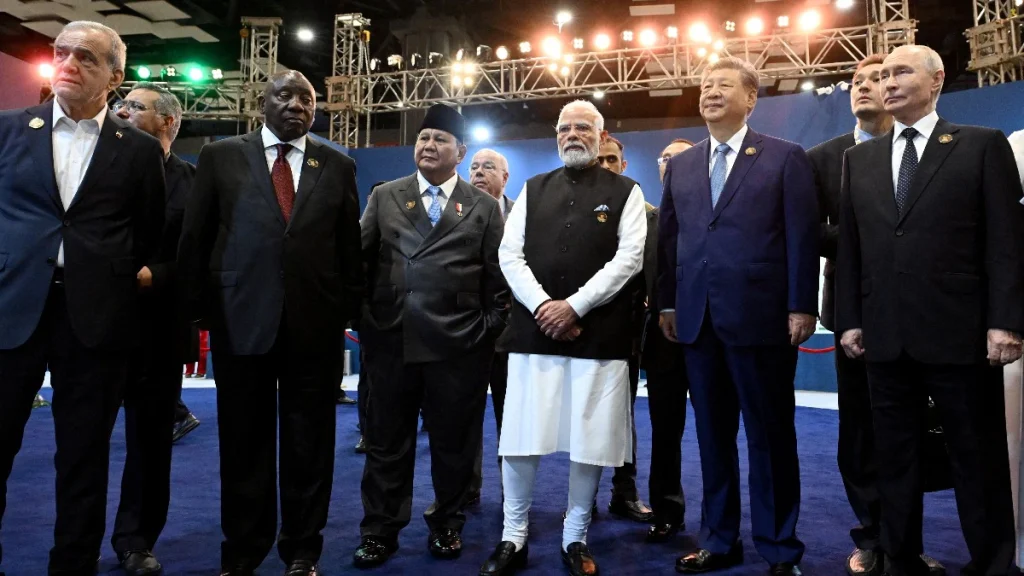

Bloc Calls for Calm as Middle East Conflict Widens
BRICS member states issued a joint declaration on Saturday addressing the growing Mideast tensions, urging all sides to exercise maximum restraint. The statement came on the opening day of the 18th BRICS summit in New Delhi, where leaders from eleven countries gathered under the shadow of a widening Middle East conflict. It marks one of the bloc’s most direct interventions yet on the region’s security crisis.
The timing matters. The declaration landed just as the United States and Iran resumed exchanging strikes, ending a fragile pause that had held for most of August. For a group that includes both Iran and the Washington-aligned UAE, agreeing on any common language at all was never going to be simple.
Background: A Bloc Under Pressure
BRICS has grown well past its original five members — Brazil, Russia, India, China, and South Africa. Egypt, Ethiopia, Indonesia, Iran, and the UAE have since joined, turning what was once a loose economic grouping into a much messier collection of foreign policy interests. That expansion is exactly why a unified statement on the Middle East conflict was considered a genuine diplomatic achievement.
Iran sits inside the bloc as a direct party to the fighting with the United States. The UAE, meanwhile, maintains close security ties with Washington. Getting both governments to sign the same paragraph on Mideast tensions required New Delhi’s negotiators to lean heavily on carefully hedged language, including a line recognising each country’s “respective national positions” before calling for restraint.
What the Declaration Actually Says
The core passage of the so-called New Delhi Declaration reads plainly: BRICS countries expressed deep concern over the continued escalation of tensions in the Middle East and West Asia, and called for exercising maximum restraint while avoiding any action that could further aggravate the situation. The bloc framed this as part of a broader commitment to resolving disputes through dialogue, consultation, and diplomacy rather than force.
Beyond the general call for calm, the statement went further than many observers expected. It demanded protection of civilians, respect for national sovereignty, and safeguards for global trade routes, including energy and shipping lanes running through the region. It also condemned strikes on nuclear facilities operating under International Atomic Energy Agency safeguards, describing such attacks as clear breaches of international law.
The declaration did not stop at the US-Iran standoff. It also addressed Gaza, Lebanon, Sudan, and Syria, calling for ceasefires and unrestricted humanitarian access across all four crises — a sign that the bloc sees the current Middle East conflict as one interconnected regional emergency rather than a series of separate disputes.
Quotes From the Summit
“We express deep concern over the continued escalation of tensions in the Middle East/West Asia and, recalling our respective national positions, call for exercising maximum restraint, as well as avoiding actions that could further aggravate the situation,” the declaration stated.
On nuclear facilities specifically, the bloc was unusually blunt: “We express serious concern over deliberate attacks on civilian infrastructure and peaceful nuclear facilities under full safeguards of the IAEA, in violation of international law and relevant resolutions of the IAEA.” It added that nuclear safeguards and safety “must always be upheld, including in armed conflicts, to protect people and the environment from harm.”
Chinese President Xi Jinping used his remarks at the summit to push member states toward a more active peacemaking role, telling fellow leaders that BRICS countries needed to stand on the “right side of history” at a time of rising power politics and a challenged international order.
Impact: What This Means Regionally and Globally
A joint BRICS statement carries weight mainly because of who is in the room. This isn’t a Western-led bloc issuing the usual condemnation — it’s a group that includes Iran itself, alongside Russia, China, and India, all of whom have their own stakes in how the Middle East conflict plays out. That gives the call for maximum restraint a different kind of diplomatic pressure, even if it comes without any enforcement mechanism attached.
For regional peace and stability, the practical effect is limited in the short term. The declaration has no binding force, and fighting between the US and Iran continued even as leaders were signing the document in New Delhi. What it does provide is a shared diplomatic reference point — language that Russia, China, and other members can now point back to in future negotiations or UN Security Council debates over the Mideast crisis.
The trade and energy language also deserves attention. Any disruption to shipping and energy routes through the Middle East hits BRICS economies directly, particularly India and China, both heavily dependent on Gulf energy imports. That’s likely why the sovereignty and trade-route language made it into the final text rather than being negotiated out.
Conclusion: What Comes Next
The New Delhi Declaration is unlikely to stop the fighting on its own, and few expected it to. What it signals is that BRICS countries are no longer content to stay silent while Mideast tensions escalate on their doorstep, particularly with a member state directly involved in the fighting. Whether this translates into concrete diplomatic action — a mediation push, a coordinated ceasefire proposal, or further statements — will depend heavily on how the US-Iran exchange develops in the coming weeks.
With China set to take over the BRICS presidency in 2027, expect Beijing to keep pushing the bloc toward a more visible role on Middle East tensions. For now, the maximum restraint language stands as the clearest joint position the group has managed to produce since the current phase of the conflict began.
Frequently Asked Questions
What is the BRICS summit?
The BRICS summit is the annual gathering of leaders from the BRICS bloc, a group that now includes Brazil, Russia, India, China, South Africa, Egypt, Ethiopia, Indonesia, Iran, and the UAE. The 2026 edition, the 18th summit overall, was hosted by India in New Delhi and brought together heads of state to negotiate a joint declaration covering trade, security, and global crises, including the ongoing Middle East conflict. Beyond the headline statements, the summit also functions as a venue for bilateral meetings between member states on the sidelines.
What is the BRICS agenda for 2026?
This year’s agenda centered heavily on the widening Middle East conflict, alongside familiar BRICS priorities like reducing dependence on Western-dominated trade and financial systems. Leaders also addressed unilateral tariff measures affecting member economies, alongside separate crises in Gaza, Lebanon, Sudan, and Syria. China’s incoming presidency for 2027 was also discussed, with Xi Jinping using the summit to argue for a more assertive BRICS role in global diplomacy going forward.
What is the latest news on BRICS currencies?
Currency cooperation remains an ongoing discussion within BRICS, with member states continuing to explore ways to reduce reliance on the US dollar for trade settlements between themselves. However, this year’s New Delhi summit was dominated by security concerns tied to Mideast tensions rather than currency initiatives, and no major new currency announcement came out of the joint declaration. Analysts expect the currency conversation to resurface more prominently once the regional security situation stabilizes.